Massage for Children With Cancer: Evidence, Consent, and Safe Sessions at Home
Published on October 30, 2026
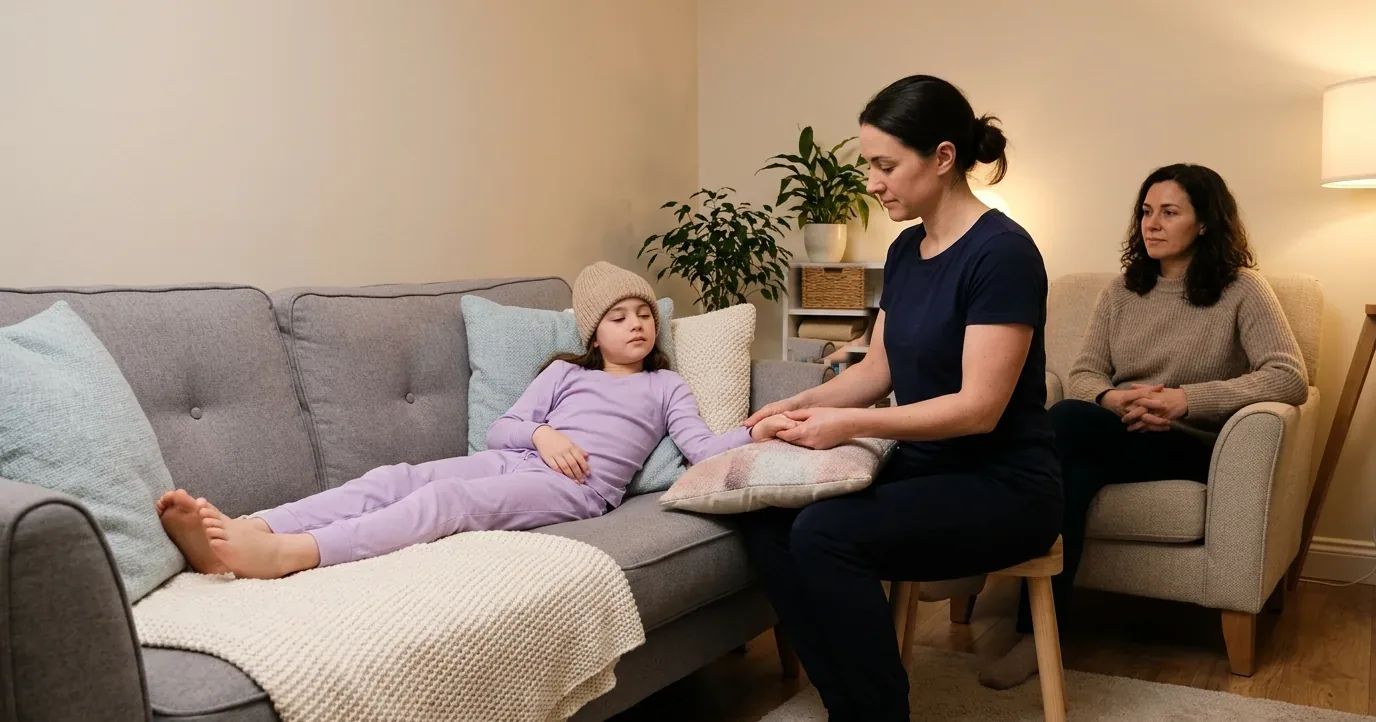
When the Client Is a Child
A child in cancer treatment spends a surprising share of it at home: between clinic days, after hospital stays, and through the weeks when blood counts are too low for a crowded waiting room. That makes a gentle home visit appealing, and it is why mobile therapists get asked. It is also where the rules change. Our guide to mobile massage for cancer patients was written for adults. This one covers what is different when the client is a child: who gives consent, who stays in the room, what this week’s blood counts mean for today’s visit, and how short and light the session should be.
It is written for two readers: parents wondering whether a home session is safe for their child, and mobile therapists who have just been asked to take one. One line holds throughout. Massage is supportive care that may ease anxiety, worry and discomfort. It does not treat the cancer, and it never replaces anything the oncology team prescribes.
What the Pediatric Research Shows
The starting point is a literature review by Hughes and colleagues, published in the Oncology Nursing Forum in 2008, which drew on more than 70 sources about massage and children with cancer. It concluded that massage may help with pain, anxiety, depression, constipation and high blood pressure, that light to medium pressure suits the pediatric oncology setting, and that massage can be added safely alongside treatment as an adjunct. It also named pediatric oncology nurses as the people who should assess, advocate for and coordinate massage, which shapes how a home visit should be arranged.
The trials since then are small, and their most consistent finding is that children feel calmer. Post-White and colleagues enrolled 23 children aged 1 to 18 who were receiving repeated cycles of chemotherapy, each with a parent, and 17 of those pairs completed every measurement. Four weekly massage sessions alternated with four weekly sessions of quiet time. Massage beat quiet time at lowering the children’s heart rates, at easing anxiety in children younger than 14, and at easing the parents’ anxiety. It made no measurable difference to pain, nausea, fatigue, blood pressure or cortisol, but the children said it helped them feel better and worry less, and that the effect lasted longer than quiet time did.
Pain relief tends to show up session by session. Batalha and Mota, nursing researchers in Coimbra, Portugal, randomized 52 hospitalized children aged 10 to 18 and gave the massage group three sessions of 20 to 30 minutes on alternate days over a single week. Pain intensity dropped after each session, but over the week as a whole, the only significant change on the main pain questionnaire was in how much pain got in the way of walking.
A hospital program shows the same pattern at scale. Rodgers-Melnick and colleagues reviewed 3,015 sessions given by a certified pediatric massage therapist to 243 children, teens and young adults with cancer or blood disorders at a large pediatric medical center. On average, pain, stress and anxiety ratings each fell by more than two points from before a session to after it. The review had no comparison group, so it describes what happened in the room rather than proving that massage caused it, but it shows a hospital running massage as a routine service for this population.
Nausea has one encouraging trial. Badr and colleagues, in Egypt, randomized 75 children with leukemia at the start of chemotherapy to Swedish massage, peppermint inhalation or usual care. By the third chemotherapy session, both the massage and the peppermint groups had far lower nausea and vomiting scores than the control group.
Two smaller pilots point the same way on comfort. At a children’s hospital in Washington, DC, Jacobs and colleagues gave hospitalized adolescents one massage a night for two or three nights. Sleep trended upward, questionnaires on fatigue, mood and anxiety showed no difference, and the feedback from teens and parents was warm enough that the hospital started a clinical massage service. In a Canadian palliative care study, Genik and colleagues offered eight children aged 10 to 17 a weekly massage for a month. Pain and worry eased immediately after some sessions, there was no lasting change by follow-up, and no adverse effects were reported.
Where the Evidence Runs Out
The largest trial is the sobering one. Phipps and colleagues randomized 178 children about to undergo stem cell transplant at four centers to one of three arms: half-hour massages from licensed therapists three times a week plus humor therapy; that same package with massage and relaxation sessions for a parent as well; or standard care. Neither intervention arm beat standard care on the children’s distress or mood, or on hospital stay, time to engraftment, or the use of pain and anti-nausea medicines.
The reviews add caution. Ho and colleagues found 19 papers on complementary therapies for nausea in children with cancer and rated 16 of them at high risk of bias. Massage was among the therapies that looked helpful, but the authors concluded the evidence was not strong enough to call any of them effective, feasible or safe for this purpose. Jacobs and Mowbray, surveying the field in 2019, noted that most massage studies in people with cancer, children and adults alike, have been unable to show significant benefit, and traced that to small samples, mixed patient groups, inconsistent techniques and other design flaws.
Treat the immune question with the same care. The 2008 review suggested massage may support immune function, and a systematic review by Rodríguez-Mansilla and colleagues listed higher white cell and neutrophil counts among the benefits reported in the seven trials it included, while calling for more research to back up the effects attributed to massage. Nobody should book massage as a way to protect a child from infection. The precautions below matter far more.
So set expectations honestly. The strongest pattern is a calmer child, a calmer parent and relief that follows a session rather than building over weeks. On a hard day that is worth having. It is not a treatment.
Clearance From the Oncology Team Comes First
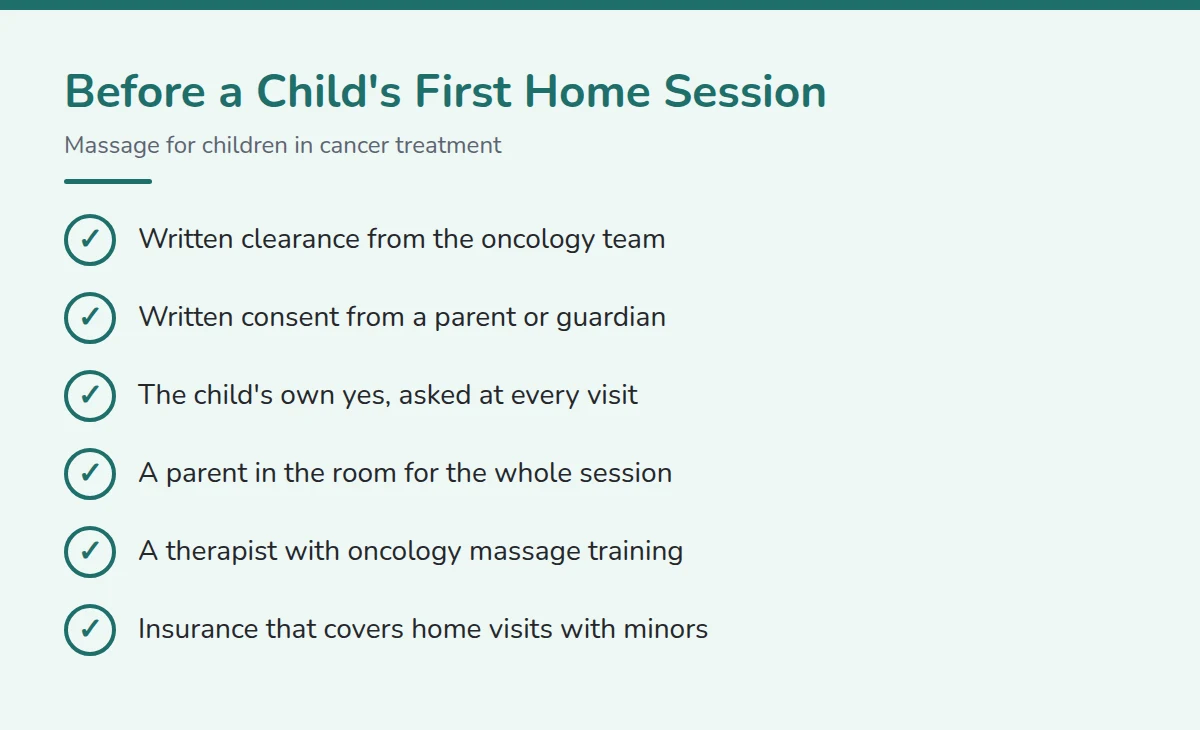
Any client in active cancer treatment needs the oncology team’s go-ahead, and for a child that means written clearance from the treating oncologist or oncology nurse practitioner before the first visit. Following the 2008 review’s lead, make the oncology nurse your working contact: they know the treatment calendar, the latest counts and the child.
Ask the team to spell out:
- which central line the child has, and where it sits;
- the platelet count below which they want massage paused or kept especially light;
- surgical sites, radiation fields, bone tumors or areas of bone pain to avoid;
- whether chemotherapy has left numb patches on the hands or feet (our guide to massage for chemotherapy-induced neuropathy covers working around them);
- whether visits should stop during count lows, after a transplant, or while the child is in the hospital.
Ask again whenever the plan changes: a new phase of treatment, surgery, a transplant, a relapse or an admission.
The Day-Of Check: Counts, Fever and the Central Line
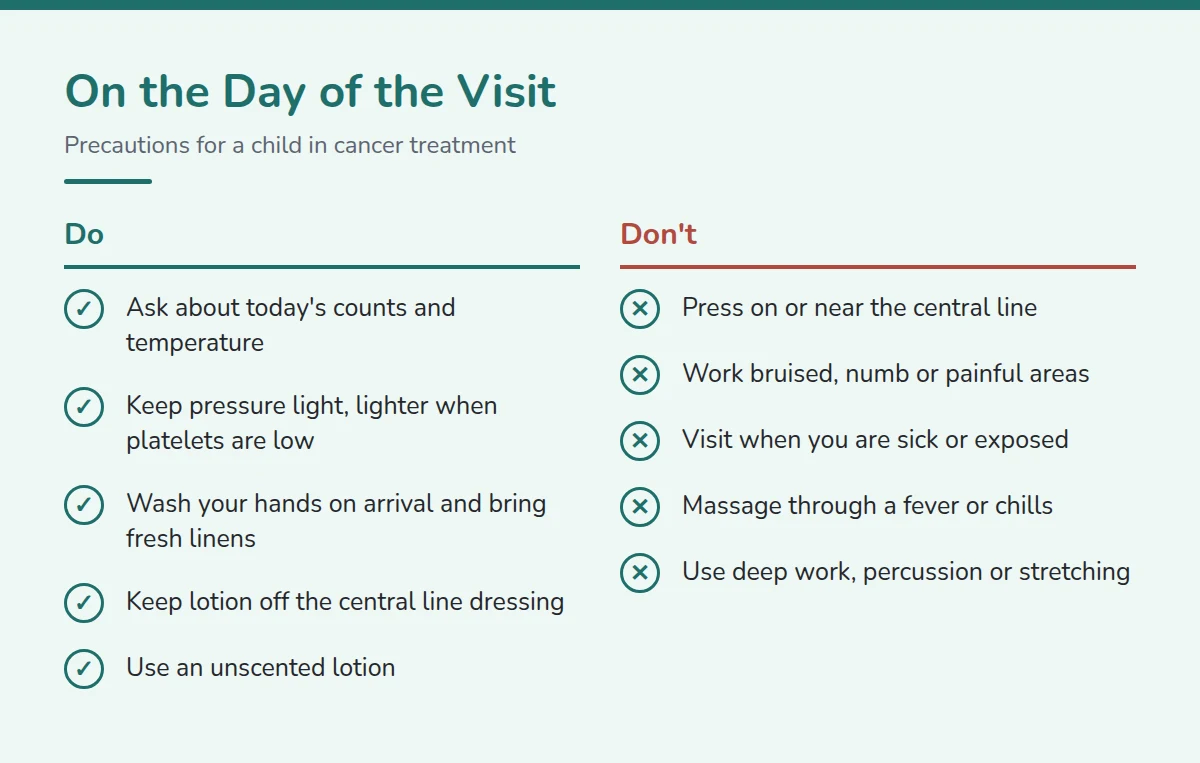
Chemotherapy and radiation can push white cells, red cells and platelets far below normal, and Nationwide Children’s Hospital tells families that counts often fall lowest 7 to 10 days after most chemotherapy treatments. That is when bruising, bleeding and infection are most likely, so it is the week for the lightest possible session or none at all, whichever the team prefers. Families usually know the latest numbers, so ask at the door.
- Low platelets. Watch for bruising, nosebleeds and purple, freckle-like spots under the skin. Keep pressure very light, skip bruised areas, use no percussion, deep work or stretching, and tell the parent about any new bruise or spot.
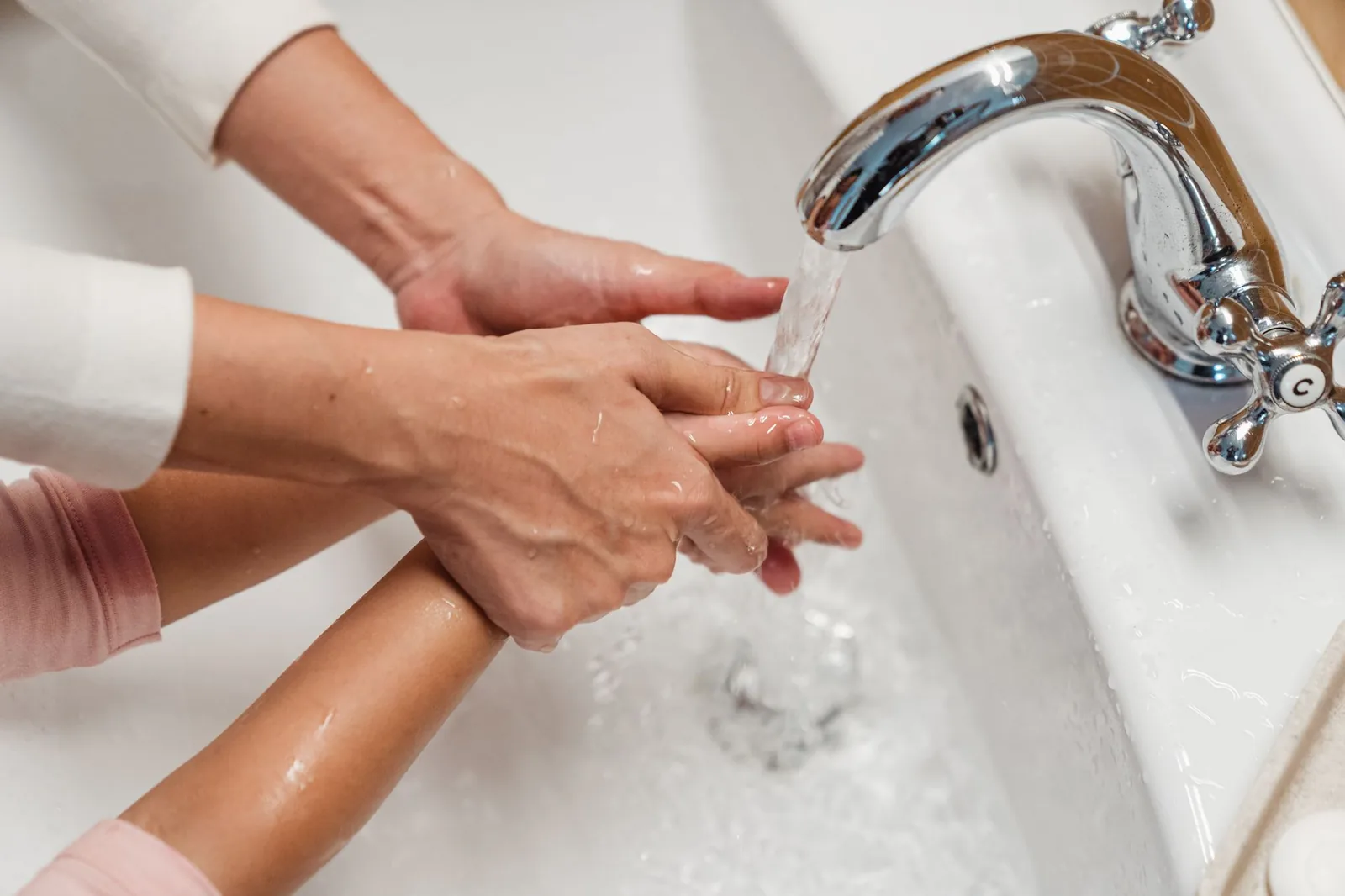
- Low white cells. Infection is the danger. The same hospital asks everyone in the family to wash their hands well, and a visiting therapist is no exception: wash on arrival, bring freshly laundered linens, and stay home if you feel at all unwell. Exposure counts as well. Nationwide lists contact with chickenpox, shingles, flu or COVID as a reason to call the clinic, so tell the family before you come.
- Fever. St. Jude Children’s Research Hospital tells families to call the care team for a temperature of 100.4°F (38°C) or higher, or whatever threshold their own team sets. Never massage through a fever, chills or unusual listlessness. Stop and hand the decision back to the parent.
- The central line. Many children in treatment have one: a port that sits entirely under the skin, a tunneled line with one end outside the body, or a PICC line in the arm. Never press on or near it, keep lotion off the dressing, and position the child so the line is never pulled, kinked or lain on, which usually means propped up on pillows rather than face-down. St. Jude lists redness, warmth or swelling at the site that is getting worse, leaking, and swelling of the face, neck, shoulder, chest or arm on the line side among the signs that need a call. If you see one, stop and tell the parent.
Consent From the Parent, Assent From the Child
A child cannot legally consent to massage, so a parent or legal guardian gives informed consent in writing, after hearing what the session will involve. That is not the end of it. The American Academy of Pediatrics describes parental permission and childhood assent as “an active process,” and expects a child’s own view to carry more weight as they mature. In practice, the therapist asks the child too.
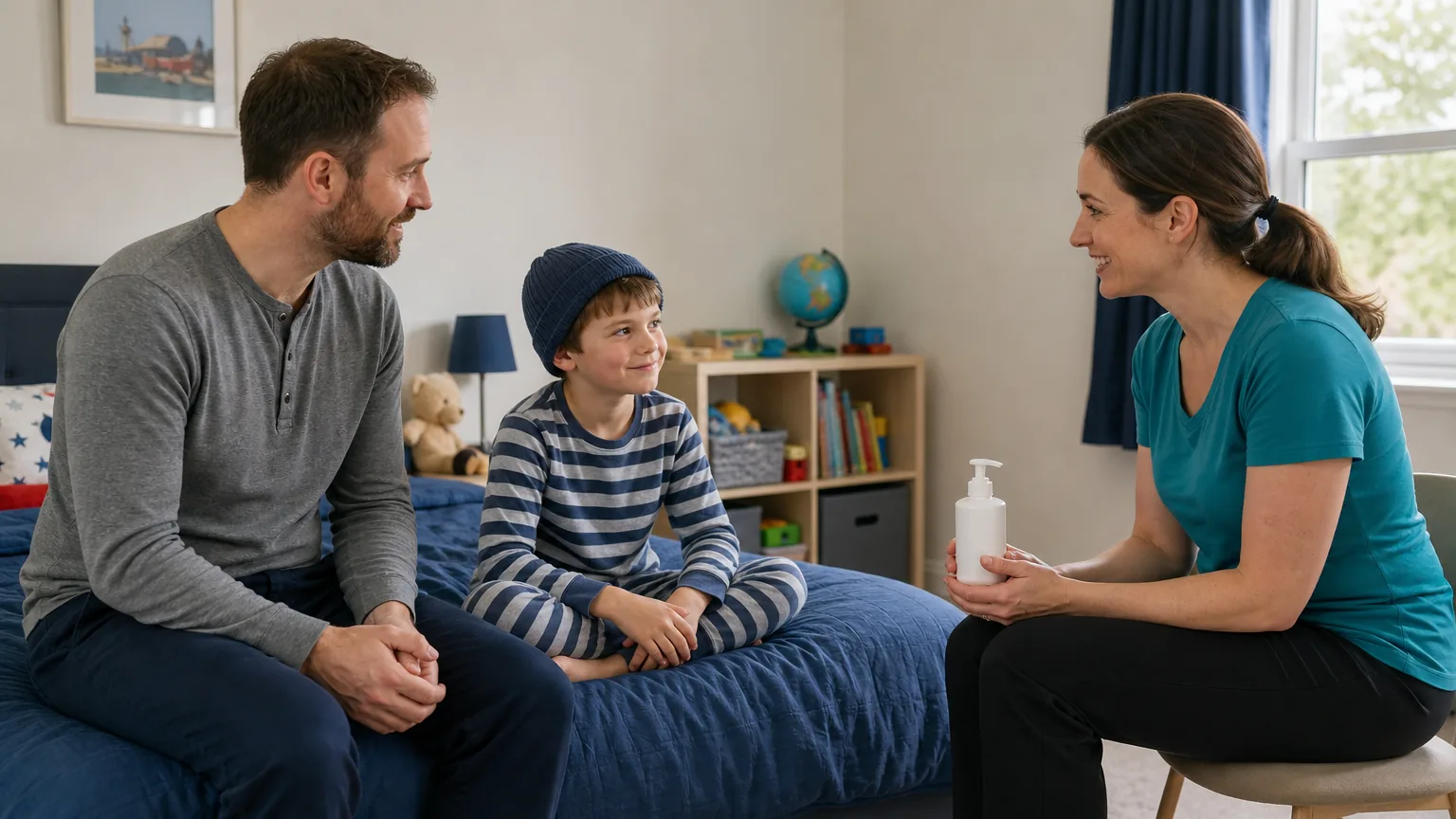
Ask in words that fit the child’s age: “Would you like me to rub your hands, or your feet?” Let them pick the room, the position, the music, and whether a parent holds their other hand. Clothes stay on. Many of these children have spent months having things done to their bodies that hurt, from needle sticks to dressing changes, so massage should be the touch they get to control. “Stop” ends a stroke immediately, and “not today” is a complete answer. Note the child’s assent at every visit, not only the first. Our guide to ethics, consent and draping in the client’s home sets out the adult version; with children the bar is higher.
Teenagers deserve the same choices and more privacy. A 15-year-old may want the parent in the corner rather than at the bedside, or may prefer a therapist of a particular gender. Accommodate that wherever the law allows.
A Parent in the Room, Every Minute
The professional standard is simple: a parent or guardian stays in the room for the whole session, the door stays open, and if the parent has to step out, the session pauses until they return. That protects the therapist as much as the child, since it leaves no question about what happened in the room. Several states write it into law. Pennsylvania requires written permission from a parent or guardian before a minor receives massage, and requires a parent, guardian or their representative to be physically present in the room during treatment. New Jersey requires written consent from a parent or guardian for any client under 18, and the parent or guardian in the room for clients under 16. Delaware requires a parent or legal guardian to be present for any client under 18 and lets the minor decline that only with the parent’s written consent. The therapist must confirm the parent’s identity, and written notice of those rights must be posted where the session happens, which for a mobile therapist means bringing it to the house.
Rules on minors vary by state, so read your own practice act before accepting the booking. Three more habits protect everyone: no photos of the child, messages go through the parent rather than to a teenager’s phone, and session notes record who was present.
Shaping a Session Around a Child
Keep it short. The Portuguese trial used sessions of 20 to 30 minutes and the transplant trial used half an hour, and for a young or exhausted child, 15 minutes may be the whole visit. Let the child decide when it ends. Pressure stays light to medium, as the 2008 review advised, and lighter whenever counts are low. Hands, feet, shoulders, back and scalp are the usual places to begin, and slow, rhythmic strokes or simply holding still often work better than a full routine.
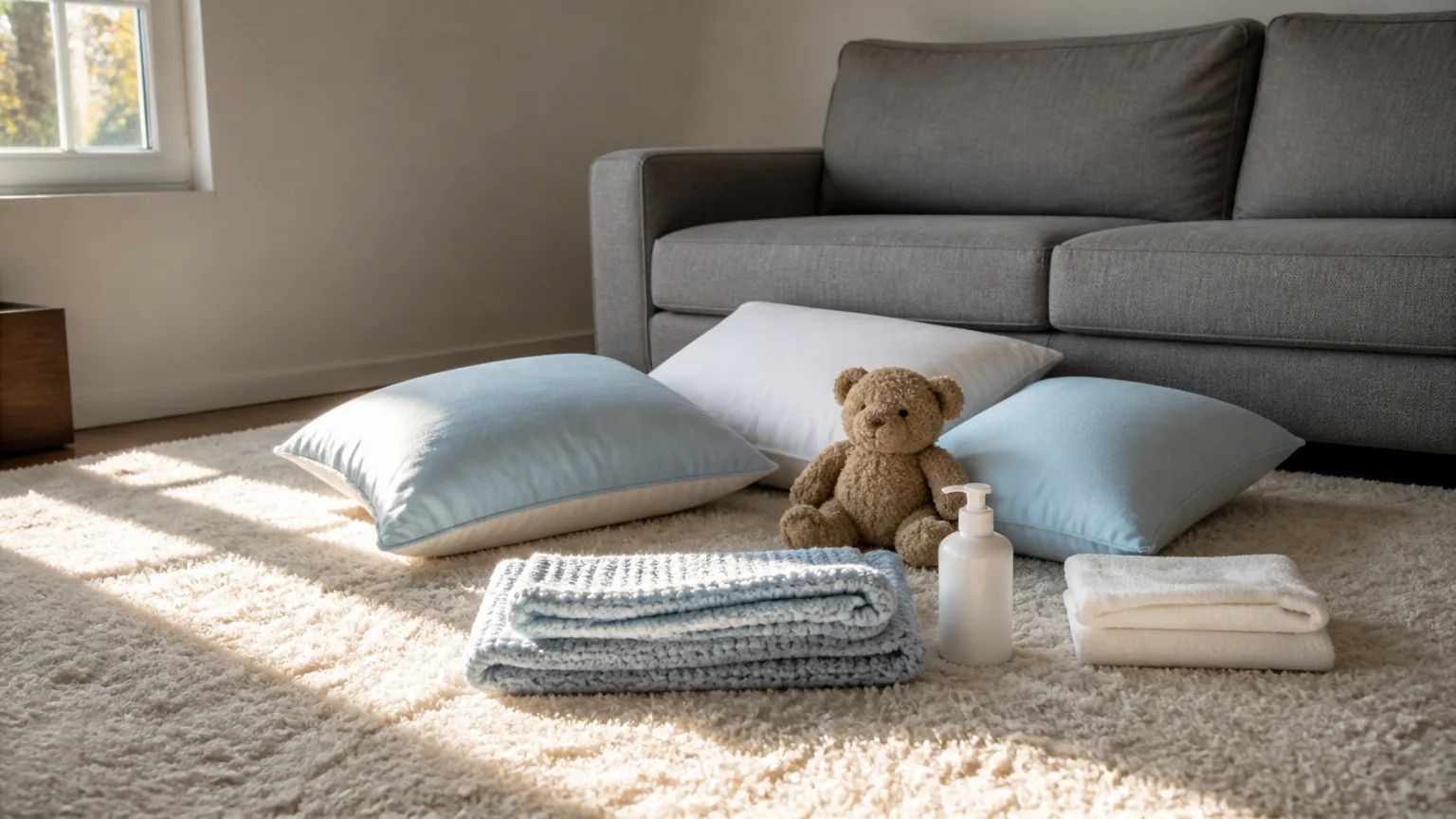
The setting does not need to look like a treatment room. A child’s own bed, the sofa or a nest of pillows on the floor all work, and the portable table is optional. A toddler may settle best on a parent’s lap, and a teenager may want their own playlist. Bring an unscented lotion, and leave essential oils out unless the oncology team has approved them.
If the team agrees, you can also teach a parent a simple hand or foot routine for the days between visits, much as our guide to teaching infant massage describes for new parents. Offer it as a way to share comfort, not as a treatment, and give the parent the same rules you follow: light pressure, nowhere near the line, and stop when the child says so.
For Parents: Questions to Ask Before You Book
- Are you licensed in our state? Then check it yourself. Our guide to verifying a mobile massage therapist’s license walks through the state lookup.
- What oncology massage training do you have? The Society for Oncology Massage recommends a course of at least 24 hours that includes hands-on clinical practice with an instructor present, followed by ongoing education. It lists pediatric oncology among its supplemental courses for specific cancer populations, so ask about experience with children separately.
- Will you follow our oncology team’s written clearance, and speak with our nurse if needed?
- Will a parent be in the room the whole time? The only right answer is yes.
- What happens if my child has a fever, or their counts drop, the morning of the visit? Look for a cancellation policy that waives fees for medical reasons, and a therapist who stays home when sick or exposed.
- Do you carry professional liability insurance that covers home visits with children?
Gentle touch therapies such as Reiki or reflexology are sometimes offered by people who hold no massage license. They are different services from licensed massage therapy, so ask exactly what credential the person holds.
For Therapists: Before You Say Yes
Do not take a pediatric oncology booking on general experience. Complete a foundational oncology massage course first, then pediatric training on top of it; the hospital program in the 2023 review was delivered by a certified pediatric massage therapist. Supervised time in a hospital program is the best preparation if you can get it.
Build the paperwork before the first visit: written parental consent, the oncology team’s clearance and parameters, an assent note for every session, and a day-of check of counts, temperature, the line and any new bruising. Professional liability insurance is non-negotiable for every practicing therapist, so confirm in writing that your policy covers clients under 18 and sessions in their homes. Licensing and scope of practice vary by state, and your own practice act is the binding authority. Keep the scope line bright: you do not diagnose, comment on medicines, or suggest that massage fights cancer or strengthens immunity.
This is heavy work. Some of the children you see will relapse, and some will not survive. Line up your own support, from a peer group to a clinical supervisor, before you need it.
The Honest Offer
A good pediatric oncology session is short, gentle and asked for: a child who said yes, a parent in the room, and a therapist who checked the counts and kept clear of the line. The research supports what families describe, which is calmer children, calmer parents and relief that lasts the evening rather than the month. On those terms, it is worth bringing to the house.
Sources
- Hughes and colleagues reviewing massage as supportive care for children with cancer
- Post-White and colleagues on a crossover pilot of massage and quiet time during chemotherapy
- Batalha and Mota testing a one-week massage protocol for pain in hospitalized children
- Rodgers-Melnick and colleagues with 3,015 sessions from a pediatric hematology and oncology massage service
- Badr and colleagues comparing Swedish massage and peppermint inhalation for chemotherapy nausea in leukemia
- Jacobs and colleagues on nightly massage and sleep in hospitalized adolescents
- Genik and colleagues for massage for children with cancer in palliative care
- Phipps and colleagues on the multisite trial of massage and humor therapy during stem cell transplant
- Ho and colleagues reviewing complementary therapies for nausea and vomiting in children with cancer
- Jacobs and Mowbray on why massage research in children with cancer so often comes up short
- Rodríguez-Mansilla and colleagues with a systematic review of massage trials in childhood cancer
- American Academy of Pediatrics Committee on Bioethics on parental permission and child assent in pediatric care
- Nationwide Children’s Hospital for what low blood counts look like during chemotherapy
- St. Jude Children’s Research Hospital with central line types, care and warning signs
- Society for Oncology Massage on what training to look for in an oncology massage therapist and its pediatric oncology and other supplemental courses
- Pennsylvania Code for written permission and a parent in the room when treating a minor
- New Jersey Administrative Code on the client age rule for massage and bodywork
- Delaware Code with the statute on massage and bodywork for minors
Further reading
- Mobile Massage for Cancer Patients: An Evidence-Based In-Home Guide
- Massage for Chemotherapy-Induced Peripheral Neuropathy: What the Dosing Trial Found and How to Work Numb Feet Safely at Home
- Hospice and Palliative Massage at Home: A Mobile Therapist’s Guide
- Ethics, Consent, and Draping in the Client’s Home: A Professional Boundaries Guide
- The Mobile Massage Policy Handbook: Cancellations, Deposits, No-Shows, and House Rules