Teaching Infant Massage in the Family Home: Scope, Safety, and the Newborn Niche
Published on September 14, 2026
The Client You Already Have
A postpartum household is one of the most reliable bookings in mobile massage. Someone who has just given birth cannot easily get to a spa, is sore in ways a table can actually help, and is at home most of the day. You are already driving to that address.
What almost always happens on that visit is that the parent asks about the baby. Can you show me something? Is it safe? My sister said it helps with the sleeping. The therapists who handle that question well end up with a second service line and a referral stream that renews itself every time somebody in the neighborhood has a baby. The therapists who improvise an answer end up somewhere they should not be.
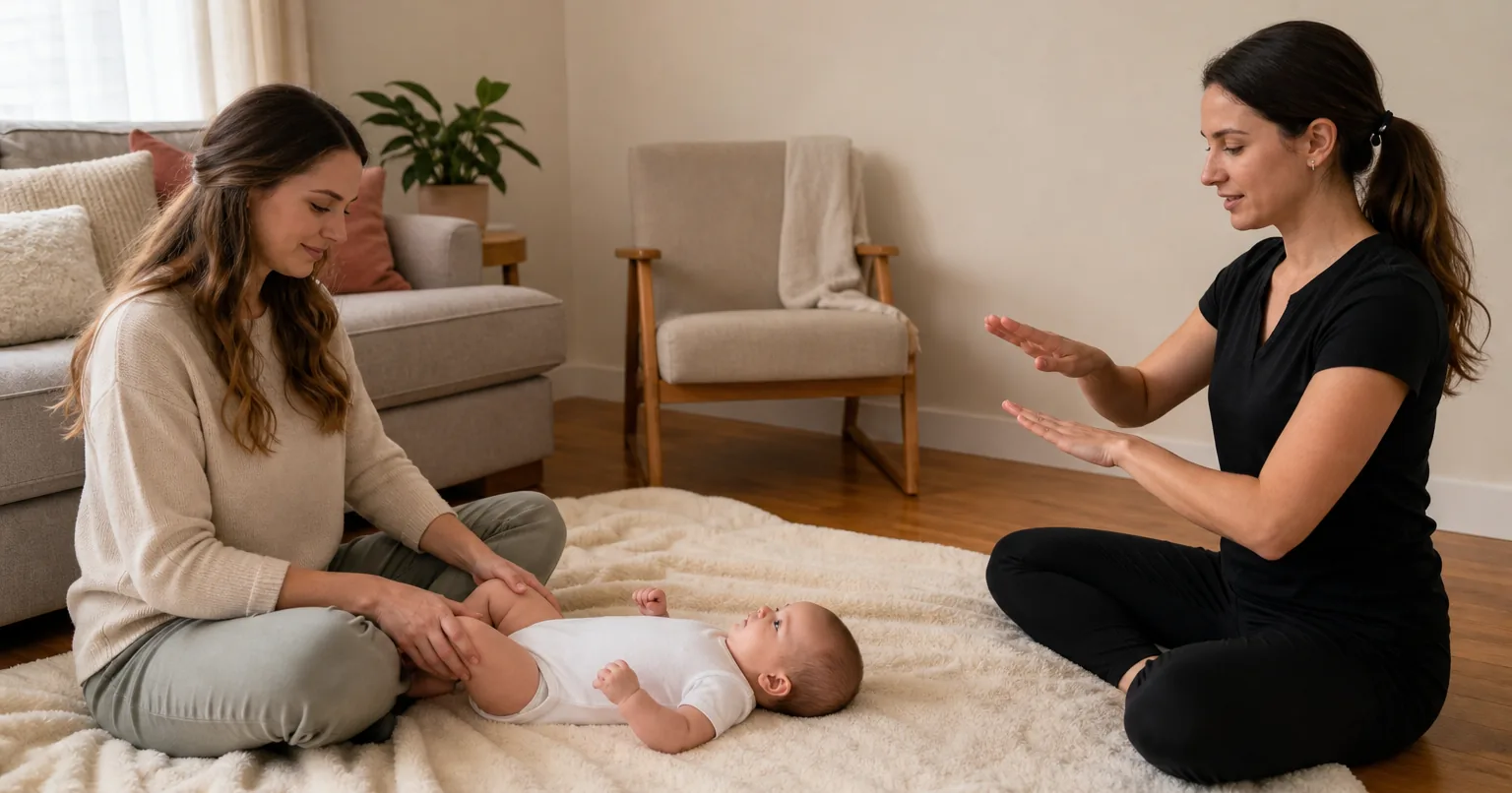
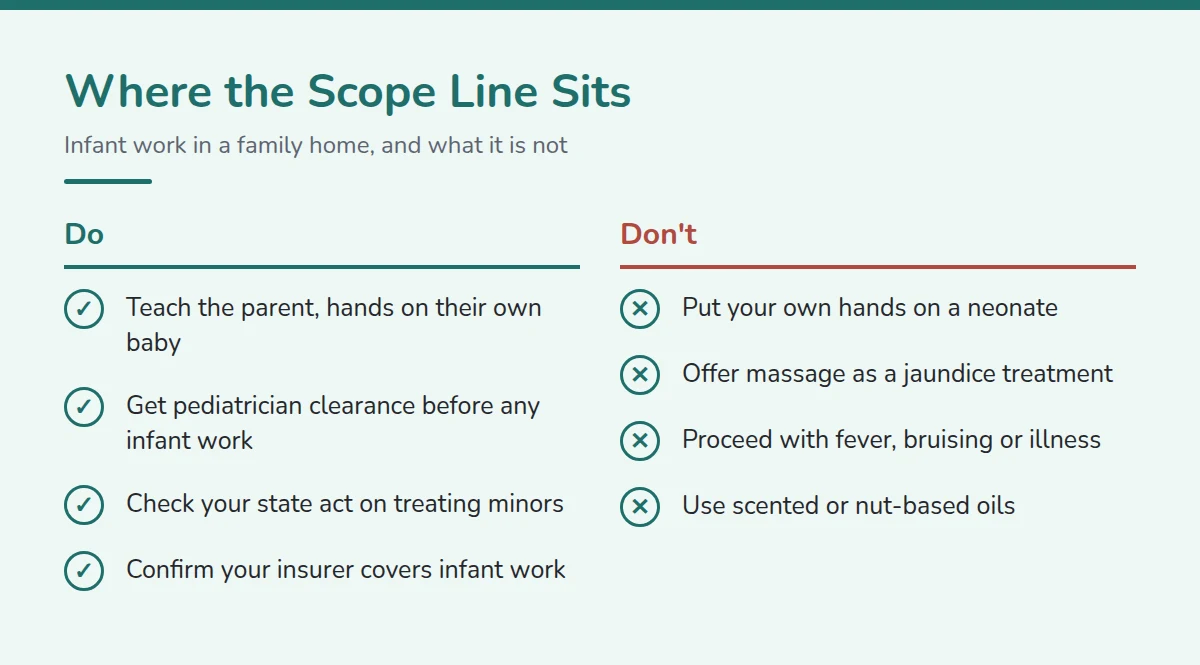
The honest version of this niche is narrower and more interesting than it first looks. Infant massage, as it is actually practiced and certified, is a teaching job. The parent’s hands go on the baby. Yours do not.
Why the Educator Model Exists
The dominant credential in this field is CEIM, Certified Educator of Infant Massage, awarded through the International Association of Infant Massage and, in the United States, its national chapter Infant Massage USA. Read the title closely. It certifies you to educate, not to treat. Several other organizations run comparable programs under different initials, and they share the same structural premise.
That premise is not bureaucratic caution. It is the point of the intervention. The benefit the research keeps circling is relational: a parent learning to read their baby’s cues, a parent with something concrete to do at the end of a difficult day, a parent whose confidence goes up. Outsource the strokes to a visiting professional and you have removed the active ingredient and kept only the rubbing.
It also solves your scope problem cleanly. A non-verbal client who cannot consent, cannot report pain, and cannot ask you to stop is the single hardest consent case in this profession. The consent and boundary framework you use in a client’s home assumes an adult who can withdraw permission mid-session. An infant has none of that, and the educator model routes around it by putting the legal guardian’s own hands on their own child while you coach from a respectful distance.
Training is a real commitment, typically a multi-day certification course plus supervised teaching of parent groups before the credential is issued, with continuing education to maintain it. Budget for it the way you would any specialization, as part of the ongoing professional spend covered in what it actually costs to build and maintain a mobile practice.
What the Evidence Actually Shows
The strongest clinical signal in infant massage is not sleep or bonding. It is bilirubin.
A review of clinical trials in The Journal of Maternal-Fetal and Neonatal Medicine gathered ten randomized controlled trials of massage therapy for neonatal hyperbilirubinemia, eight in term neonates and two in preterm. Six of the eight term trials reported a reduction in bilirubin levels. In the preterm trials the picture was weaker, with only one of two showing a significant reduction. Most trials used the Field protocol developed at the Touch Research Institute.
The mechanism the trials point to is mundane and plausible. Both preterm trials and five of the term trials reported increased stool frequency. Bilirubin leaves the body through the gut, so anything that moves the gut faster gives it less opportunity to be reabsorbed. That also explains the reported gains in feeding tolerance and weight, which travel with the same finding rather than being separate effects.
Now the part you must say out loud to parents. The reviewers concluded that although current evidence supports a role for massage therapy, the limitations of the trials mean the evidence is not sufficient to use it for managing neonatal hyperbilirubinemia in routine practice. Jaundice affects roughly 2.4 to 15 percent of neonates in the first two weeks of life and is a leading cause of nursery admission worldwide. It is monitored with blood levels and treated with phototherapy, and untreated severe cases cause permanent neurological injury.
So the sentence you need ready, word for word, is this: massage may be a helpful adjunct alongside the care the pediatrician is directing, and it is never a substitute for bilirubin monitoring or phototherapy. A parent who delays a follow-up blood draw because the massage therapist sounded optimistic is the worst outcome this niche can produce. Present the evidence the way you would present any body of massage research to a client, which means saying where it is genuinely promising and where it stops.
Minors and Neonates Sit Differently in Scope
Your state practice act is the binding authority here, and it frequently treats minors as a separate category rather than as small adults. The variations that actually bite include a requirement that a parent or guardian be physically present for the entire session, written guardian consent held on file, a minimum age below which massage is restricted or prohibited outright, and in some jurisdictions specific language about infants or neonates.
Some states say nothing at all, which is not the same as permission. Where an act is silent, the safer reading is that hands-on work with a neonate sits outside ordinary general practice unless you hold a credential that speaks to it.
Check the board directly rather than relying on what a training provider told you, using the same verification habit described in the state licensing and scope of practice guide. Then check the second gate, which therapists forget: your professional liability carrier. Policies vary on whether minors are covered, some exclude infants under a stated age, and some will cover instruction but not hands-on treatment of a neonate. Get the answer in writing before the first booking, not after an incident.
Clearance Is Not Optional
Paediatrician clearance before any infant work is a hard rule, and there is no version of this niche where you skip it.
Two categories make it absolutely mandatory and make the conversation more detailed than a form. Any jaundiced infant is under active medical management, and you need to know the treatment plan you are working alongside. Any preterm infant needs clearance too, and note that this is exactly where the trial evidence was weakest, so approach with more caution rather than less. Preterm neonates are also where hospital-based programs run under direct clinical supervision, which is a different setting from a family’s living room.
Beyond those two, the screen before teaching a family includes fever or any acute illness, unexplained bruising, a fracture or recent injury, an unhealed umbilical stump, recent immunization within the previous day or two, known hip dysplasia, any skin condition or open lesion, congenital conditions, and post-surgical recovery. Teach parents to work around rather than over the fontanelle, the spine, and any site a clinician has flagged. When anything on that list is present, the answer is not a modified session. The answer is a call to the pediatrician first.
What a Teaching Visit Looks Like
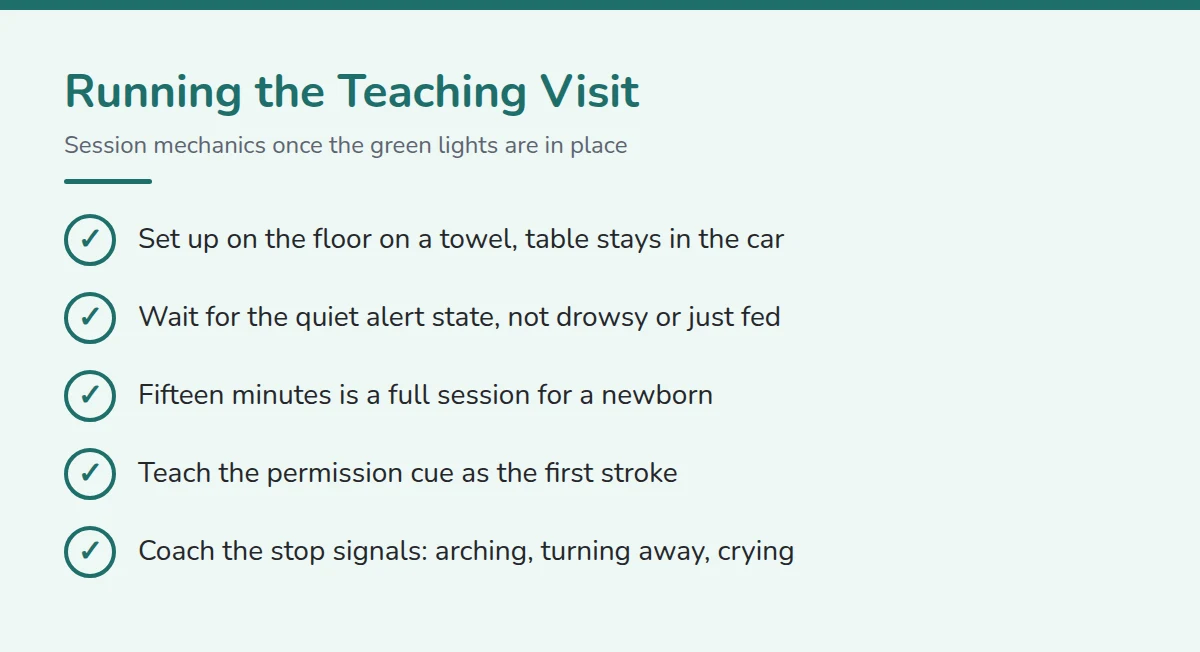
Leave the table in the car for this part. Infant massage happens on the floor, on a towel or a blanket, with the parent sitting with the baby in front of them, and your own position is alongside, demonstrating on a doll while they work on their own child.
Timing is dictated by the baby. The window is the quiet alert state, not a drowsy baby, not a hungry one, and not straight after a feed. Fifteen minutes is a full session for a newborn and much less is fine. Teach the permission cue as the first stroke of the routine, a moment where the parent asks and waits, because that is the habit that makes this an interaction rather than a procedure.
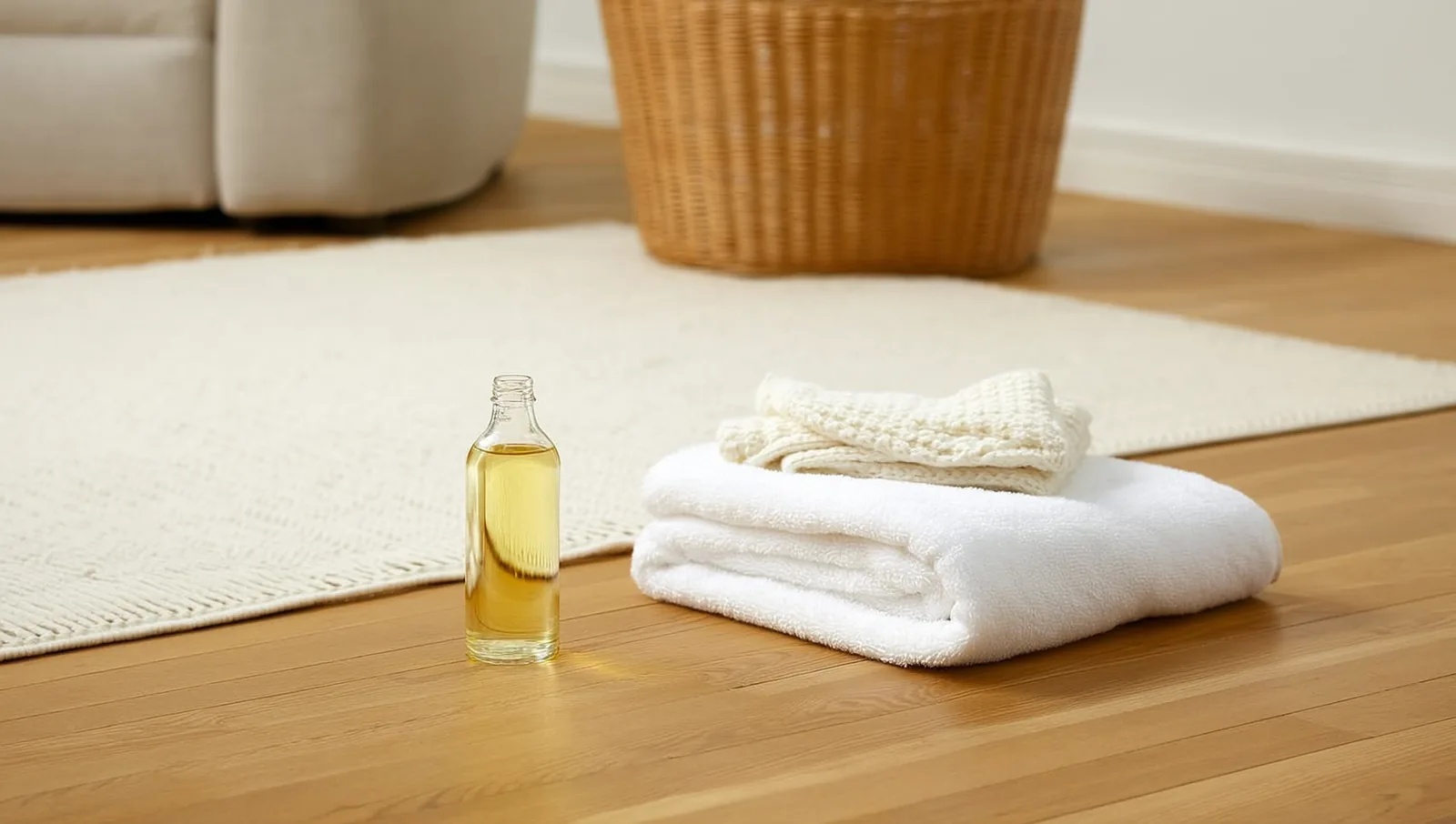
Oil choice is worth being firm about. Use a plain unscented edible oil so that whatever ends up in the baby’s mouth is harmless, patch test on a small area first, avoid nut-derived oils given allergy risk, and leave essential oils out entirely at this age.
Most of your teaching content is stop signals: turning away, splaying fingers, arching, colour change, the cry that means enough. A parent who can read those is getting the thing you came to deliver.
Pricing and Booking
The natural product is a combined postpartum visit. Sixty minutes of hands-on work for the parent, then a thirty-minute teaching block with the baby, priced as a single visit with one travel fee rather than two bookings. Against a typical mobile rate of $100 to $150 for the hour plus $20 to $50 travel, the teaching block adds roughly $40 to $75 depending on your market.
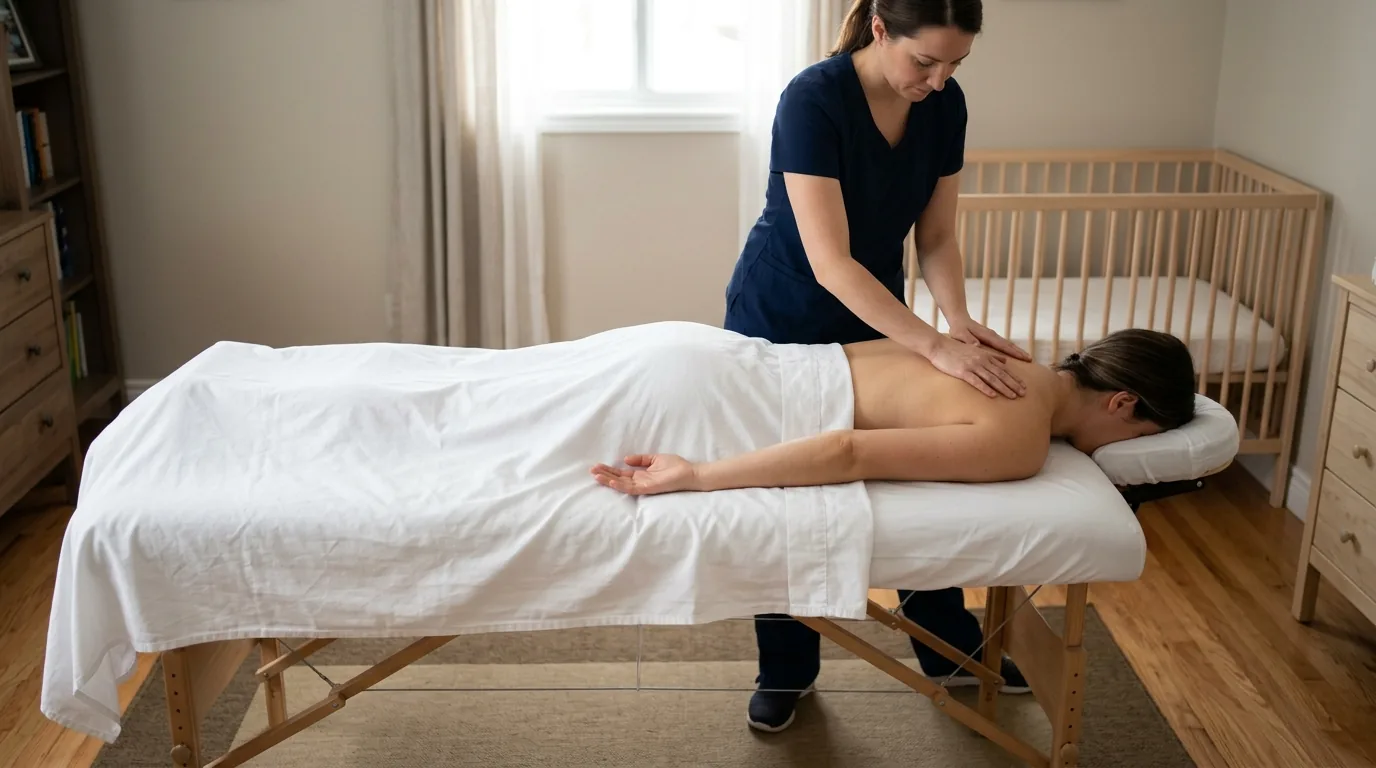
The alternative structure is the one the certifying bodies use: a series of four or five short weekly sessions, which follows the baby through real developmental change and books your calendar out a month at a time. Price the series slightly under the sum of its parts and take payment up front.
Two commercial notes. Baby showers are a genuinely strong gift-certificate occasion, and the purchaser is rarely the recipient, which is the ideal shape for gift sales. And doulas, lactation consultants, prenatal yoga teachers, and postpartum groups are the referral network here, not general advertising. Slot the service into your existing menu and pricing structure rather than running it as a separate business.
Where the Line Sits
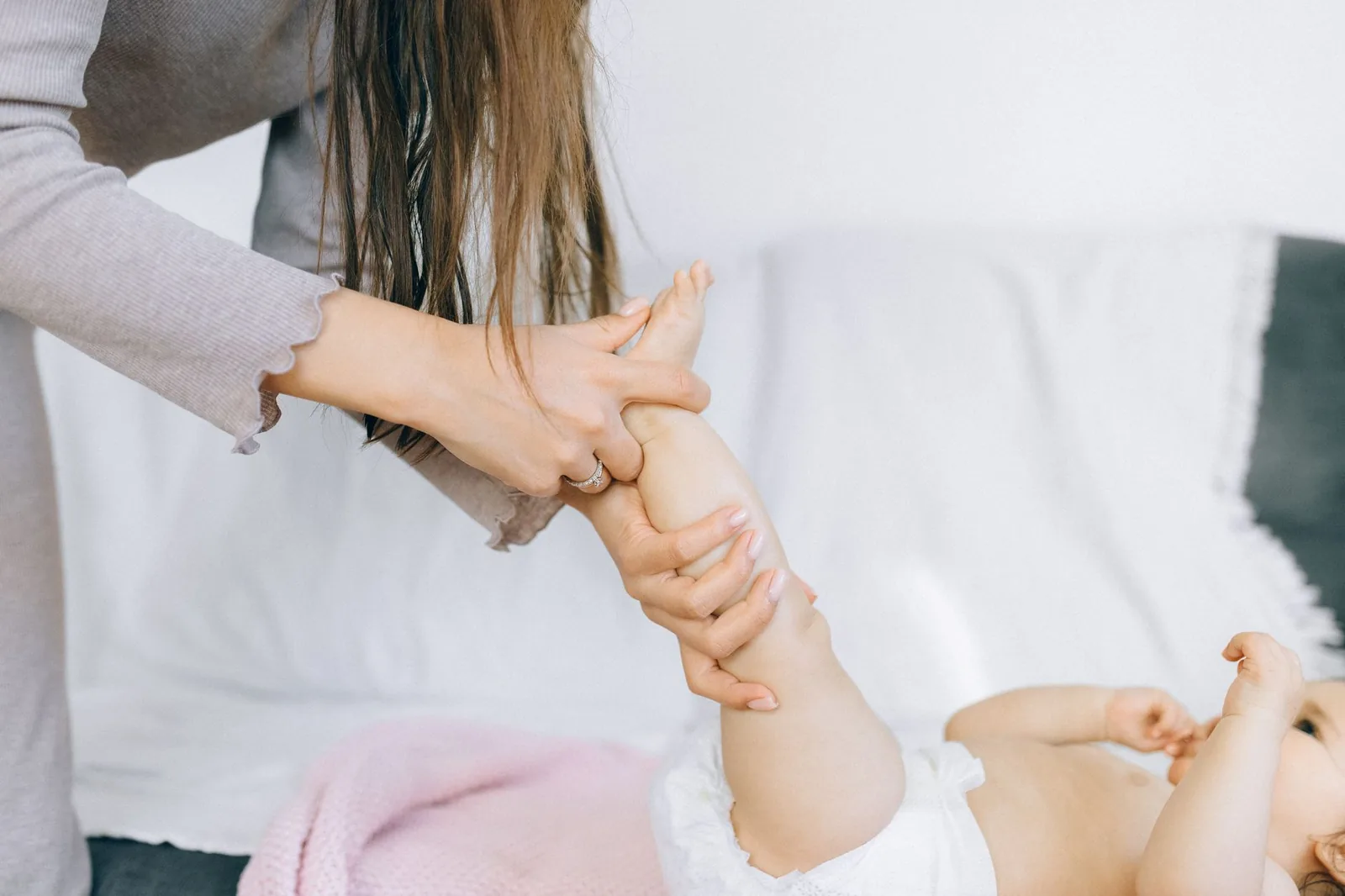
You teach. You do not diagnose, you do not treat jaundice, you do not promise weight gain, and you do not put your own hands on a neonate as a billable treatment. Held inside those limits, this is quietly excellent work: a parent who was frightened of their own baby’s fragility ends the visit with confident hands, and you leave with the household booked for next month.
Sources
- The Journal of Maternal-Fetal and Neonatal Medicine on what ten trials found about massage and neonatal jaundice
- American Academy of Pediatrics on how newborn jaundice is monitored and treated
Further reading
- State Licensing and Scope of Practice: A Mobile Therapist’s Compliance Guide
- Ethics, Consent, and Draping in the Client’s Home: A Professional Boundaries Guide
- Building Your Mobile Massage Service Menu: A Modality-by-Modality Guide
- What the Research Actually Says About Massage: An Evidence Guide for Clients
- What It Really Costs to Become a Mobile Massage Therapist
- NCCIH on what the research says about massage therapy
- NCCIH for the evidence review on massage therapy for health