Ethics, Consent, and Draping in the Client's Home: A Professional Boundaries Guide
Published on August 29, 2026
When You Are the Only Policy in the Room
A clinic provides scaffolding you barely notice until it is gone: a front desk that sees who comes in, a colleague behind the next wall, a draping policy on the break-room noticeboard, a manager who fields the complaint if one arrives. Walk into a client’s living room with a table under your arm and every one of those layers disappears. The only person who will ever audit the session is you.
That is the argument for treating ethics as a written protocol rather than a personal disposition. Good intentions are not a system. What follows is the conduct side of mobile practice: what the client is entitled to, what you owe them, and how you prove afterwards that you delivered it. It is the mirror image of the personal safety protocol that protects you on a house call, and a serious practice needs both.
Informed Consent Is a Conversation, Not a Signature
A signed intake form is evidence that consent happened. It is not the consent itself. Genuine informed consent means the client understands, before you touch them, what the session involves and what their options are inside it. Cover five things out loud at the first appointment, in plain language, while they are still standing up and fully clothed:
- The plan. What you intend to work on and why, described without diagnostic claims.
- The areas. A full-body session in your vocabulary may not match theirs. Name the regions.
- The draping process. What they remove, that they undress in private, that they stay covered throughout, and how you will move the sheet.
- The pressure. What you are aiming for, and that adjusting it is a normal request rather than a complaint.
- Their control over all of it. They can change their mind about any area, at any point, without explaining themselves.
Then get specific consent for anything the general plan does not obviously include. Gluteal work, abdominal work, assisted stretching, work near the upper chest wall or inner thigh, and any technique they have not had before all need their own explicit yes on the day. Consent given in March for glute work does not carry forward to August, and a client who nods along to “full body” has not agreed to anything in particular.

The Right to Withdraw It Mid-Session
Consent that cannot be revoked is not consent. Either party can end a session at any moment, for any reason, and neither owes the other a justification. The practical problem is that a person lying face down under a sheet in their own home, having already paid you, is in a poor position to assert that. Plenty will decide it is easier to endure the last twenty minutes than to speak.
So build in the exits yourself. Say at the start that stopping is always available and costs nothing, and ask questions that make “no” easy: “do you want me to stay here or move on?” invites a real answer in a way “is that okay?” does not. Read the body when the words are absent, because flinching, breath-holding, stiffening under your hands, or a leg that keeps drifting away are all refusals. This is the same discipline that governs dementia-aware consent in aged care work and consent at the end of life when speech has gone, applied to a client who simply finds it hard to interrupt you.
If a client asks you to stop, stop immediately, redrape, and step back from the table before you discuss anything. Then honour it without visible disappointment. A therapist who sighs, goes quiet, or negotiates has taught that client that withdrawing consent carries a social cost, and they will not do it again.
Draping, Position by Position
Draping is the most visible ethical standard you have, and clients read it as a proxy for everything else. The rule underneath every variation is simple: only the region being worked is uncovered, everything else stays covered, and the genitals and gluteal cleft are never exposed at any point in any position. Breast tissue stays covered on female clients except where state law, specific training and separate written consent all align, which for most mobile practitioners means it stays covered.
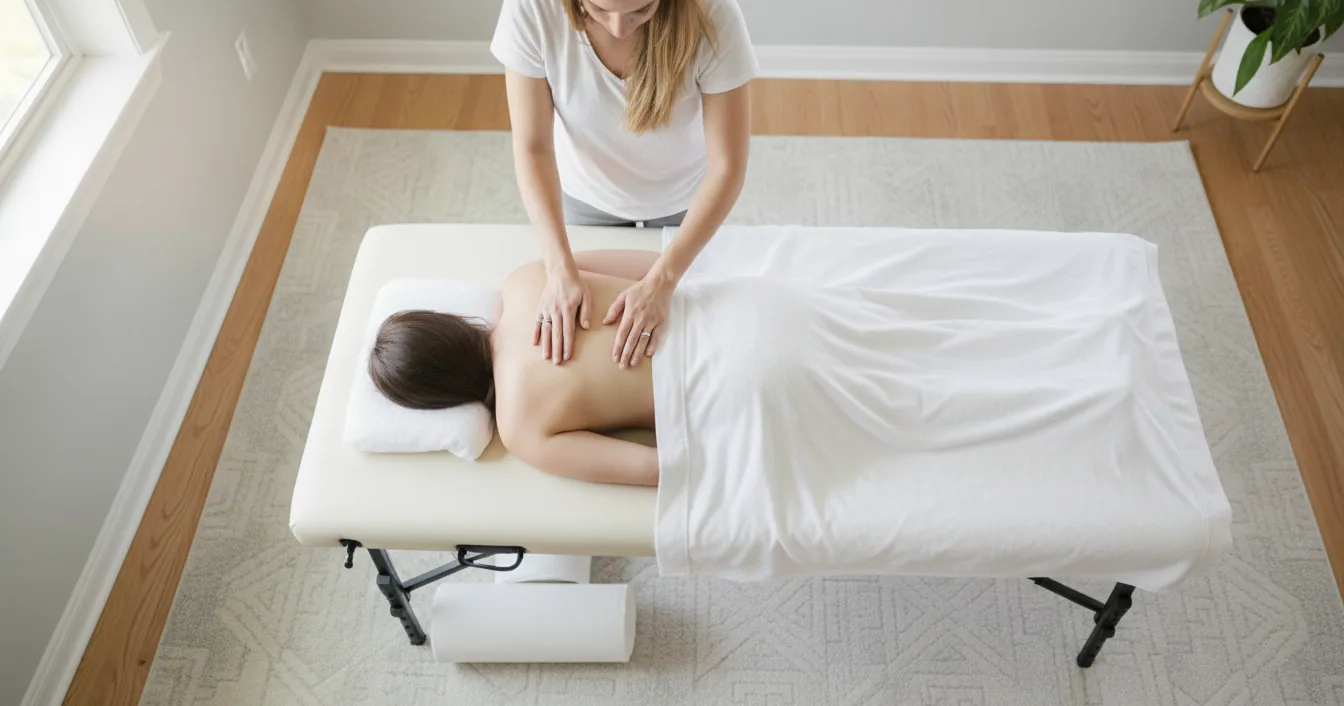
Prone. Sheet across the whole body. Fold down to the sacrum for back work and no further. For a leg, undrape one leg only, tuck the sheet under the hip and along the full length of the thigh so it cannot slide, then redrape before you move to the other side.
Supine. Anchor the sheet at the shoulders before the client turns. For anterior leg work, secure the medial edge high on the inner thigh with a tuck, not with tension from your hand. For abdominal work, use a separate chest drape held in place by the client while you fold the main sheet down.
Side-lying. The position most likely to fail, and the one prenatal clients spend most of the session in. Pull the sheet taut behind the back and tuck it under the underside hip and shoulder so the front stays closed when the top leg comes forward onto a bolster.
Turning over. Hold the sheet up as a screen, look away, and let the client roll underneath it themselves. Never lift the drape to look at what you are about to work on.
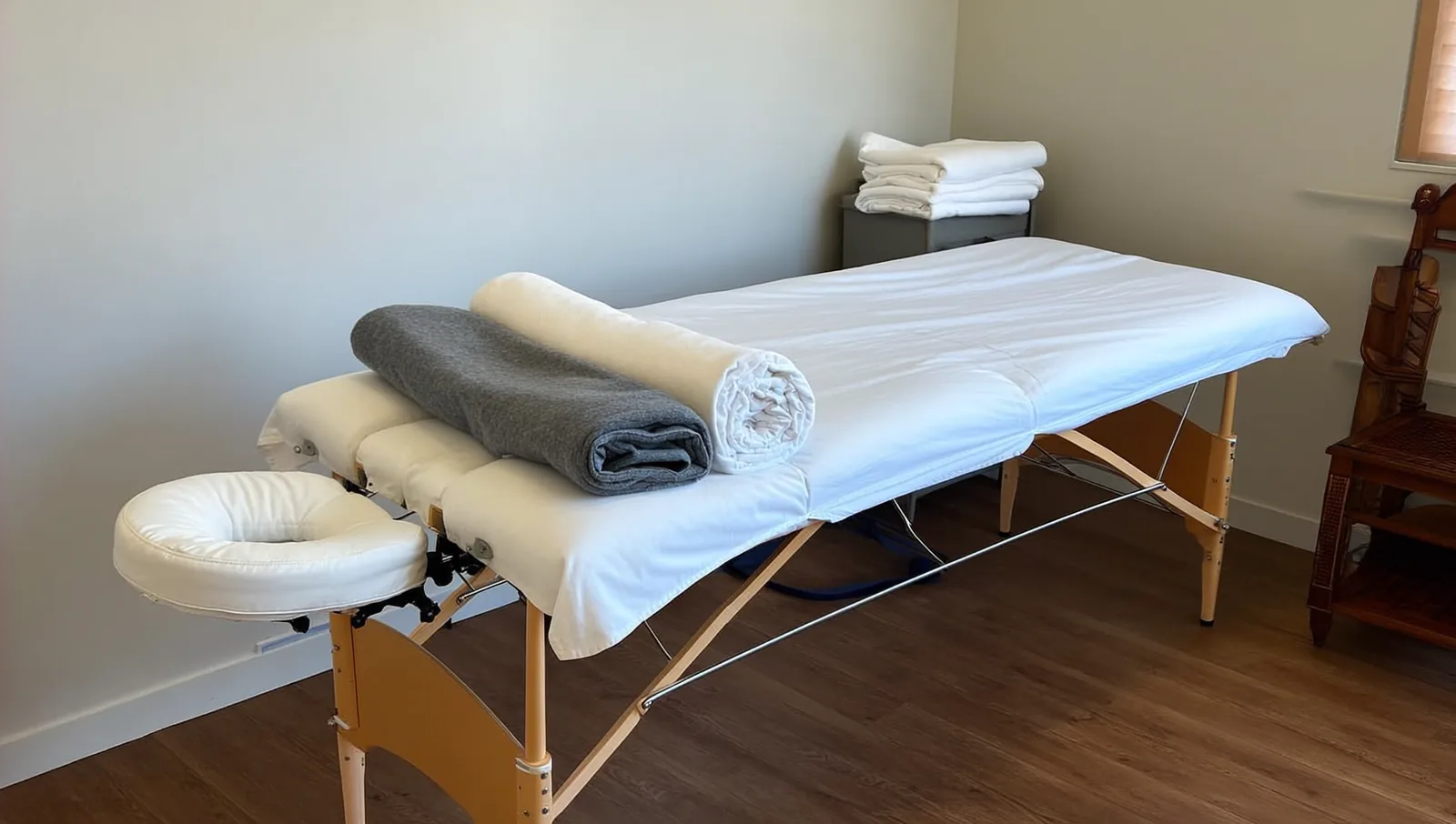
The mobile wrinkle is that you are working in a room nobody designed for this. Bring your own laundered linens rather than using a client’s bedding, carry enough to change fully between clients, and pack extra bolsters and a blanket, because a house runs colder than a treatment room and a cold client tenses up. Our equipment guide covers the sheet and bolster systems that survive four turnovers a day out of a car boot. Ask about a room that closes, and if the only option is open-plan with family walking through, resolve it before you set up or offer seated clothed work instead.
Documentation Is an Ethical Act

Notes are how a professional judgement survives contact with a complaint eighteen months later. Record what the client requested, the consent you obtained and for which areas, what you did, what you avoided and why, and anything that ended the session early. Keep the language factual and free of diagnostic labels. “Client reported 6/10 neck pain, consented to upper trapezius and suboccipital work, declined glute work” is a record. “Client has a disc issue” is a scope violation in your own handwriting. Store notes securely, keep them as long as your state requires, and treat what you learn inside somebody’s house as confidential in the way their medical history is. In a mobile practice that covers what you saw as much as what they told you.
Reporting Misconduct, Including Somebody Else’s
Every client should know the route, and most do not. Misconduct by a self-employed mobile therapist is reported to the state massage therapy board, which holds the licence and the power to suspend it, and to the booking platform if one was involved. Anything criminal goes to the police as well, and the two processes run independently. Boards publish complaint forms and licence lookup tools on the same site, which is also where a client can verify anyone before booking.
The harder obligation runs the other way. If you learn that a colleague is violating boundaries, reporting it is part of the job rather than an optional act of courage. Investigations have repeatedly turned up therapists still booking in-home appointments after a suspension, because nobody outside the incident said anything.
Dual Roles and the House You Are Standing In
Dual relationships are the quiet failure mode of solo practice, and mobile work accelerates every one of them. You are not in a neutral clinic room. You are in their kitchen, meeting the dog, learning the family’s business by accident, being offered a glass of wine and a place at the table. Warmth is not the problem. Drift is.
Draw the lines before you need them. Decide in advance whether you treat close friends and family at all, accepting that if you do you will be a worse practitioner for them, because neither of you can be honest about pressure or non-compliance. Do not barter, which converts a professional exchange into an open-ended obligation. Decline gifts beyond nominal value, and do not drink alcohol in a client’s home. Do not become the person they process a divorce with, since counselling sits outside your scope of practice even when the client is willing and the room is quiet.
Social media deserves its own rules, because it is where mobile boundaries usually break first. Never photograph a client, a client’s home, or anything identifying inside it, and never post a testimonial that lets a local reader work out who it is. Do not follow clients back or move a booking conversation into personal messaging, where the tone slides quietly out of professional register. Keep booking in software, and answer during business hours.
Scope of Practice Is Ethics With a Legal Edge
The last boundary is the one clients push on hardest, usually with good intentions. Someone points at a hip and asks whether it is sciatica, or wants to know if they should stop seeing their physiotherapist. You cannot diagnose, prescribe, advise anyone to abandon medical care, or claim to fix or cure anything.
Have the sentences ready, because the pressure to be helpful is real when it is just the two of you. “I cannot diagnose that, and I would not want to guess. We can work the soft tissue around it today, and if it is still limiting you next week that is worth a medical opinion” is honest, useful and in scope. The distinction that keeps you out of trouble is between fixing and facilitating: describe what you did and what you noticed, not what condition the client has.
None of this is bureaucratic. Ethics complaints against massage therapists rarely concern poor technique. They concern the moment when a personal instinct quietly overrode a professional standard, in a room with no witnesses. Writing your standards down before that moment arrives is the whole of the work.
Sources
- Massage Magazine on what scope of practice permits, and where documentation and consent fit
- SheKnows for what a normal massage involves and how a client reports misconduct
- American Massage Therapy Association with continuing education on healthy boundaries and ethical decision-making
- American Massage Therapy Association on intake forms, SOAP notes and practice templates
Further reading
- Personal Safety for Mobile Massage Therapists: A Comprehensive Protocol
- State Licensing and Scope of Practice: A Mobile Therapist’s Compliance Guide
- Mobile Massage in Aged Care: Bringing Wellbeing Home to Seniors
- Hospice and Palliative Massage at Home: A Mobile Therapist’s Guide
- The Mobile Massage Equipment Buyer’s Guide: Tables, Chairs, and Everything In Between