What It Really Costs to Become a Mobile Massage Therapist
Published on September 12, 2026
Nobody Quotes You the Whole Number
Ask a massage school what it costs to train and you will get a tuition figure. That figure is real, and it is also perhaps two thirds of what you will spend before your first client pays you. The rest arrives in small instalments that never appear in a brochure: an exam fee, a fingerprint appointment, a licence application, an insurance policy, a table you have to carry, and a set of linens you will wash more often than your own bedding.
Prospective students routinely budget for the first number and get ambushed by the second. This guide totals both. Where a figure is published and current it is stated plainly; where it genuinely varies by state and school, it is given as a range with a note to verify it locally, because massage is regulated state by state and there is no national price list. If you want the sequence of steps rather than the cost of them, our complete career-entry guide from massage school to licensed mobile therapist walks the path itself.
Tuition Is the Big Line, and It Moves the Most
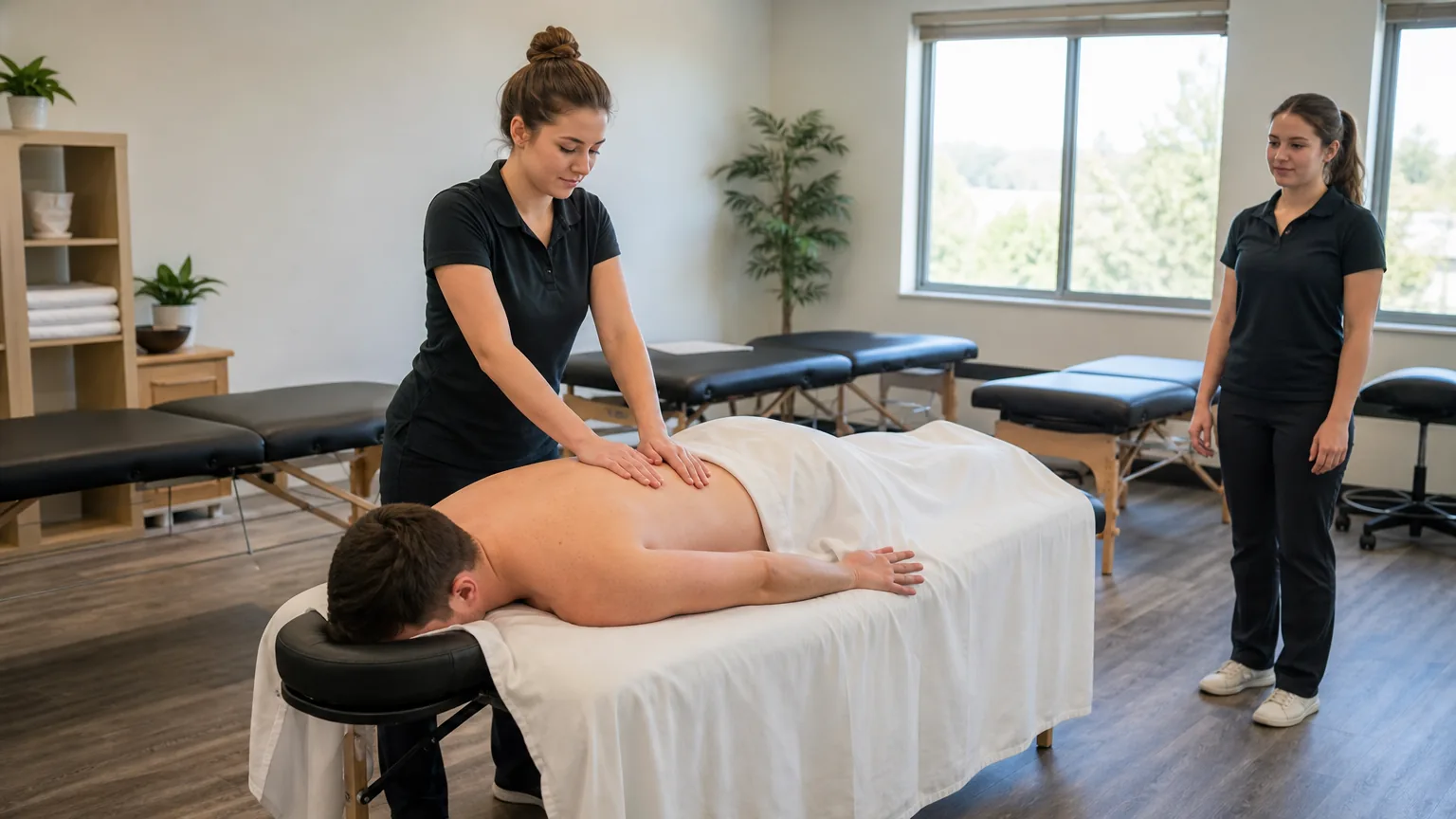
Entry-level training is measured in supervised in-class hours. AMTA School Members commit to a minimum of 500 in-class hours, and that 500-hour mark has become the practical floor for the profession. Plenty of states require more, and some programs run 600, 750 or 1,000 hours to clear a particular state’s bar or to bundle extra modalities.
Hours drive price, and so does the kind of institution. A community college or technical college program is usually the cheapest route to a licensable credential. A private career college costs more, sometimes considerably more, and often justifies it with faster completion, evening scheduling, or a student clinic that runs real appointments. Across both, a 500 to 750 hour program commonly lands somewhere between about $6,000 and $18,000 in tuition, with longer or premium programs climbing past $20,000.
Two cautions before you compare quotes. First, ask what tuition actually includes, because textbooks, an anatomy atlas, a student kit, a uniform, and the school’s own lab fees are sometimes extra and can add several hundred dollars. Second, and more important than price, confirm in writing that the program’s hour count qualifies you for licensure in the state where you intend to practise. A cheap program that leaves you 100 hours short of your own state’s requirement is not cheap.
The Fees Between Graduating and Working Legally
Graduation does not make you employable. A short series of fees stands between a completed program and a licence you can legally practise under, and they come due in quick succession at the exact moment tuition has drained your savings.
The Massage and Bodywork Licensing Examination, used by most states and administered by the Federation of State Massage Therapy Boards, carries a registration fee of $265 at the time of writing. Budget for the possibility of sitting it twice. A retake is a full fee, not a discount, and building a second attempt into the plan is realism rather than pessimism.
Then comes the state itself. Licence application fees vary widely by jurisdiction and commonly fall somewhere between roughly $50 and $300. Nearly every state requires a criminal background check with fingerprinting, typically another $30 to $100 through an approved vendor. Several states add a jurisprudence exam on their own statutes, usually for a modest additional fee. Some cities and counties then layer a local permit on top of the state licence, which catches mobile therapists more often than clinic staff because you may be working across several municipalities. Our state licensing and scope of practice compliance guide covers how to verify what your own board and county require before you are surprised by it.
Call this whole stage $400 to $700 for most people, and understand that none of it is optional.
Insurance Is the Cheapest Line You Cannot Skip
Professional liability insurance is non-negotiable for every practising therapist, and it stops being someone else’s problem the moment you leave an employer’s policy behind. A mobile practitioner also wants general liability for the ordinary accidents of working inside other people’s homes, a knocked-over lamp or a cracked tile under a loaded table.
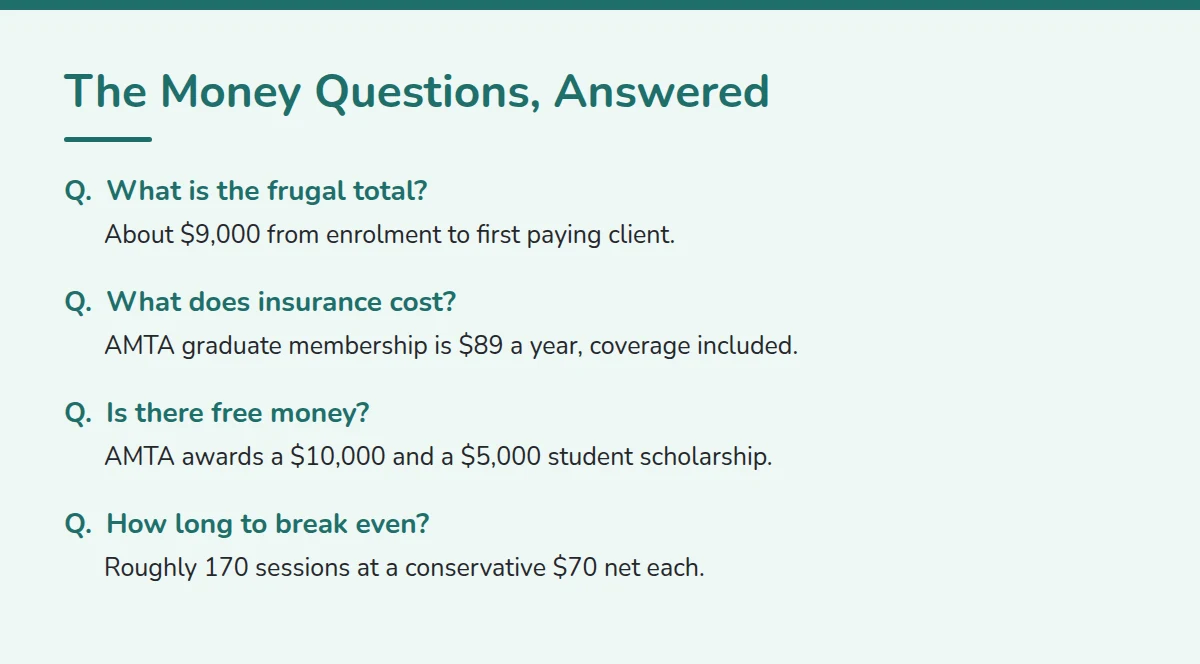
The good news is that this is the line item where a new therapist is treated most generously. AMTA professional membership runs $235 a year, or $20 a month, and bundles A-rated liability insurance with more than fifty other benefits. The graduate rate is $89 a year, or $8 a month, which is what most people reading this will actually pay in their first year out. Student membership, for anyone enrolled in a supervised entry-level program of 500 in-class hours or more, is free, and it includes the study tools you would otherwise buy. Association membership is almost always the cheapest route to coverage for a solo practitioner, and members also save up to 40 percent on continuing education, which matters later when renewal hours come due.
The Mobile Capital Nobody Budgets For
Here is where a mobile launch diverges from a spa job. An employed therapist walks into a furnished room. You bring the room with you.
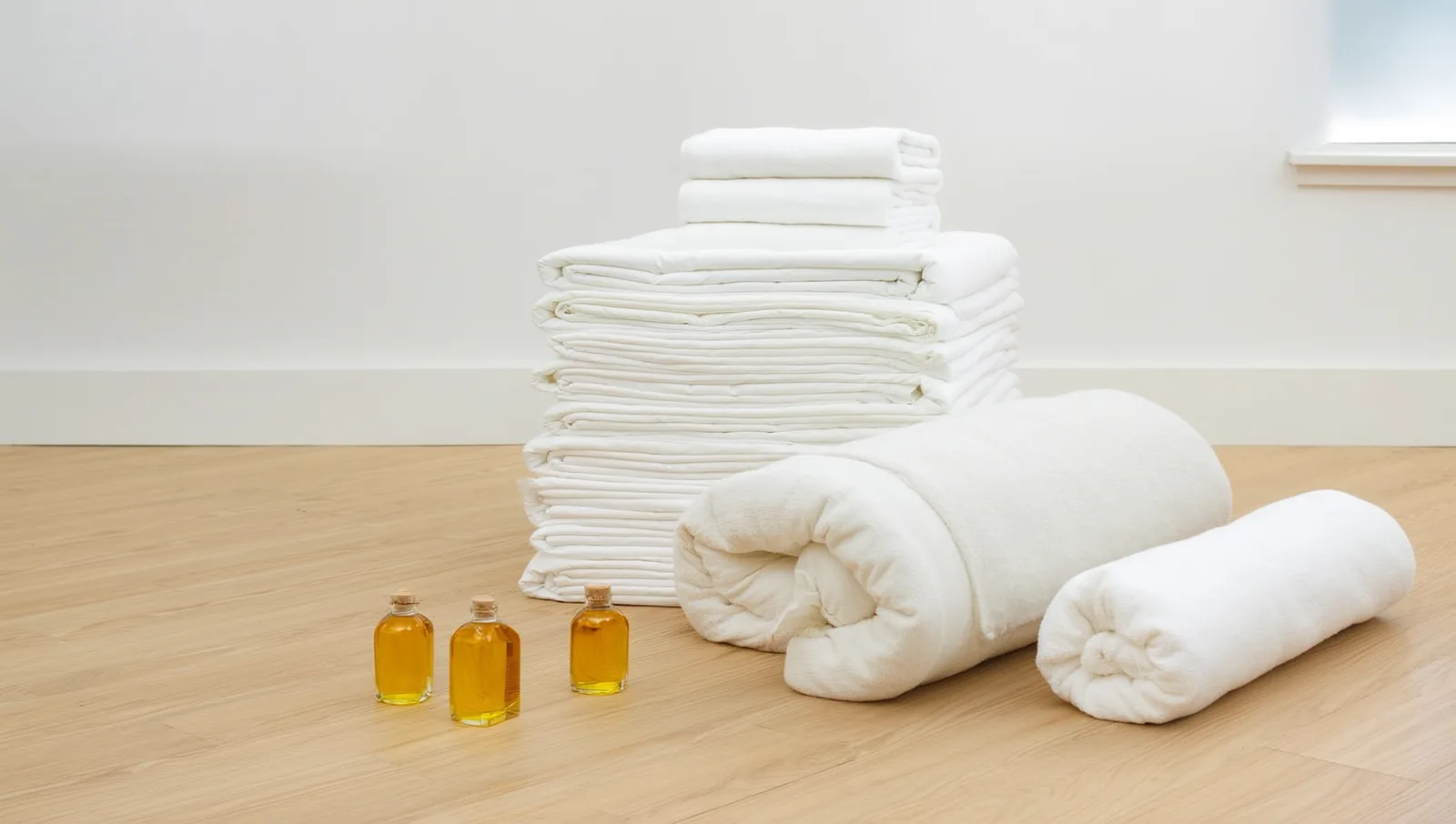
The portable table is the anchor purchase and the one worth spending on, because you will carry it, not admire it. Reliable aluminium and hardwood portables run roughly $200 to $700, and weight matters more than any feature on the spec sheet once you have taken one up three flights of stairs. Around it sits a kit that adds up faster than people expect: several full linen sets so you are never waiting on a wash, a bolster, face cradle covers, oils or creams, a carry case, and a stool. Figure $200 to $400 to start, then a recurring supply and laundry cost forever after. Our mobile massage equipment buyer’s guide covers the durability tradeoffs that only reveal themselves after fifty appointments.
Then the business layer. Forming an LLC costs a state filing fee of roughly $50 to $500 depending where you live, though a sole proprietorship costs nothing to start. Booking software that handles scheduling, reminders, intake forms and card payments in one place runs about $25 to $60 a month and is worth more to a solo owner than the few dollars saved by stitching free tools together. Add a vehicle that can actually carry the kit, fuel, and the mileage you will now be logging for tax purposes.
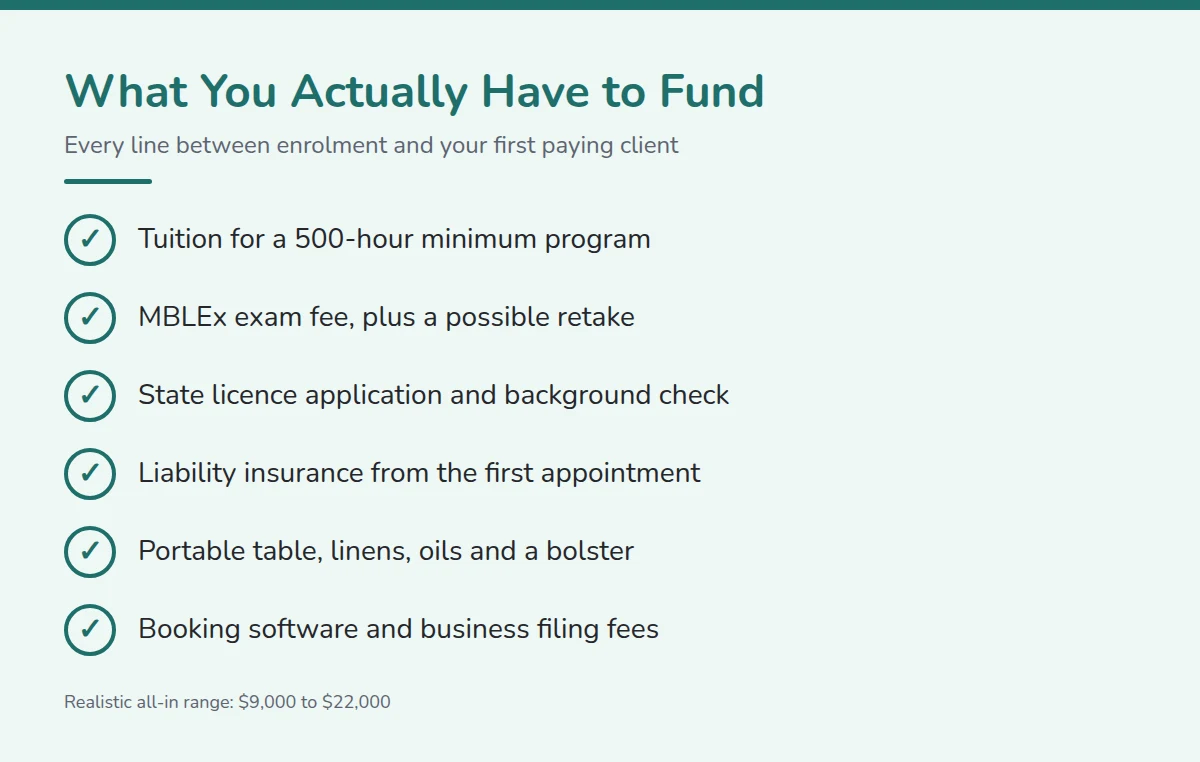
A realistic mobile startup layer, excluding the vehicle, is $800 to $1,800. Add it all up and the honest total from enrolment to first paying client sits somewhere around $9,000 at the frugal end and $22,000 or more at the premium end.
Scholarships and Aid Worth the Application
The money is not all yours to find. AMTA awards a $10,000 Rick Boden Healer at Heart Scholarship, with applications accepted until November 30, 2026 and the recipient announced in January 2027. The application is genuinely short: the form, plus a few sentences on how you plan to incorporate self-care into your practice and how that will help you promote the health of others. AMTA also runs a $5,000 Bob King Scholarship on its own annual cycle. Eligibility requires enrolment in a program that qualifies you for licensure where you live or intend to practise.
Beyond that, accredited programs participating in Title IV can offer federal financial aid, so file the FAFSA even if you assume you will not qualify. Many schools run their own payment plans, workforce development boards fund retraining in some states, and veterans should check benefit eligibility with the school directly. Free student membership and a free MBLEx study guide are small, but they are real money you do not have to spend.
The Break-Even Math
Entry cost only means something against what the work returns. Mobile sessions command more than a spa’s walk-in rate because you are delivering the service to the door, and clients weighing in-home massage against a spa, clinic or franchise are paying for exactly that convenience. Our breakdown of mobile massage pricing covers what the market actually bears in different areas.
The number that matters is not your rate but your net. Subtract travel time and fuel, supplies and laundry, card processing, insurance, software, and the self-employment tax you must set aside. What remains is often something closer to half to two thirds of the sticker price. Work an illustration with a $12,000 total entry cost and a conservative $70 net per session: recouping the investment takes roughly 170 sessions. At eight sessions a week that is about five months of steady work. At four sessions a week, closer to ten.
That spread is the real lesson. The entry cost is fixed and knowable; the payback period is entirely a function of how quickly you fill a calendar, which is a marketing problem rather than a money one. Plan for a slow ramp, keep a cushion for the months before the book fills, and treat the first year as an investment that is still being made. Our first-year roadmap for launching a mobile practice covers the part that actually determines your answer.
Budget the whole number, not the tuition. The therapists who struggle in year one are rarely the ones who paid too much for school. They are the ones who discovered the other $3,000 after they had already spent everything.
Sources
- American Massage Therapy Association on finding a school and the 500 in-class hour standard
- AMTA for the Rick Boden and Bob King student scholarships and how to apply
- Federation of State Massage Therapy Boards for MBLEx registration, fees and the application process
Further reading
- From Massage School to Licensed Mobile Therapist: The Complete Career-Entry Guide
- Launching a Mobile Massage Business From Scratch: Your First Year Roadmap
- The Mobile Massage Equipment Buyer’s Guide: Tables, Chairs, and Everything In Between
- Understanding the Price Range of Mobile Massage Services
- State Licensing and Scope of Practice: A Mobile Therapist’s Compliance Guide
- NCCIH on what the research says about massage therapy