Mobile Massage in Aged Care: Bringing Wellbeing Home to Seniors
Published on May 29, 2026
Why Aged Care Is Becoming a Mobile Massage Niche
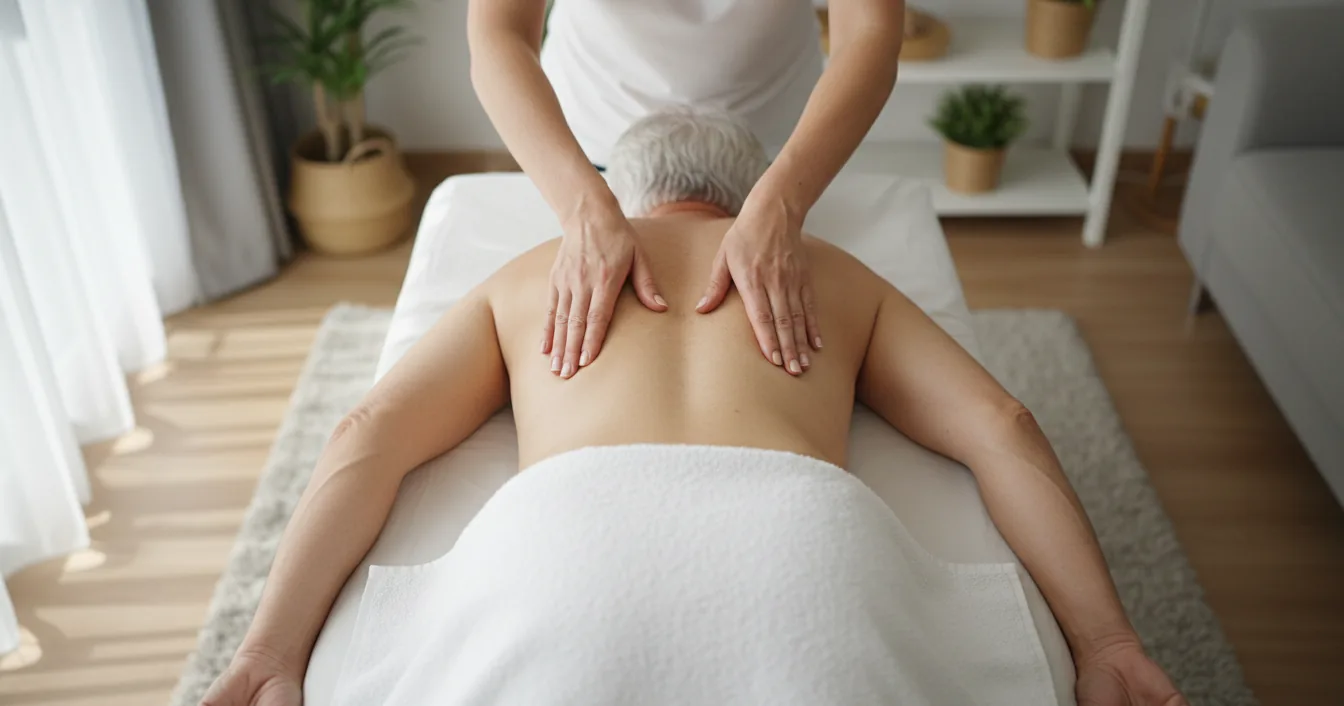
The fastest-growing demand for in-home massage comes from a group that can no longer easily get to a clinic: older adults aging in place. AMTA’s consumer research found that roughly nine million Americans over 55 received some 39 million massages in a single year, and they booked them mostly for medical reasons (pain relief, soreness, stiffness, recovery) rather than pure pampering. For a homebound 84-year-old, the barrier was never desire. It was the drive, the parking, and the waiting room. Mobile massage erases that barrier and brings the table to the living room.
There is a quieter reason the work matters. Social isolation is linked to higher rates of dementia, heart disease, and stroke, and homebound elders are among the most isolated people in any community. A visiting therapist is one of the few professionals who arrives with unhurried, caring touch rather than a clipboard.
Aged-care systems are starting to recognize this formally. In Australia, the Support at Home program that replaced Home Care Packages on 1 November 2025 explicitly lists remedial massage among funded in-home services. That is an international signal rather than a US rule (funding and scope work very differently here), but it points the same direction the recent NSW provider reports describe: massage is moving out of the spa and into aged care. In the United States the specialty is still wide open, with very few therapists focused on hospice, palliative, or in-home senior work. That gap is the opportunity.
What Gentle Massage Offers Older Adults
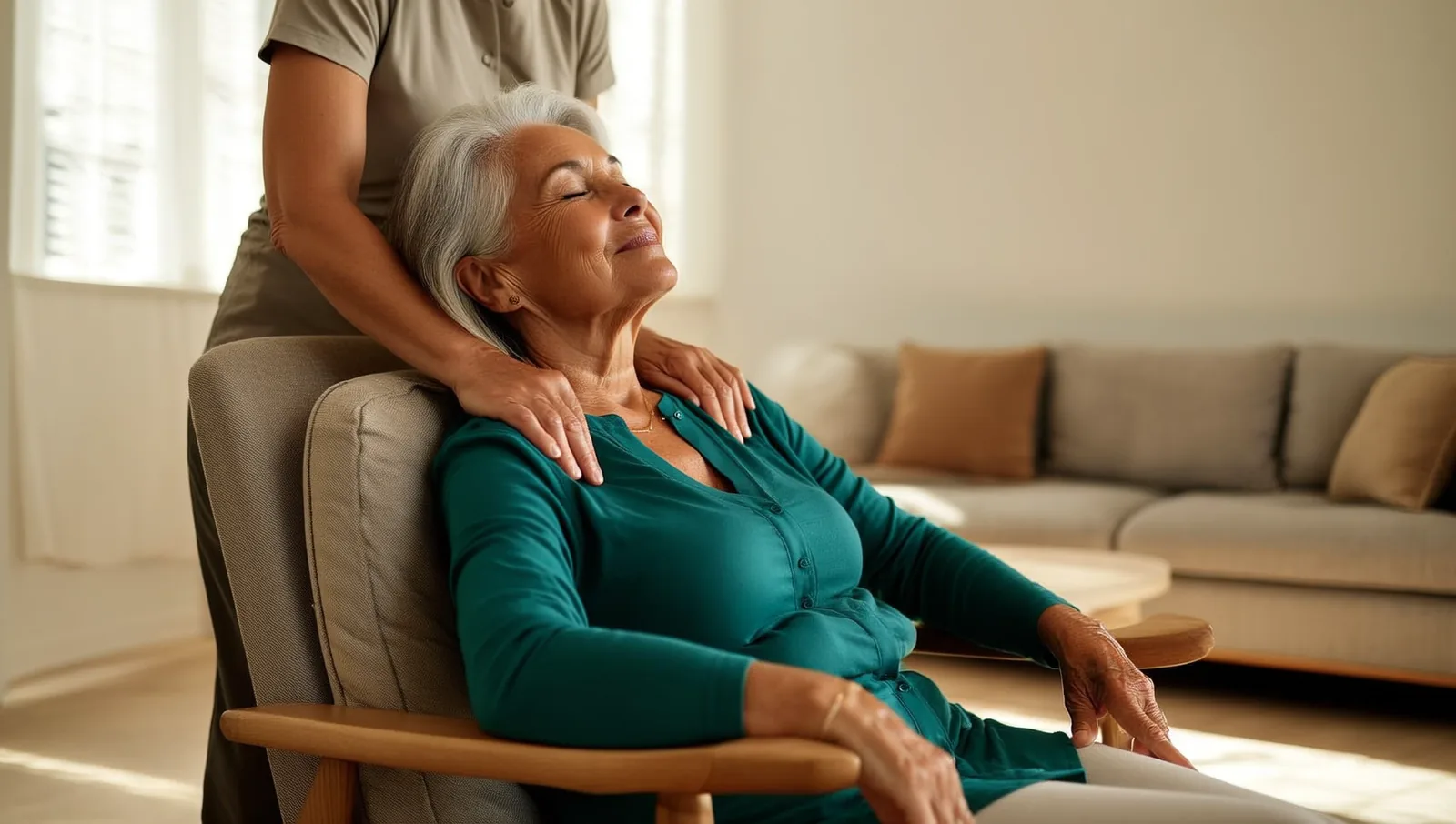
The honest case for senior massage is strong without overstating it. For arthritic joints, a randomized trial published in JAMA Internal Medicine found Swedish massage safe and effective for knee osteoarthritis, with AMTA summarizing meaningful gains in pain, stiffness, and function for adults aged 55 to 75. Sleep frequently improves. Circulation and gentle movement support mobility, and regular massage may contribute to better balance and postural control, though no honest therapist should promise it prevents falls. On the nervous system, moderate-pressure massage is associated with lower cortisol and higher serotonin and dopamine, the biochemical backdrop to reduced anxiety.
For dementia specifically, present the evidence as it is. A meta-analysis of 11 studies found that massage and touch significantly reduced overall agitated behaviors, while anxiety, sadness, and anger measured separately did not change significantly. The takeaway is real but modest: gentle massage helps people feel calmer and more settled, it does not treat the disease.
Then there is touch itself. Many people in their 80s and 90s are cared for medically but rarely touched with affection. This “skin hunger,” or touch deprivation, raises cortisol and tracks with anxiety, depression, and loneliness, and one long-term study of older adults found that more frequent physical contact predicted falling loneliness over five years, something video calls did not replicate. These are the same stress-relieving effects that make in-home sessions so restorative, delivered to the population that needs them most. One technical note worth holding onto: the measurable physiological effects depend on moderate rather than feather-light pressure, but with a very frail client, gentleness always wins. You adapt to the body in front of you.
Screening Frail Clients: The Contraindications You Cannot Skip
Advanced age itself is not a contraindication. Frailty plus several coexisting conditions is, which is why every senior session begins with a written health history, a medication review, and a skin check rather than a casual booking form. Build it on the same disciplined intake and client vetting that protects you on any booking.
Start with the one that can kill. Never massage a limb with a suspected or untreated deep vein thrombosis (DVT), because pressure can dislodge a clot that travels to the lungs as a pulmonary embolism. Learn the warning signs, which usually appear in one leg: swelling on a single side, calf pain or tenderness, warmth, red or discolored skin, and an ache that does not ease when you stretch or rub it. If you see them, stop, do not try to “work it out,” and tell the client to seek medical care right away. Sudden shortness of breath, chest pain that worsens with breathing, or coughing up blood is a 911 emergency. After a treated clot, resume only with physician clearance.
The rest of the screen follows the same conservative logic:
- Blood thinners such as warfarin make a client bruise and bleed easily. Use light pressure, skip percussion, and get physician clearance before any deep work.
- Fragile aging skin, senile purpura, skin tears, open wounds, and pressure sores are local contraindications. Work elsewhere, and never rub a bedsore or the reddened skin around it. Do not repeat the myth that massage prevents pressure ulcers, because the evidence does not support it.
- Osteoporosis calls for reduced pressure and no deep work, especially along the spine. Severe osteoporosis rules out deep work entirely.
- With diabetic neuropathy, never apply pressure to any area the client cannot feel, and treat foot ulcers or broken skin as off-limits.
- Edema depends on its cause. Swelling from heart, kidney, or liver failure needs physician clearance before any fluid-moving work, and new one-sided leg swelling should be treated as a possible clot.
Several conditions simply require a physician’s go-ahead before you begin: recent surgery, uncontrolled high blood pressure, a pacemaker or other implant, and any active cancer or site that received radiation. When in doubt, lighten the pressure or get clearance. Be clear with every client that massage complements medical care and never replaces it. The blood-pressure studies that show a benefit used people who were not on medication, so no one should ever cut a prescription because a session left them feeling better. For comfortable positioning on a frail body, the right portable table and bolstering matter as much as your hands.
Dementia-Aware Intake and Consent
A dementia diagnosis does not erase a person’s right to consent. Capacity is specific to the decision at hand and it fluctuates, so seek consent for something as low-risk as a hand massage when the person is at their best, and re-confirm willingness at the start of every visit rather than leaning on a signature from weeks ago.
When a client genuinely cannot consent, get written consent from whoever is legally authorized to make health decisions (a healthcare proxy or a health-and-welfare power of attorney, not a finance-only POA) before the first session, and make every decision in the client’s interest rather than the family’s or your own convenience. Proxy consent never overrides the body in the moment. If the client pulls away, grimaces, stiffens, holds their breath, or bats at your hands, stop. They keep a veto at all times.
Adapt how you communicate, too. Approach from the front, say your name, make eye contact before you speak, use short sentences, ask one yes or no question at a time, narrate each step before you take it, and keep your voice calm. Do not argue or correct, because tone and body language carry more meaning than words as dementia progresses.
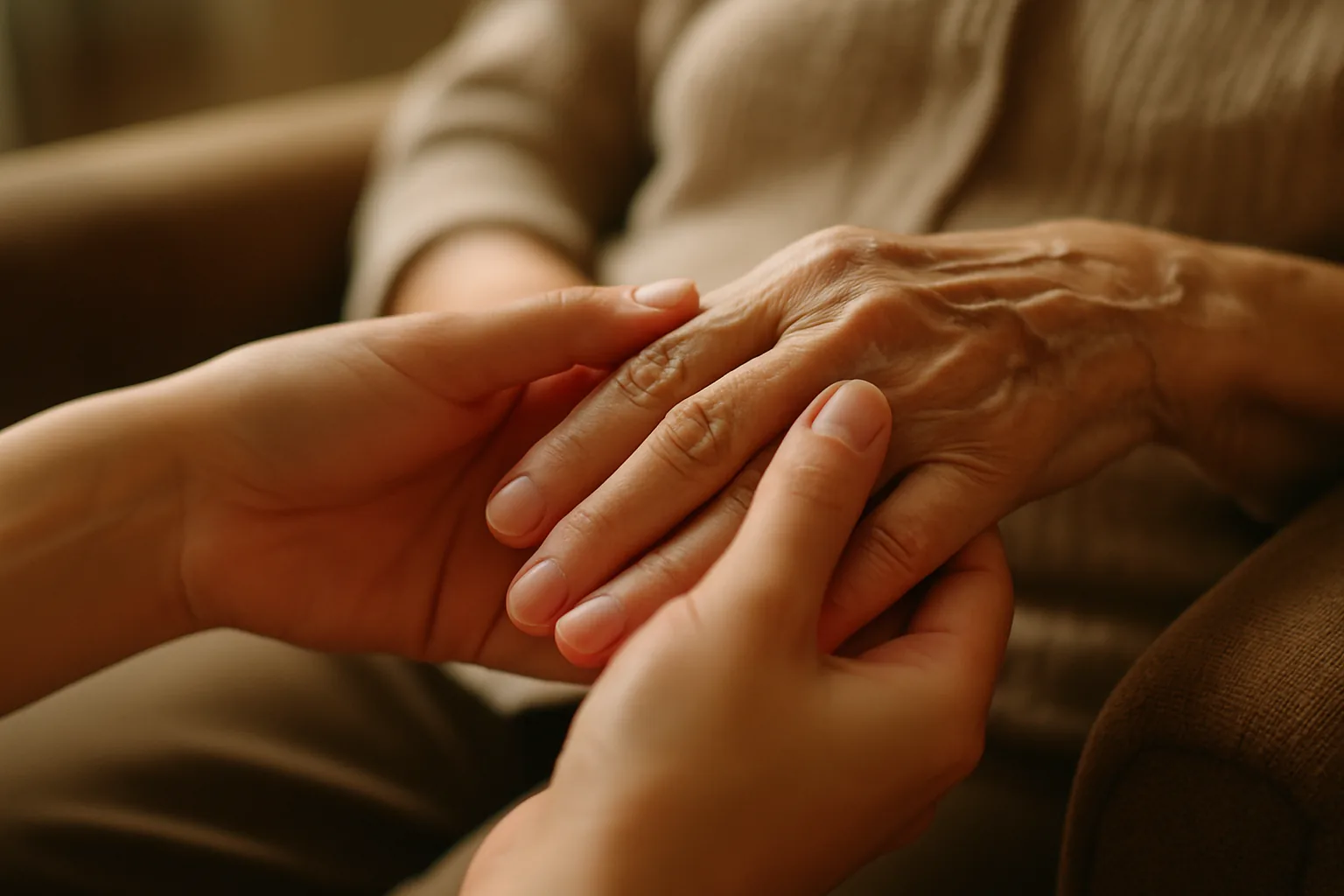
Hand massage is the best-supported and lowest-risk choice, and a simple three to ten minute routine reliably eases restless, non-aggressive agitation. Be honest that it does not reliably reduce physical aggression, so keep your movements predictable, never corner or restrain anyone, and step back if aggression appears. Keep the client clothed, which keeps consent clear, and avoid the prone position, which can be disorienting and make the face cradle feel suffocating. Because late-day confusion (sundowning) worsens with fatigue and low light, book sessions for mid-morning to early afternoon and keep the room quiet, softly lit, and free of clutter, with familiar music if it soothes.
Partnering with Home-Care Agencies and Family Caregivers
The steadiest senior referrals come from organizations already inside the home: home-care agencies, assisted-living and aging-in-place providers, and hospice or palliative teams. Because so few therapists specialize here, an LMT who shows up prepared becomes a known quantity quickly. The price of entry is functioning like a clinical team member. Keep SOAP notes, a format every discipline reads and the backbone of communicating with a client’s care team, coordinate with the care coordinator or physician, and report any new swelling, redness, or bruising you find. AMTA publishes free SOAP and intake templates to build from. How you structure travel fees and recurring session pricing matters even more in this niche, since aged-care work is usually a standing weekly visit rather than a one-off.
Family caregivers are partners as well. You can teach a spouse or adult child a basic hand-massage routine to use between your visits. A randomized trial that trained 38 caregiver and patient pairs found meaningful drops in patient agitation and depression and in caregiver stress. Keep what you teach simple and clearly separate from professional treatment, so the line between self-care and licensed practice stays intact.
Knowing the Scope-of-Practice Line
The line that protects you and your clients is bright. A licensed massage therapist does not diagnose, prescribe, or claim to treat or cure disease, whether that is arthritis, neuropathy, dementia, or heart disease. You assess, you observe, and you refer. Market senior services as relaxation, comfort, and mobility support, never as medical treatment. Licensing and scope vary by state, so the binding authority is your own state’s massage practice act, and that act is also where the line falls between licensed massage therapy and unlicensed bodywork. The Federal Trade Commission takes health claims seriously and has acted against businesses that targeted older consumers with cure-all promises, so be especially careful with testimonials.
Insurance closes the loop. Professional liability coverage is non-negotiable for every practicing therapist, and for mobile aged-care work you should confirm that the policy follows you into clients’ homes and facilities, includes general or premises liability (a slip-and-fall in a client’s living room is a real risk), and can name a partner agency as an additional insured. Vulnerable clients raise the stakes on every one of these safeguards. Building an aged-care practice deliberately, on a foundation of careful screening, honest scope, and genuine warmth, is what turns it into work that is both sustainable for you and meaningful for the people you visit.
Sources
- American Massage Therapy Association on the research behind massage for older adults
- JAMA Internal Medicine for a trial of Swedish massage for knee osteoarthritis
- Complementary Therapies in Clinical Practice with a review of how massage lowers cortisol and lifts mood
- AARP on skin hunger and the toll of touch deprivation in later life
- American Massage Therapy Association for how to adapt technique for aging bodies
- Cleveland Clinic on the warning signs of deep vein thrombosis
- UF Health with why you never massage on or near a pressure sore
- Cochrane reviewing whether massage prevents pressure ulcers
- Alzheimer’s Association on communicating with a person who has dementia
- Alzheimer’s Association for understanding and easing sundowning
- Alzheimer’s Society with how mental capacity and consent work in dementia
- Journal of Advanced Nursing on massage and touch for agitation in dementia
- Geriatric Nursing reporting a trial of caregiver-delivered massage at home
- Center to Advance Palliative Care on how massage therapists fit into a care team
- ClinicSense for the boundaries of a massage therapist’s scope of practice
- Federal Trade Commission on the rules for advertising health claims
- Myotherapy Association Australia for aged-care funding now recognizing remedial massage