What the Research Actually Says About Massage: An Evidence Guide for Clients
Published on September 9, 2026
Somewhere Between Miracle and Placebo
Most people meet massage through one of two stories. In the first, it fixes almost anything: it flushes toxins, breaks up scar tissue, resets the immune system, and stands in for the medical care you would rather not have. In the second, it is a pleasant placebo, a nice hour that no serious clinician would count as treatment. Neither story survives contact with the actual literature. There are thousands of trials and hundreds of systematic reviews on massage therapy, and the picture they paint is more specific and more useful than either extreme: real, mostly short-term benefits in a few areas, uncertain benefits in several more, and no support at all for the biggest claims. AMTA’s own position on research is that it validates the techniques that work and helps other clinicians see massage as part of a care team, and that argument only holds if the reporting is honest. This guide is the honest version, written for the person deciding whether to book, not for a journal.
How Researchers Grade an Answer
Here is the piece almost no consumer article explains. When scientists pool studies, they do not just report whether a treatment worked. They also rate how much confidence the answer deserves, usually on four levels: high, moderate, low, and very low certainty. That rating is not a grade for massage. It is a grade for the evidence, and reviewers lower it when trials are small, when results disagree with each other, when nobody could be blinded, when follow-up is short, or when the studies measured slightly different things.
The most important thing a client can know is what low certainty means. It does not mean “this does not work.” It means future research could well move the estimate. Plenty of ordinary medicine sits at low certainty too. Treating low certainty as a verdict of failure is as wrong as treating it as a green light.
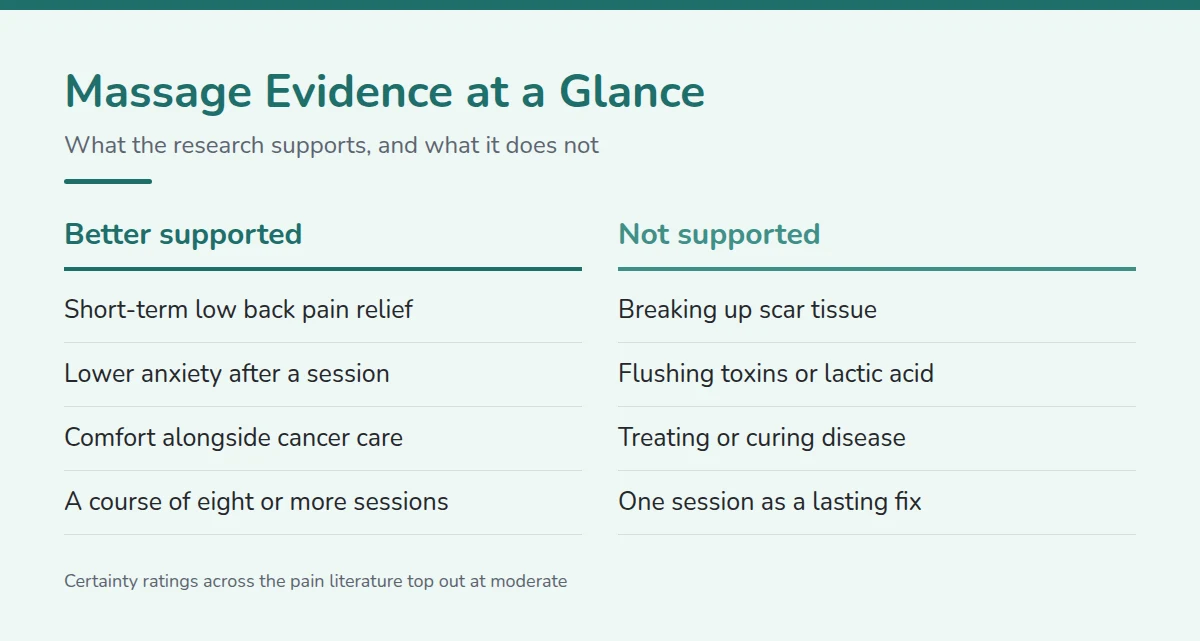
The best map of this territory is a 2024 evidence review in JAMA Network Open. Its authors found 129 systematic reviews of massage therapy for painful conditions in adults, discovered that only 41 had bothered to rate the certainty of their own conclusions, and charted 17 of those across 13 health conditions. Not one conclusion in the entire set reached high certainty. Seven reached moderate, and every one of those seven said the same thing: massage therapy is associated with a reduction in pain. Everything else landed at low or very low. That single paragraph is a more accurate summary of massage research than any brochure you will be handed.
Where the Evidence Is Strongest
Short-term pain relief, especially in the low back. Cochrane’s review of massage for low back pain pooled 25 trials covering 3,096 participants and found massage better than inactive controls for both pain and function in subacute and chronic cases. The reviewers still rated the quality low to very low, largely because these trials cannot be blinded. This remains the single best supported use, and our guide to massage as part of a pain plan goes through the condition by condition detail.
Short-term anxiety and physiological arousal. Sessions reliably lower self-reported anxiety and shift measurable markers such as heart rate variability toward a parasympathetic state. The effects are consistent, well explained by known physiology, and modest in size. Our explainer on how touch moves the nervous system covers the mechanism and is candid about where the cortisol claims have been oversold.
Symptom support alongside cancer treatment. Massage has moved into hospital and oncology settings on the strength of trials in cancer pain and anxiety, and it appears in joint integrative oncology guidance from professional bodies as an option for pain in advanced disease. It is offered as an adjunct to treatment, never as a treatment itself. The precautions matter enormously here, which is why we cover in-home oncology work separately.
Notice what “strongest” means in this field. It means moderate certainty at best, short-term relief rather than cure, and benefit measured against doing nothing rather than against another active therapy.
Where the Evidence Is Mixed
Neck pain is the clearest example. Cochrane’s 2024 review covered 33 trials and 1,994 participants and found that against a placebo, massage produced little to no difference in pain or disability out to 12 weeks. Buried in the subgroup analysis was a more interesting result: a clinically meaningful difference appeared with a higher dose of eight or more sessions. Dose is the recurring theme across the whole literature. Many trials test a single session, or two, and then report disappointment. A course of sessions is where the therapeutic argument actually lives.
Sleep quality, depression, tension headache, fibromyalgia, and post-exercise soreness all sit in this middle band. Each has positive trials behind it. Each also has small samples, protocols that vary wildly from study to study, and short follow-up. The fair reading is “promising and unsettled,” which is a legitimate reason to try something and a poor reason to promise anything.
Where It Is Thin or Absent
Claims about structure are where the field goes furthest past its evidence. Massage does not break up scar tissue, permanently realign fascia, or reposition bones. It does not flush toxins or clear lactic acid; that idea has been tested and has not held up. It does not cure disease, and no honest practitioner will tell you it treats one.
Some popular services are simply under-studied rather than disproven. Post-surgical scar work is a good example: the studies exist, but they use dozens of different outcome measures and protocols ranging from one session to daily treatment for months, so reviewers cannot draw a conclusion from them. That is a reason to describe it as comfort and mobility work rather than a proven treatment.
Why These Studies Are So Hard to Blind
Drug trials have an elegant trick available to them. Half the participants get the pill, half get an identical dummy, and nobody knows which. Touch research has no equivalent. You cannot keep a person from noticing they were touched for an hour, and you certainly cannot blind the therapist. Researchers try light-touch or sham protocols, but light touch is itself an active intervention, which muddies the comparison rather than cleaning it.
The consequence shows up everywhere. Many trials end up comparing massage against a waiting list or no treatment, which flatters the result, because attention, rest, and a warm room are doing part of the work. Head-to-head comparisons against exercise, physical therapy, or medication are rarer and less flattering, and the JAMA review noted precisely that gap. None of this is a scandal. It is a structural limit of studying something that has to be delivered by a person, and it is the main reason certainty ratings in this field stay low.
There is a subtler point worth holding onto. Expectation and the therapeutic relationship are not contaminants to be scrubbed out of massage. They are part of how it works, in the same way a doctor’s manner affects recovery. Research design has to account for them; you, as a client, do not have to apologize for them.
How to Read a Study Without a Science Degree
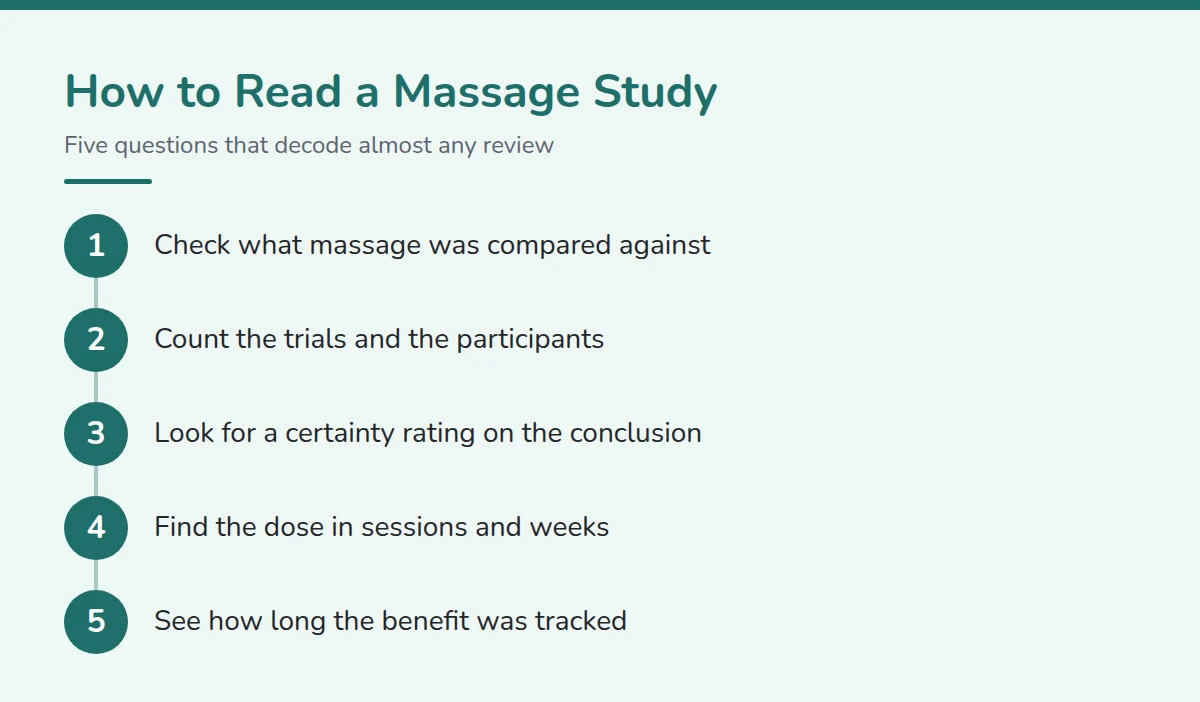
You do not need statistics to get real value out of a review’s abstract. Five questions do most of the work. What was massage compared against, since beating a waiting list is a far lower bar than beating physical therapy? How many trials and how many participants, because twelve people in one clinic proves very little? Did the authors rate the certainty of their own conclusion, which the JAMA team found most reviews had not? What was the dose, counted in sessions and weeks? And how long did anyone follow up afterward, since relief measured ten minutes after a session is a different claim from relief that lasts a month? Answer those five and you will understand a massage review better than most of the marketing written about it.
What Research Cannot Tell You
A trial reports an average across a group. You are a single person, and averages hide enormous variation: in the same study, some participants improve markedly, some not at all. No review can tell you which one you will be.
Nor can it tell you much about the therapist. Almost every study treats “massage” as one intervention, when skill, communication, and fit vary as much as they do among any group of clinicians. That variation is invisible in the literature and obvious in the room.
What you can do is run a small honest experiment. Commit to a defined course rather than a single session, since the dose findings suggest that is where change shows up. Pick one outcome you actually care about, such as morning stiffness, headache days, or sleep, and track it plainly. Set a decision point, six or eight sessions out, where you either continue on the evidence of your own notes or stop. That is not as rigorous as a trial, and it is far more relevant to you than one.
Where Physician Clearance Comes First
Reading research well does not replace medical clearance. Get a physician’s sign-off before your first session if any of the following apply: recent surgery, active cancer, a diagnosed clotting disorder or current blood thinners, uncontrolled cardiovascular disease, a complicated pregnancy, an implanted device or pump, or a neurological condition with changing symptoms. Undiagnosed pain deserves a diagnosis before it gets a treatment plan, and a good therapist will refer you rather than guess.
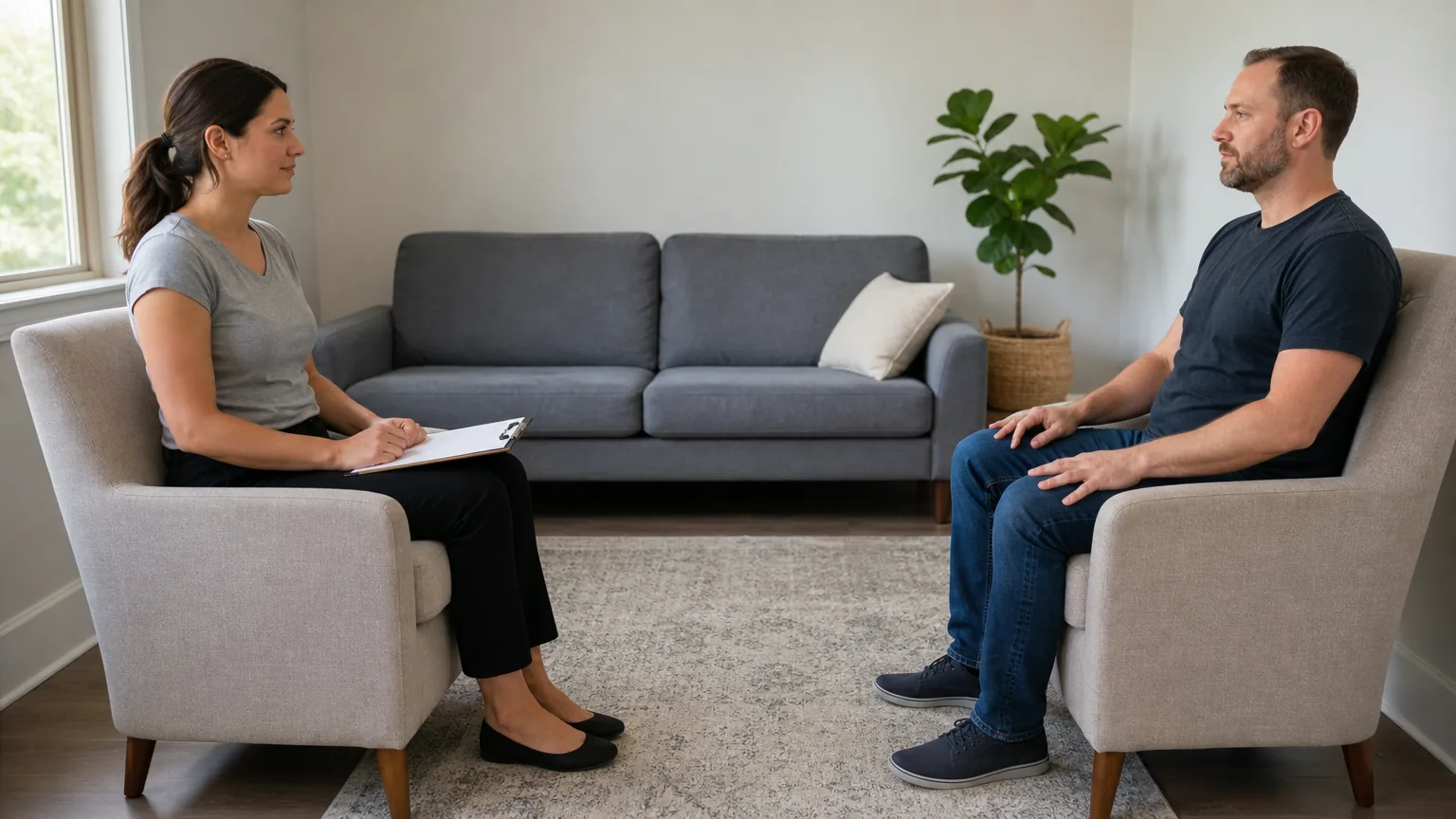
It is worth knowing where the professional line falls. A licensed massage therapist does not diagnose, does not treat disease, and does not adjust your medication, and those limits separate licensed practice from unlicensed bodywork. Exactly what a therapist may and may not do varies by state, as our licensing and scope of practice guide sets out.
What an Honest Answer Sounds Like
If you ask a therapist whether massage is proven and they say yes without qualification, you have learned something about the therapist. The accurate answer is longer and more convincing: the evidence points most consistently at short-term relief of musculoskeletal pain and anxiety, is unsettled in several other areas, does not support structural or detox claims, and works best as an adjunct to medical care over a course of sessions rather than as a one-time fix. That answer is checkable, which is exactly what makes it worth trusting.
Sources
- JAMA Network Open on how much of the massage-for-pain literature actually holds up
- Cochrane for what 25 trials show about massage and low back pain
- Cochrane with a 2024 review of massage for neck pain and the dose effect
- AMTA on why staying current with the research matters to practice
- AMTA for the health areas where massage research has accumulated
- Society for Integrative Oncology and ASCO reviewing integrative options for pain in cancer care
Further reading
- Mobile Massage for Pain Management: Bringing Relief Home
- The Science of Touch: How Mobile Massage Affects the Nervous System
- Mobile Massage for Cancer Patients: An Evidence-Based In-Home Guide
- State Licensing and Scope of Practice: A Mobile Therapist’s Compliance Guide
- Handheld Massage Tools Worth Recommending Between Sessions: A Therapist’s Picks