Mobile Massage vs Spa, Clinic, and Franchise: How to Choose Where to Book
Published on September 11, 2026
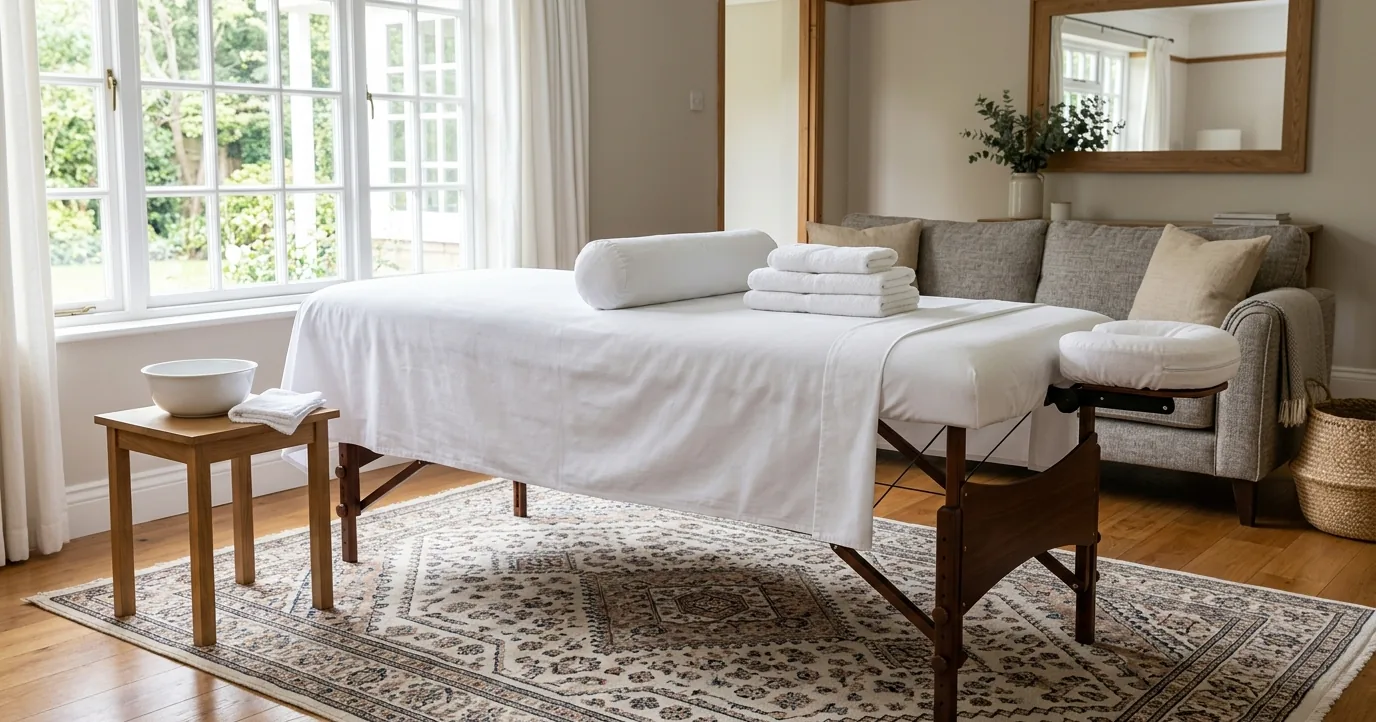
Four Doors, Not Two
Most articles on this question stage a fight between two options: the spa you drive to, and the therapist who drives to you. That framing loses the plot, because the market actually holds four distinct business models, and they are not variations on a theme. They price differently, staff differently, and are genuinely good at different things.
There is the independent mobile therapist, who arrives at your door with a portable table. There is the day spa or resort spa, where massage sits inside a larger menu of amenities. There is the clinical setting, meaning a chiropractic office, a physical therapy practice, or a medical massage clinic, where the session belongs to a treatment plan. And there is the membership franchise, the storefront chain that sells a monthly rate.
Book the wrong model for what you actually want and you will blame massage for a problem that was really a mismatch. What follows compares the four on the things that decide satisfaction: what you truly pay per hour, how much of that hour is hands-on, whether you see the same therapist twice, what the room can offer, and how you feel in the forty minutes after the session ends.
The One Difference Underneath All the Others
Everything else traces back to overhead and employment. A franchise or spa carries rent, a front desk, laundry, and a roster of therapists who are usually employees paid a fraction of the ticket price. A clinic carries all of that plus billing infrastructure. An independent mobile therapist carries a vehicle, a table, and their own insurance, and keeps the whole fee. Price, continuity, and how rushed the hour feels are all downstream of that single structural fact.
What You Actually Pay Per Hour
Headline rates make mobile look expensive and franchises look cheap. Both impressions survive right up until you work out the landed cost.
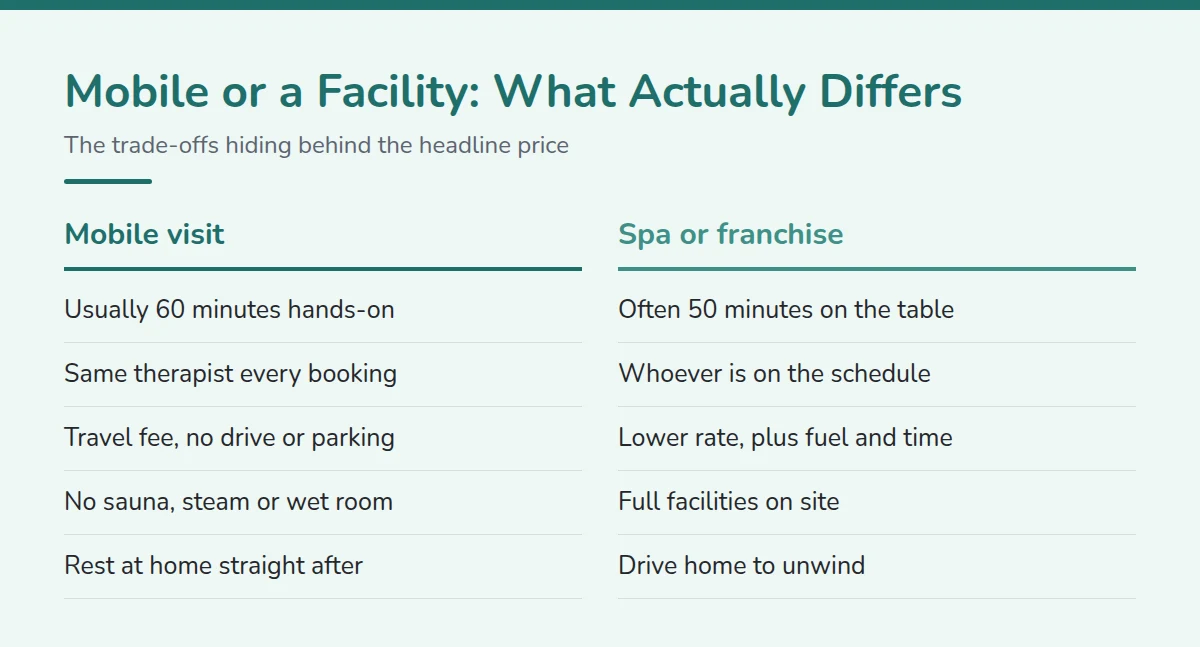
A sixty-minute mobile session typically runs between one hundred and one hundred fifty dollars, with a travel fee of twenty to fifty dollars on top. Our breakdown of mobile massage pricing goes through each variable that moves that number. A day spa often sits in the same band or above it once an automatic service charge is applied. A membership franchise advertises the lowest figure, frequently sixty to ninety dollars, but that is the member price, and membership means a monthly charge whether or not you book, credits that pile up if you fall behind, and cancellation terms people routinely underestimate. Divide a year of dues by the sessions you genuinely attended, and the honest per-hour number is usually well above the sticker.
Then add what it costs to get there. Thirty to fifty minutes of round-trip driving, fuel, city parking, sometimes a valet tip. None of that appears on an invoice and all of it is real. Gratuity is the other line people forget: fifteen to twenty percent is customary everywhere except providers who publish a no-tipping rate.
Run those numbers honestly and the gap between a home visit and a walk-in facility narrows to something far smaller than the headline suggests. It does not disappear. Mobile still usually costs more per hour than a franchise membership, and if price is the binding constraint in your decision, the membership wins on arithmetic alone. What the premium buys is travel time, which is a trade rather than a trick. The therapist absorbs the drive instead of you, and our guide to how therapists price travel zones explains where that fee actually goes.
How Much of the Hour Is Hands-On
Ask this before you book anywhere, because “sixty-minute massage” is not a standardized unit.
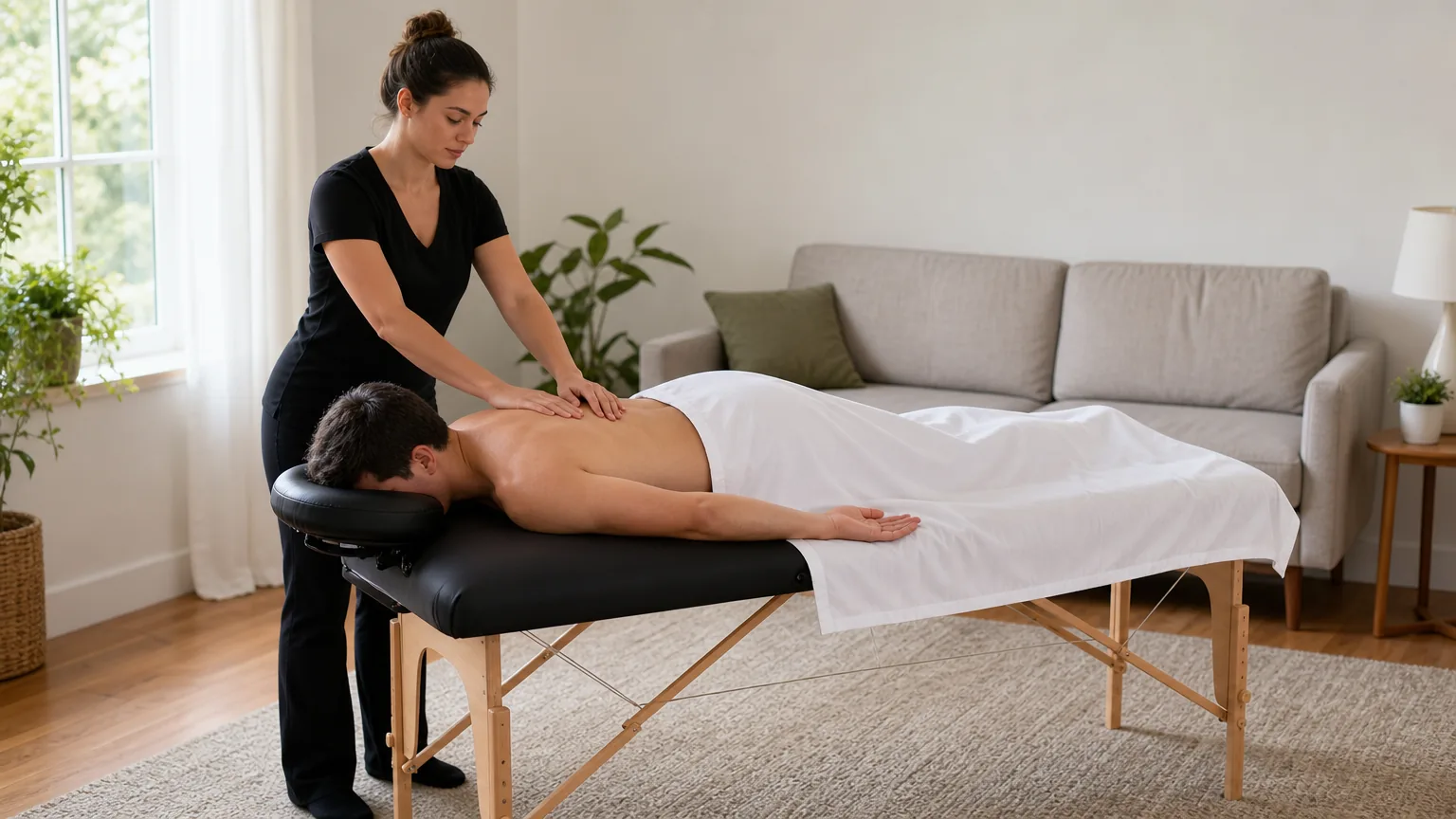
At many franchises and some spas, a sixty-minute appointment means roughly fifty minutes of table time, with the rest absorbed by consultation, changing, and turning the room over for the next client. That is not deception when it is disclosed, and it usually is disclosed, in small print. It does mean a fifty-minute session priced as an hour.
Mobile normally runs the other way. The clock starts when hands go on, because setup and breakdown happen on the therapist’s own time at either end. Ninety minutes booked is ninety minutes worked. Confirm it rather than assume it, but that is the standard. Across a course of sessions, ten extra minutes a visit is a meaningful difference in what you receive for the money.
Whether You Get the Same Therapist Twice
This is the comparison point that matters most for anything therapeutic, and the one consumers weigh least.
Storefront chains have long struggled with therapist turnover, and spa booking systems tend to assign whoever is free in your slot. Book monthly at a franchise and you may meet four different people in four visits, each starting from a blank intake form and a fresh guess at your shoulder.
An independent mobile therapist is one person for as long as you keep booking. They remember which side of your neck locks up, how you responded to more pressure last time, and that your job changed in March. For occasional relaxation this hardly matters. For a recurring problem it matters a great deal, because the research that supports massage most consistently points to a course of sessions rather than a single visit. Our guide to what the evidence actually says covers why dose keeps turning up in the trials.
Clinics land in between. Caseloads are usually assigned, so continuity is better than a franchise, though staff still change.
Privacy and the Twenty Minutes After
A good massage leaves you slow, warm, and pleasantly useless. What happens next differs completely by venue.
At a facility you dress, walk through a lobby, possibly make small talk while a card is run, then drive home in traffic. A fair share of the calm you just paid for gets spent on the road.

At home the session ends and you are already where you want to be. You can lie still, shower, or go to bed. For clients managing pain or fatigue that is often the deciding factor, which is why in-home work has grown fastest among people for whom leaving the house is the hard part.
Privacy cuts both ways. You undress in your own room rather than a shared changing area, which most clients prefer. You also let a stranger into your home, past your kitchen, and into your bathroom. Some people would rather keep the whole transaction inside a building they do not own, and that is a legitimate answer rather than squeamishness to be talked out of. What should never vary by venue is conduct. Draping, consent, and boundaries are one professional standard everywhere, and our guide to ethics and draping in the home sets out what you are entitled to expect.
Where Mobile Is Genuinely the Weaker Choice
Any comparison that finds for the author’s own service on every point is marketing. Here is where mobile honestly loses.
Amenities that will not fit in a car. No portable setup delivers a steam room, sauna, soaking tub, wet room, or the scrubs and wraps that need a drain in the floor. If you want the spa afternoon, book the spa.
Space. A table needs a clear area of roughly eight by ten feet with room to work all four sides. Studio apartments, crowded rooms, and tight stairwells make that awkward. So do dogs who want to help.
Household noise. Thin walls, children, roommates, and the doorbell all intrude in ways a treatment room does not.
Anything billed to insurance. Massage inside a chiropractic, physical therapy, or medical practice can be documented, coordinated with your treating provider, and sometimes covered by a plan or a prescription. Independent mobile work is nearly always cash pay.
Same-day availability. A franchise with a dozen therapists on shift can often fit you in this afternoon. A solo practitioner with a full book cannot.
A first massage, for the nervous. If you have never had one and the idea makes you tense, a public building with a front desk is an easier place to start.
Where the Clinic Fits
Clinical settings deserve a separate note, because people file them alongside spas and they are not the same purchase. In a chiropractic or physical therapy practice, massage is usually adjunctive to a diagnosed condition, delivered in shorter units, written into a chart, and coordinated with whoever directs your care. That coordination is the value, and neither a spa nor a franchise offers it.
The limit is worth understanding too. A licensed massage therapist does not diagnose and does not treat disease, in a clinic or anywhere else, and exactly where that scope line falls varies by state. If your issue is a specific injury, a post-surgical recovery, or persistent pain nobody has assessed, get the diagnosis first and let massage support the plan. Our guide to massage inside a pain-management plan covers how those pieces fit, and when physician clearance has to come first.
What Mobile Carries That People Do Not Expect
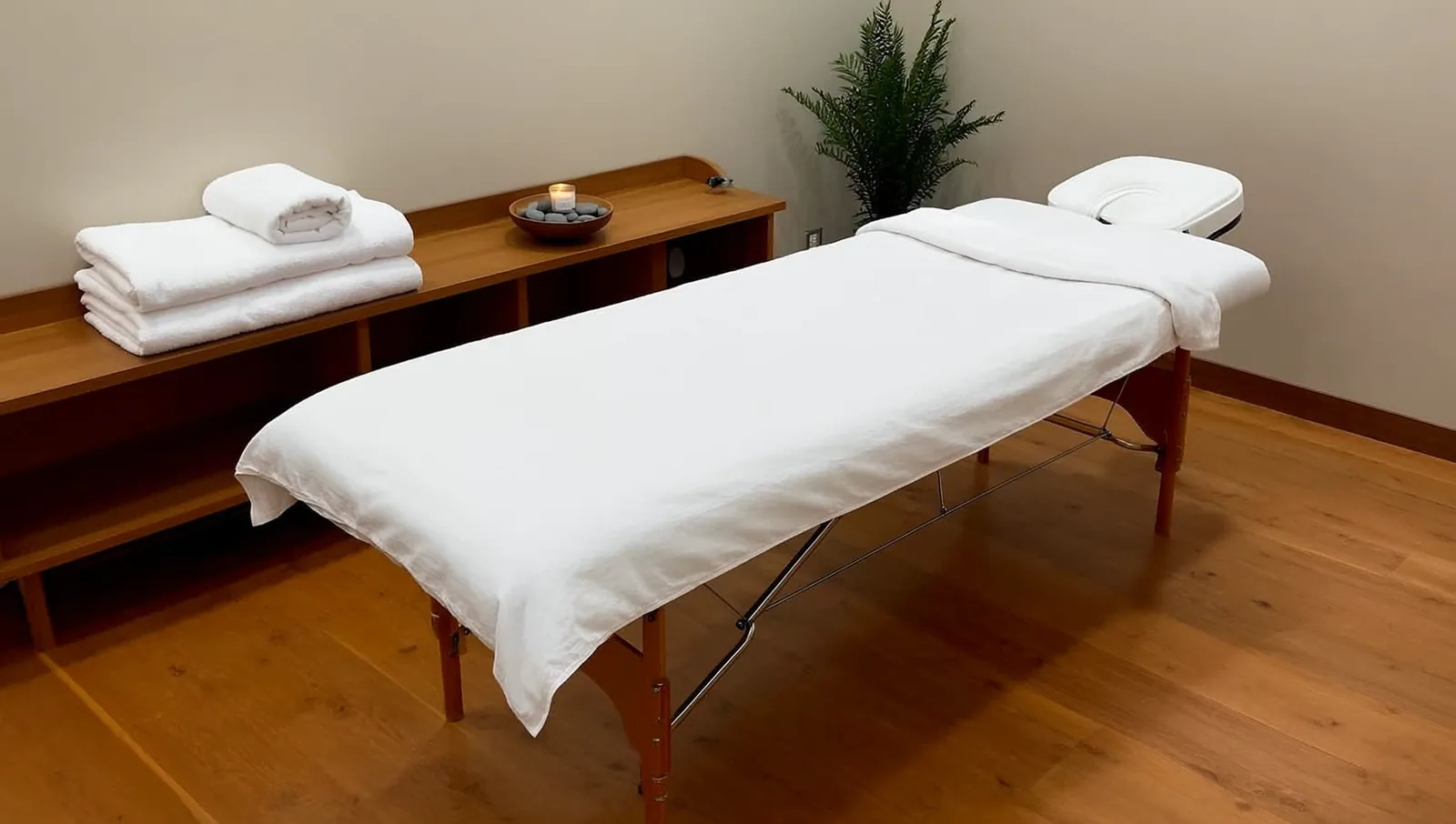
The stereotype of the home visit is a folding table and a bottle of oil, and it is out of date. Mobile menus have widened considerably over the past few years, and a well-equipped traveling therapist may offer hot stone work, lymphatic drainage, cupping, prenatal bolstering, and aromatherapy. At the far end of the spectrum, one North Carolina therapist converted a twenty-six foot bus into a full mobile studio with a private restroom and its own generator, bringing hot towels, stones, and a cupping machine to every appointment.
Breadth of menu is still a poor reason to pick a venue. Match the modality to the outcome you want, then find whoever delivers it well.
Matching the Model to Yourself
Choose mobile if leaving the house is the obstacle, if the hour afterward is part of what you are buying, if you want the same therapist every time, or if you are managing pain, limited mobility, a newborn, or a schedule with no slack in it.
Choose a day spa when the occasion is the point: a gift, a couples booking, a birthday, an afternoon where the facilities matter as much as the table.
Choose a clinic when there is a diagnosis, a referral, an insurer, or a provider who should be reading notes.
Choose a franchise if you want frequent maintenance massage at the lowest per-hour price, you will genuinely book every month, and seeing a different therapist each time does not bother you.
Plenty of people run two: a membership for routine upkeep, and a mobile therapist for the weeks when getting out is impossible.
Vetting Whoever You Choose
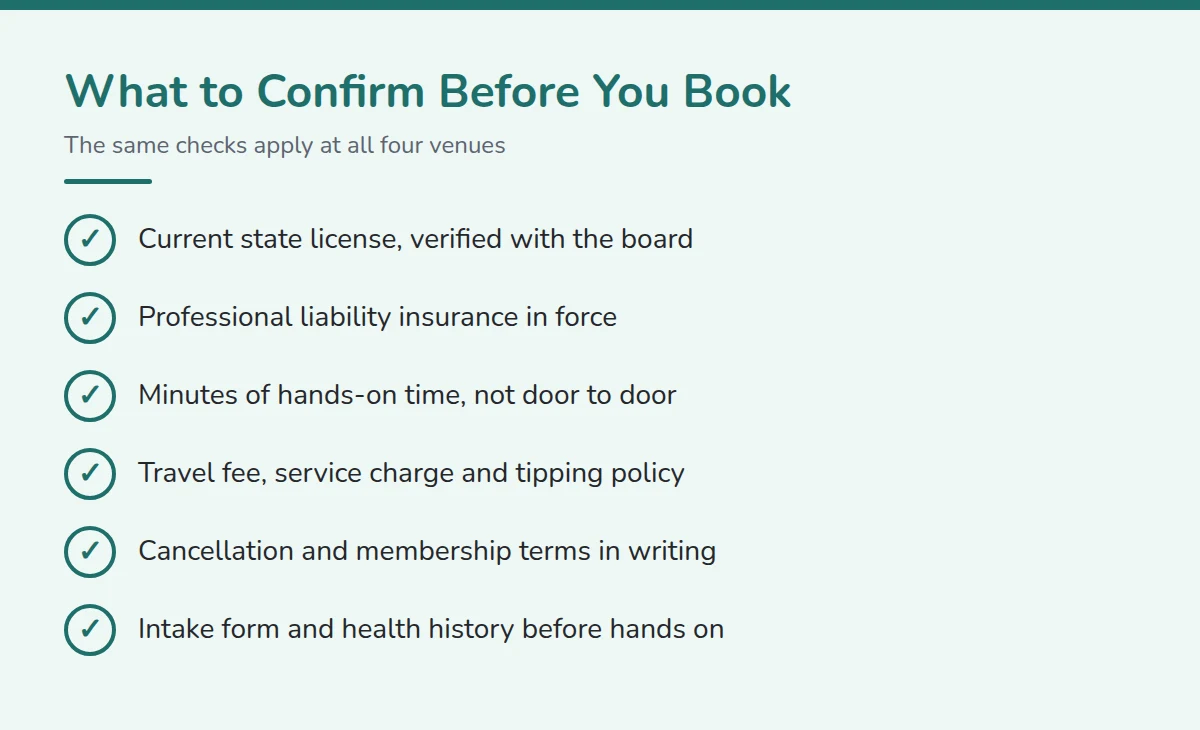
The venue matters less than the practitioner, and the checks are identical across all four. Confirm the therapist holds a current license in your state and verify it with the board rather than taking a website’s word for it. AMTA runs a national locator listing members who meet its requirements, which is a reasonable place to start. Ask whether the practitioner carries professional liability insurance. Expect an intake form and a health history conversation before hands touch you. Read the cancellation policy, and at a franchise read the membership agreement properly rather than initialing it at the desk. And know that you can adjust the pressure, ask for a change, or end a session at any time, anywhere, without explaining yourself.
The Honest Answer
There is no universally better venue, which is why anyone who claims otherwise should be discounted. There is only the fit between what a model is structurally good at and what you need on the day. Mobile sells you time, continuity, and privacy, and charges a premium for them. A franchise sells you price and availability, and bills you in therapist continuity. A spa sells you an environment. A clinic sells you coordination with your medical care. Pick the one whose strengths line up with your reason for booking, and the hour itself will look after you.
Further reading (sources)
- AMTA on the research behind massage and health
- AMTA for its national locator of member therapists
- WILMA with the therapist who moved her whole studio onto a bus
- SheKnows on what a normal session feels like and when to speak up
- Spa Business for how mobile providers widened their treatment menus