Self-Care and Injury Prevention for Mobile Massage Therapists
Published on July 14, 2026
Your Body Is the Business
Every mobile massage therapist runs a physical enterprise with a single, non-replaceable asset: their own body. In a spa, that truth is easy to ignore because the building absorbs some of the load. On the road, there is no front desk, no hydraulic lift table waiting in the room, no colleague to take the next client when your thumbs are done for the day. You carry the table up the stairs, you set up on whatever surface the living room offers, and you deliver the same quality of work you would give in a clinic. Then you pack it all up and drive to the next appointment.
The American Massage Therapy Association frames self-care not as an indulgence but as career longevity, and that framing matters more for mobile therapists than for anyone else in the field. A sustainable mobile practice is not built on grit. It is built on body mechanics, hand health, and a deliberate defense against burnout, applied every single day. This guide gathers the AMTA’s self-care guidance and translates it through the mobile lens, for therapists who want the career to last decades rather than years.
Why the Road Is Harder on Your Body
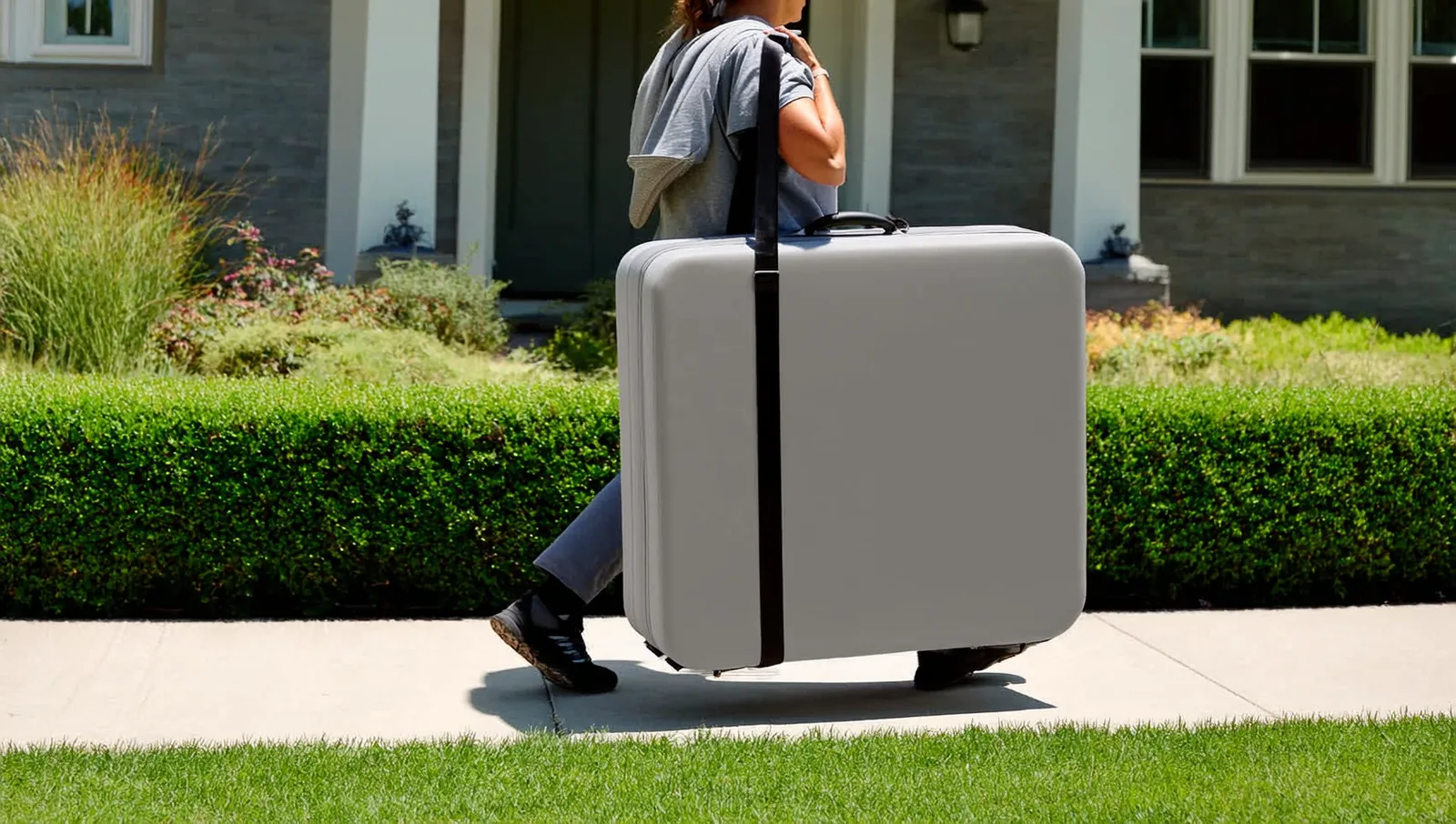
Start by naming the extra load, because you cannot manage what you pretend is normal. A portable table weighs between twenty-five and forty pounds, and that is before you add a face cradle, bolsters, a sheet set, lotion, stones, and a speaker. You carry that kit from a parking spot that may be a block away, sometimes up two flights of stairs, several times a day.
Then comes setup. A clinic room is built for massage. A client’s home is not. You will work in bedrooms with barely a foot of clearance on each side of the table, over beds that sit too soft and too low, in living rooms where the coffee table has to be moved first. Without a hydraulic base, your working height is whatever you set the legs to before the session, and if you set it wrong, you spend the next ninety minutes paying for it in your low back. Add the driving, the loading and unloading, and the between-session fatigue that never fully clears, and the mobile therapist’s body takes a beating a spa therapist rarely sees.
Body Mechanics: Set the Table to Your Frame
The AMTA’s body mechanics course exists because posture at the table is the single largest predictor of whether a therapist’s career ends early. The principles are simple to state and easy to abandon when you are tired.
Set your table height deliberately every time. There is no hydraulic pedal on the road, so measure it against your own body, not the client’s convenience. Stack your joints so force travels through bone rather than being held by muscle. Lead with your legs in a lunge, shift your body weight into the stroke instead of pushing from the shoulder, and keep your wrist as close to neutral as the technique allows. When you need depth, drop into it with your legs and lean, do not grind it out with your arms. Good mechanics are not slower. They are what let you give firm, confident pressure without spending your own reserves to produce it.
Make Friends with Your Forearms
The AMTA titles one of its self-care lessons “Make Friends with Your Forearms,” and the habit behind it is one of the most career-extending a therapist can build: rely less on your hands and more on your forearms. Thumbs are the first casualty of a long massage career. Thumb joints, wrists, and the small muscles of the hand are simply not designed to deliver deep pressure hour after hour, and the road offers no relief, because you cannot reassign a client to a coworker the way a busy clinic can.

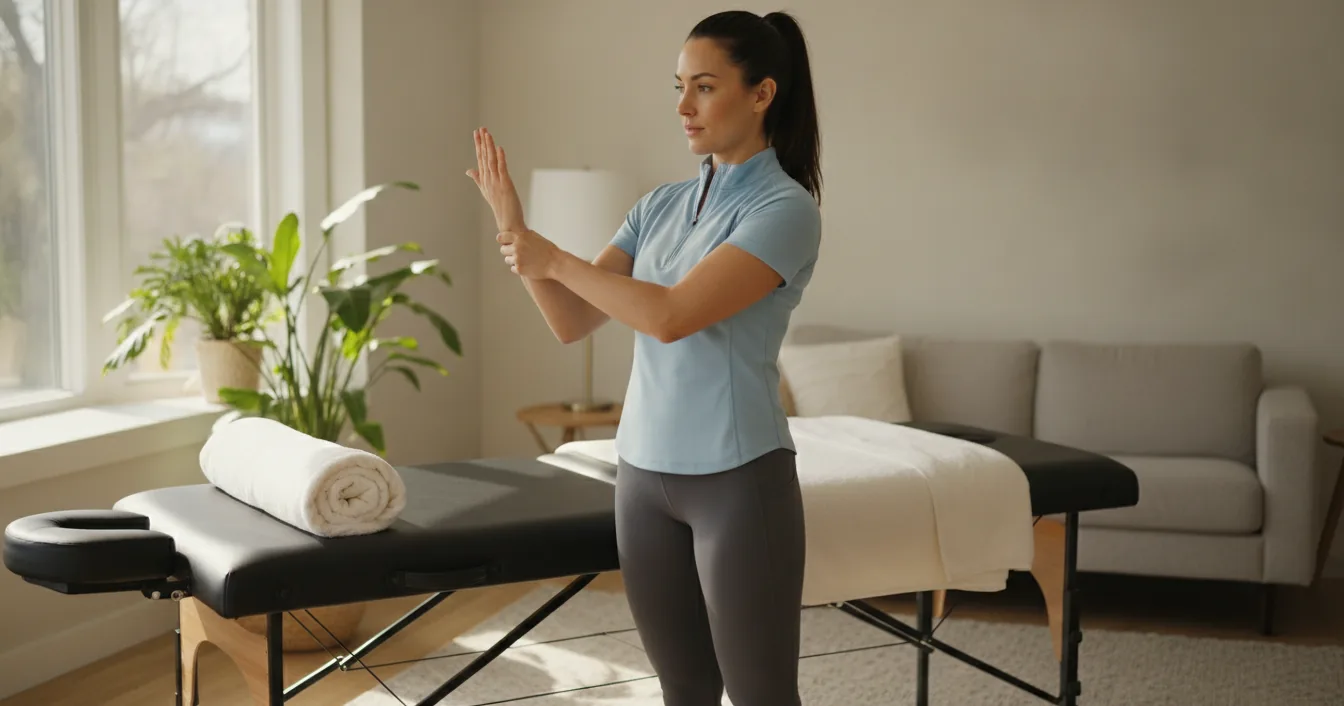
Trade the thumb for a forearm or a soft elbow wherever the stroke allows. Broad surfaces cover more tissue with less strain and spare the joints that wear out first. Off the table, protect those same structures the way the AMTA’s Healthy Hands course teaches: warm your hands before a session the way an athlete warms up, keep grip and forearm strength in your fitness routine, and treat any early ache in a thumb or wrist as a signal to change technique now, not something to push through. A handheld percussion tool run over your own forearms between appointments can aid recovery, and our guide to handheld massage tools worth recommending applies just as much to the therapist as to the client.
Warm Up Before You Load In
Most mobile therapists go from the car seat straight to lifting a table and then straight to hands-on work, cold. The AMTA’s energizing morning routine guidance is built to close that gap. A few minutes of mobility work for the spine, shoulders, wrists, and hips before your first load-in prepares the tissue for the day and lets you give your best to clients without depleting yourself.
Keep it portable. A short sequence you can run beside the car, wrist circles and forearm stretches between sessions, and a proper lift posture (hip hinge, table close to the body, legs doing the work) turn the transport itself into controlled movement rather than a repeated small injury. A wheeled cart for the table, where the terrain allows, removes a load your spine would otherwise carry several times a day.
Guard Against Burnout, Not Just Injury
Self-care is not only physical. The AMTA’s burnout prevention course treats emotional exhaustion as an occupational hazard on the same footing as a wrist injury, and mobile work layers on its own stressors: solo driving, unpredictable homes, the emotional labor of being a guest in someone’s private space, and the isolation of never having a colleague down the hall. Burnout and vicarious fatigue compound quietly across a career.
Build the buffers in on purpose. Cap the number of hands-on hours you book in a day rather than filling every request. Leave real travel time between appointments so you are not arriving already depleted. Protect a recovery day. Use mindfulness or peer support to process the harder sessions, and treat clear professional boundaries as self-care rather than rudeness, a theme our personal safety protocol develops in detail. A therapist running on empty makes worse mechanical choices at the table, which is how emotional burnout becomes physical injury.
Build a Career That Lasts
The through-line in all of the AMTA’s self-care material is longevity: you are meant to still be in the field, and out of pain, twenty years from now. That is a business decision as much as a health one. Price your work so you can afford to see fewer clients per day rather than more, a calculation our pricing guide can help you run. Keep a fitness base off the table so your body meets the work rather than absorbing it. And vary the kinds of work you offer so your career does not depend on maxing out deep-tissue hours.

Chair and corporate massage load the body differently than table work and can extend a career by giving your hands and low back a change of demand for part of the week, which is one reason our service menu guide treats a varied menu as a longevity strategy. Choosing a lighter, better-designed table is another lever worth pulling, and our equipment buyer’s guide weighs the ergonomic tradeoffs. Setting long-term goals, the way the AMTA’s career resources encourage, keeps these choices deliberate rather than reactive.
The Bottom Line
Clients look to their therapist as a wellness example, and there is no more honest version of that than a practitioner who has protected their own body well enough to still love the work after fifteen years. On the road, nobody else will build that protection for you. Set the table to your frame, spare your thumbs, warm up before you lift, guard against burnout as seriously as injury, and structure the business so it does not ask more than your body can give. Self-care is not what you do after the work. For a mobile therapist, it is the work that makes all the rest of it possible.
Sources
- American Massage Therapy Association on why body mechanics and self-care build career longevity
- American Massage Therapy Association for continuing education on healthy hands, forearms, and burnout prevention
- American Massage Therapy Association with resources on long-term goals and advancing a massage career
Further reading
- Handheld Massage Tools Worth Recommending Between Sessions: A Therapist’s Picks
- The Mobile Massage Equipment Buyer’s Guide: Tables, Chairs, and Everything In Between
- Building Your Mobile Massage Service Menu: A Modality-by-Modality Guide
- Personal Safety for Mobile Massage Therapists: A Comprehensive Protocol