Fibromyalgia and Mobile Massage: Pressure, Pacing, and Why Home Visits Suit This Client
Published on September 19, 2026
The Client Who Spent Her Energy Getting There
Ask someone with fibromyalgia what a spa appointment costs and the answer will not be a dollar figure. It is the shower beforehand, the getting dressed, the drive, the wait under bright reception lighting, the climb onto a table set to somebody else’s height, and then the drive home while the good feeling drains out through the steering wheel. By the time they are face down on the table, most of what they had for the day is already spent.
That arithmetic is the whole argument for a home visit, and it is the reason this condition fits a mobile practice better than almost anything else on your books. But getting the logistics right is the easy half. The harder half is pressure, and most therapists get it wrong in the same direction.
What Central Sensitization Means for Your Hands
Fibromyalgia is not a muscle problem that happens to hurt everywhere. The National Institute of Arthritis and Musculoskeletal and Skin Diseases describes it as a disorder of increased pain sensitivity, with brain imaging showing altered signaling in the neural pathways that transmit and receive pain. People with it feel pain where other people feel nothing. It runs in families, affects more women than men, and usually starts in middle age.
The practical translation is that the volume dial is stuck high. Pressure a healthy client experiences as productive discomfort, the good pain, can register in a fibromyalgia client’s nervous system as an injury signal. Deep tissue is not a stronger dose of the same medicine here. It is a different input into a system that is already amplifying everything it receives.
One legacy point worth knowing, because clients still raise it: fibromyalgia used to be diagnosed by pressing on eighteen specified tender points. The criteria moved on. The 2016 revision that Wolfe and colleagues published assesses widespread pain across body regions alongside a symptom severity score covering fatigue, unrefreshing sleep and cognitive symptoms. A client who says “I have twelve of the eighteen points” is quoting a standard her own rheumatologist has probably stopped using.
Style by Style, What the Evidence Actually Supports
This is the rare condition where the research compares massage styles head to head rather than lumping them together.
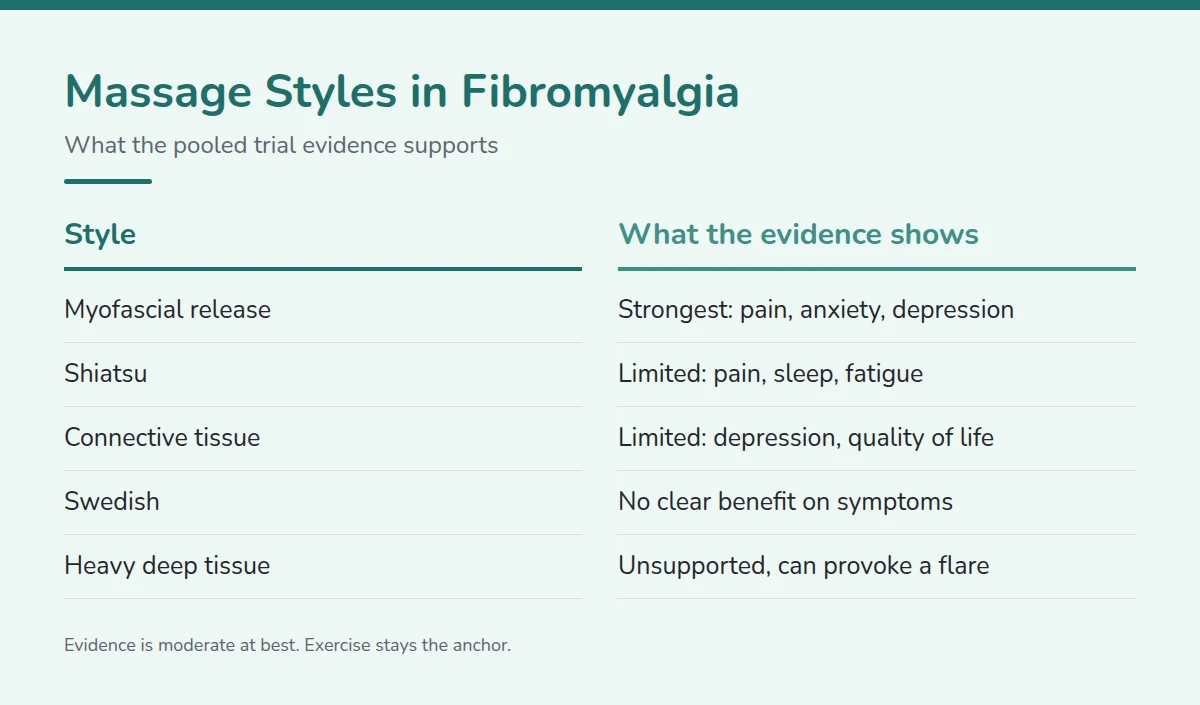
Yuan and colleagues, in Manual Therapy, pooled ten trials and found that myofascial release produced large positive effects on pain and medium effects on anxiety and depression at the end of treatment, with the pain benefit holding into the medium term. Their narrative analysis credited myofascial release with improvements in fatigue, stiffness and quality of life too. Shiatsu showed gains in pain, pressure pain threshold, fatigue and sleep. Connective tissue massage helped depression and quality of life, with manual lymphatic drainage beating it on stiffness. And Swedish massage, the default sixty minutes most people picture when they book, did not improve outcomes.
Li and colleagues, writing in PLoS ONE, pooled nine randomized trials covering 404 patients and found that massage delivered over five weeks or longer improved pain, anxiety and depression. Notably, it did not improve sleep disturbance, which is worth remembering before you promise anyone a better night.

Now the sobering half. The Agency for Healthcare Research and Quality’s 2020 evidence review, led by Skelly and colleagues, rated myofascial release as producing only a small improvement in intermediate-term function against sham, and judged the strength of evidence low or insufficient across most fibromyalgia interventions. The EULAR recommendations from Macfarlane and colleagues make the same point from a different angle: exercise is the single therapy with a strong recommendation behind it, and the effect size for most treatments is modest.
Read together, these say something defensible. Myofascial release has the best evidence of any hands-on style for this condition, that evidence is moderate rather than strong, and massage belongs alongside exercise and the rest of a management plan rather than instead of it. Our guide to reading massage research covers why studies in this field come out modest so consistently.
Calibrating Pressure on a System That Amplifies
Start lighter than the client asks for. People with fibromyalgia have often been told their pain is imaginary, and some will request heavy work to prove they can take it. Taking them at their word on session one is how you produce a flare and lose the client.
The technique that carries the evidence is also the technique that suits the physiology. Myofascial release uses slow, sustained, low-load pressure held long enough for tissue to respond, applied with a broad contact surface such as a forearm or a flat palm. That is close to the opposite of stripping, deep cross-fiber friction, or hunting for the worst spot and leaning on it. Percussion devices deserve the same caution; our guide to handheld tools between sessions covers where they help and where they cause trouble.
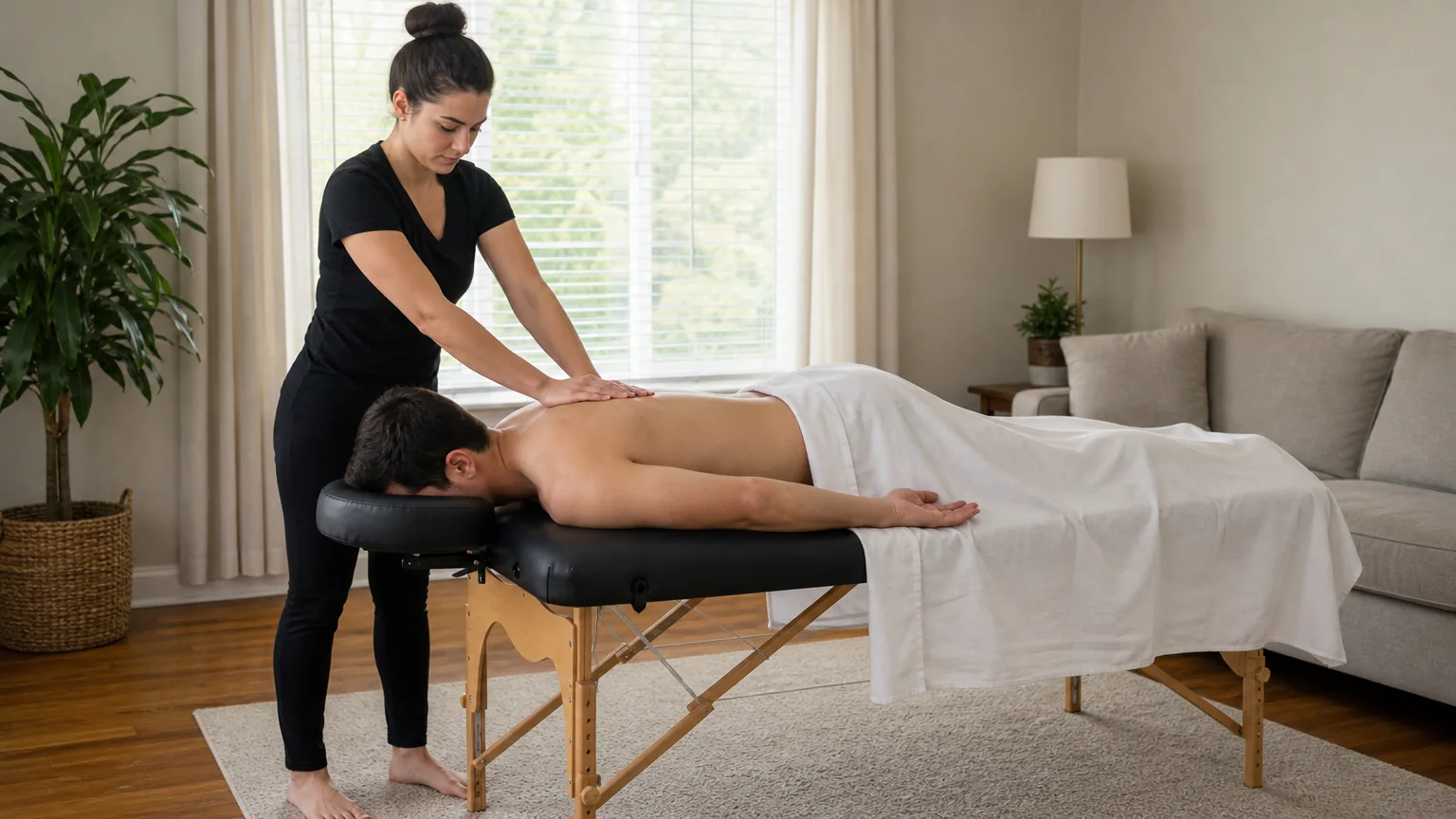
Check in three times rather than once. Ask at the first contact on a new region, again a minute in, and again when you move on. “Is this too much” invites a polite yes. “Where is this on a scale where five is the most you want today” gets you a real number.
Session Length and the Energy Envelope
A standard ninety-minute session can be too much stimulus for a first appointment. Forty-five to sixty minutes is a reasonable starting point, and you can build from there once you know how the client responds over the following two days.
Book a course, not a visit. The Li meta-analysis found its benefits at five weeks and longer, which means a single session is a trial rather than a treatment, and your cancellation and deposit terms need to handle a block booking where any individual appointment might land on a flare day.
Be careful how you talk about pacing. The concept of an energy envelope, spending within your daily budget rather than pushing through, is genuinely useful language for a client. It is not a proven treatment, and it is worth knowing why. Racine and colleagues ran a pilot randomized trial in The Journal of Pain comparing operant learning against energy conservation pacing, and neither approach reduced average pain or usual fatigue, though both improved sleep quality. Use pacing as a frame for scheduling the session, not as a therapeutic claim.
Allodynia, and the Things You Do Not Think About
Allodynia means pain from something that should not hurt at all. For a mobile therapist that shifts attention away from your hands and onto everything else in the room.
Cold hands. Cold oil. The drag of a sheet being repositioned. A table surface firmer than the client’s own mattress. A bolster placed without warning. A strongly fragranced lotion, in a population that often reports sensory sensitivity. Any of these can end a session that your actual technique would have gone fine.
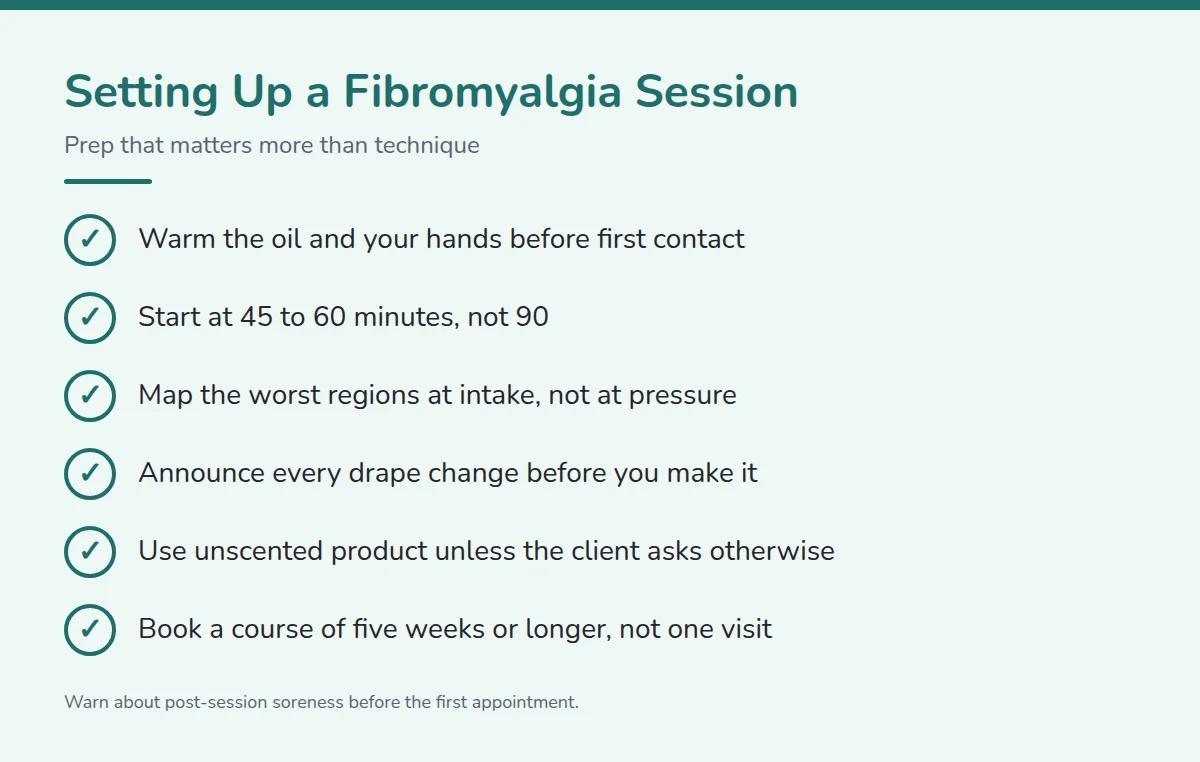
So warm the oil and warm your hands before contact, add padding, announce a drape change before you make it, and use unscented product unless the client asks otherwise. Map the worst regions during intake and plan the route around them rather than discovering them at pressure.
The Post-Session Crash Nobody Warns Them About
Transient soreness after massage is common enough in general pain populations to be documented in the safety literature. Yin and colleagues’ systematic review of adverse events found serious complications rare, and minor transient effects unremarkable. In fibromyalgia the same minor effect can escalate into a flare lasting days, which the client will experience as the massage having made things worse.
Warn them before the first session, out loud and in the intake paperwork. Tell them that a mild increase in soreness in the next twenty-four to forty-eight hours is possible, that it is information rather than damage, and that you will scale the next session down if it happens. A client who was warned reports a flare and rebooks. A client who was not warned disappears.
Why the Home Visit Is Clinically Different
Sitting upright in a car is the worst possible way to spend the half hour after a session that just downshifted someone’s nervous system. The physiology of that window sits in our explainer on how touch affects the nervous system, and for a fibromyalgia client it is the part of the appointment with the most value in it. In a home visit they stand up, walk ten feet, and lie down in their own bed.
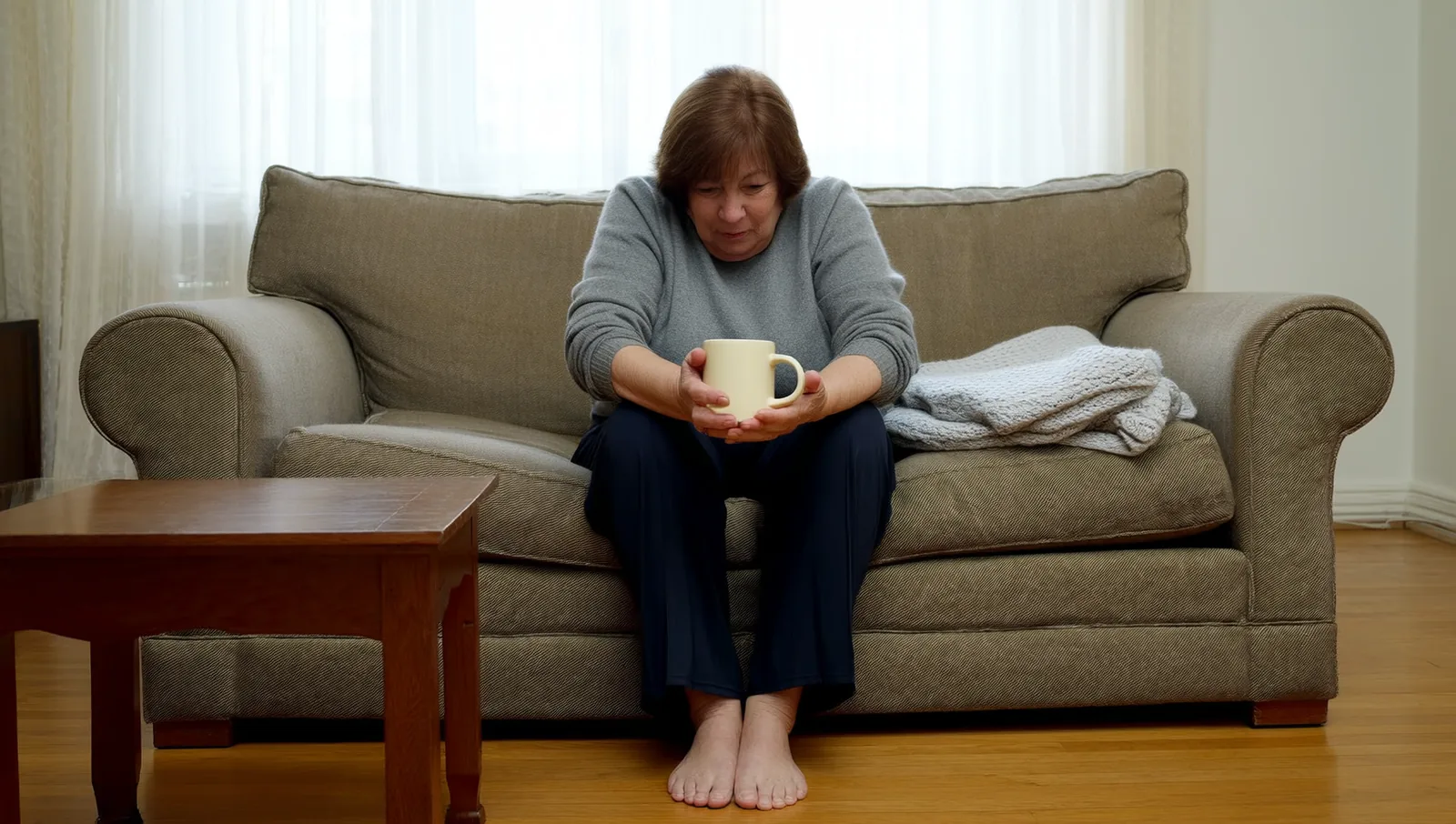
Everything else about the setting works in the same direction. The room is their temperature, their lighting, and free of whatever scent a treatment room has. If a client genuinely cannot get onto the table on a bad day, you can work them side-lying on their own bed or seated in their own chair without turning it into a negotiation. And rescheduling around a flare becomes a phone call rather than a wasted journey for someone who had nothing to spare.
Clearance, Scope, and the Claim You Do Not Make
Widespread pain that nobody has diagnosed is a referral, not a booking. Several conditions mimic fibromyalgia closely enough to need bloodwork, and a massage therapist is not the person who rules them out. For a client with a confirmed diagnosis, take a full medication history, ask what else is being managed alongside it, and get written clearance from the treating physician before the first session, the same standard applied across our in-home pain management guide.
Then hold the line on language. You do not diagnose, and you do not treat fibromyalgia. What you offer is soft tissue work that has moderate evidence behind one specific style, delivered at a pressure the client’s nervous system can accept, in the one setting that does not cost them the drive home. Scope of practice varies by state, and your own practice act is the binding authority on what you may say in your marketing as well as what you may do with your hands.
That is a smaller promise than this corner of wellness usually makes. It is also the one that survives contact with a client who has been promised more before.
Sources
- NIAMS on what is known about the causes and symptoms of fibromyalgia
- Yuan and colleagues comparing the effectiveness of different massage styles in fibromyalgia
- Li and colleagues for a meta-analysis of nine randomized trials of massage in fibromyalgia
- Skelly and colleagues with AHRQ’s evidence review of noninvasive nondrug treatment for chronic pain
- Macfarlane and colleagues on the revised EULAR recommendations for managing fibromyalgia
- Wolfe and colleagues setting out the 2016 revisions to the fibromyalgia diagnostic criteria
- Racine and colleagues testing two activity pacing approaches against each other in fibromyalgia
- Yin and colleagues reviewing adverse events reported from massage in pain-related conditions
- Flynn summarizing nondrug options across the common chronic musculoskeletal pain conditions
- NCCIH for what the science says about complementary approaches to chronic pain
Further reading
- Mobile Massage for Pain Management: Bringing Relief Home
- Low Back Pain and In-Home Massage: What the Guidelines Actually Support
- What the Research Actually Says About Massage: An Evidence Guide for Clients
- The Science of Touch: How Mobile Massage Affects the Nervous System
- Handheld Massage Tools Worth Recommending Between Sessions: A Therapist’s Picks