The Complete Marketing Playbook for Mobile Massage Therapists
Published on August 2, 2026

Why Marketing Is Harder Without a Storefront
A clinic has a sign, a window, and a street. Somebody walking past on a bad neck day sees the lettering and books an appointment that afternoon. A mobile practice has none of that. There is no lobby to wander into, no foot traffic, no sandwich board. Every single client you will ever treat arrives because of something you deliberately did to put yourself in front of them.
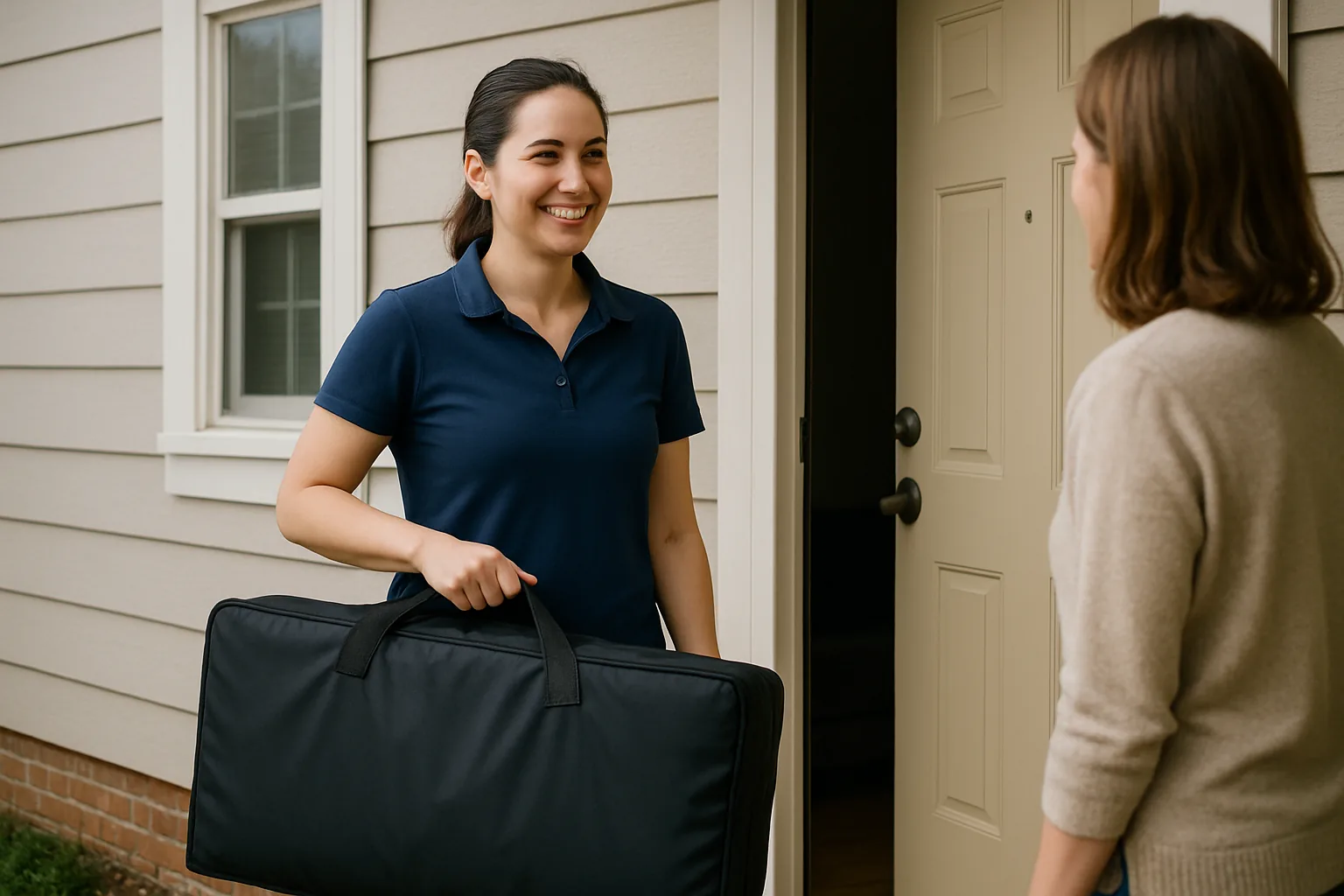
That reframes marketing from a chore you get to after the real work into a load-bearing part of the business. It also raises the bar on trust. A client walking into a lit reception area has already absorbed a dozen quiet reassurances before they hand over a card. A client booking you is agreeing to let a stranger into their living room, unfold a table, and put hands on them. Your marketing has to carry all of that reassurance by itself. This playbook covers the levers that actually move bookings for a traveling therapist, in the order they tend to matter.
First, Know Which Stage You Are In
Most wasted marketing money comes from running the wrong play for the stage you are at. Massage practices grow through three recognizable stages, and each one has a different job.
Stage one is credibility. You are licensed, insured, and open, but nobody can verify you exist. The only marketing that matters here is being findable and checkable: a claimed Google Business Profile, a real website with your license status and modalities, listings on the reputable mobile platforms, and a handful of genuine reviews. Skip the paid ads. Money spent driving traffic to a profile with no reviews converts poorly and teaches you nothing.
Stage two is client base. You have proof of competence and now you need volume and rebooking. This is where referral programs, gift certificates, and community events earn their keep, because they all work by borrowing trust from someone who already has it.
Stage three is scale. The calendar is full, and growth now means systems rather than hustle: corporate contracts, recurring event work, packages that stabilize revenue, and possibly a second therapist. Marketing shifts from finding individuals to signing accounts.
If you are in stage one and reading about corporate wellness contracts, you are reading ahead. That is fine, but do not spend against it yet. The first-year roadmap for a new mobile practice covers the structural work that has to be in place before any of this pays off.
Position Yourself For Something Specific
The chains have moved on from generic relaxation. Massage Envy, the largest brand in the category, has spent recent years pushing toward personalized, results-driven experiences rather than a nondescript hour on a table. If a national franchise with a real advertising budget has abandoned “a relaxing massage,” a solo mobile therapist advertising the same thing is competing on the one axis where they are guaranteed to lose.
Specificity is the counter. Prenatal work. Post-surgical scar and lymphatic care under physician clearance. Runners in the four weeks before a marathon. In-home sessions for clients who cannot easily travel. A narrow position is easier to rank for, easier to price, and dramatically easier for someone to refer you for, because it gives them a sentence they can remember. Our modality-by-modality service menu guide walks through what each specialty demands in training and gear before you commit to it.
Positioning also disciplines your language. Describe outcomes you can honestly deliver, and keep claims inside your licensed scope. Advertising rules are set at the state level and several boards have taken action over therapists who implied they treat or cure medical conditions. Say what the work does. Do not say what it heals.
Show Personality Without Losing Professionalism
The strongest differentiator a solo therapist has is being a specific person rather than a generic pair of hands. Clients form longer relationships with therapists who share something real about who they are and how they work: why you moved into prenatal after your own pregnancy, how you think about pressure and check in during a session, what your setup looks like when you arrive.
The boundary is easy to state and easy to cross. Share about yourself and your practice, never about your clients. No treatment stories, no anonymized case details, no photos of anyone on your table, no reposting a client’s review in a way that identifies them. Keep politics and personal grievances off the business account. The test that holds up: would you be comfortable if the client in question read this post? If the answer needs a pause, do not publish it.
Gift Certificates Do Three Jobs at Once
Gift certificates are the single most underused tool in a small massage practice, and they pay in three separate currencies. They bring in cash before the work is delivered, which smooths a lumpy month. They reward existing clients, who buy them for people they like. And they acquire new clients at no advertising cost, because the recipient has almost always never booked you before.

Mobile practice adds a few mechanics worth getting right. State on the certificate whether the travel fee is included and what service area it covers, or you will spend redemptions negotiating. Check your state’s rules on expiration dates and unclaimed property, which vary considerably and in some states prohibit expiry entirely. Sell them as a fixed dollar value rather than a named service so a price increase does not strand you. Most importantly, treat every redemption as a genuine first appointment: full intake, health history, contraindication screening, and the same client vetting you would apply to any new booking. A gift certificate is an introduction, not a waiver. The personal safety protocol for mobile therapists applies exactly as it would to a cold inquiry.
Community Events Beat Advertising For Local Trust
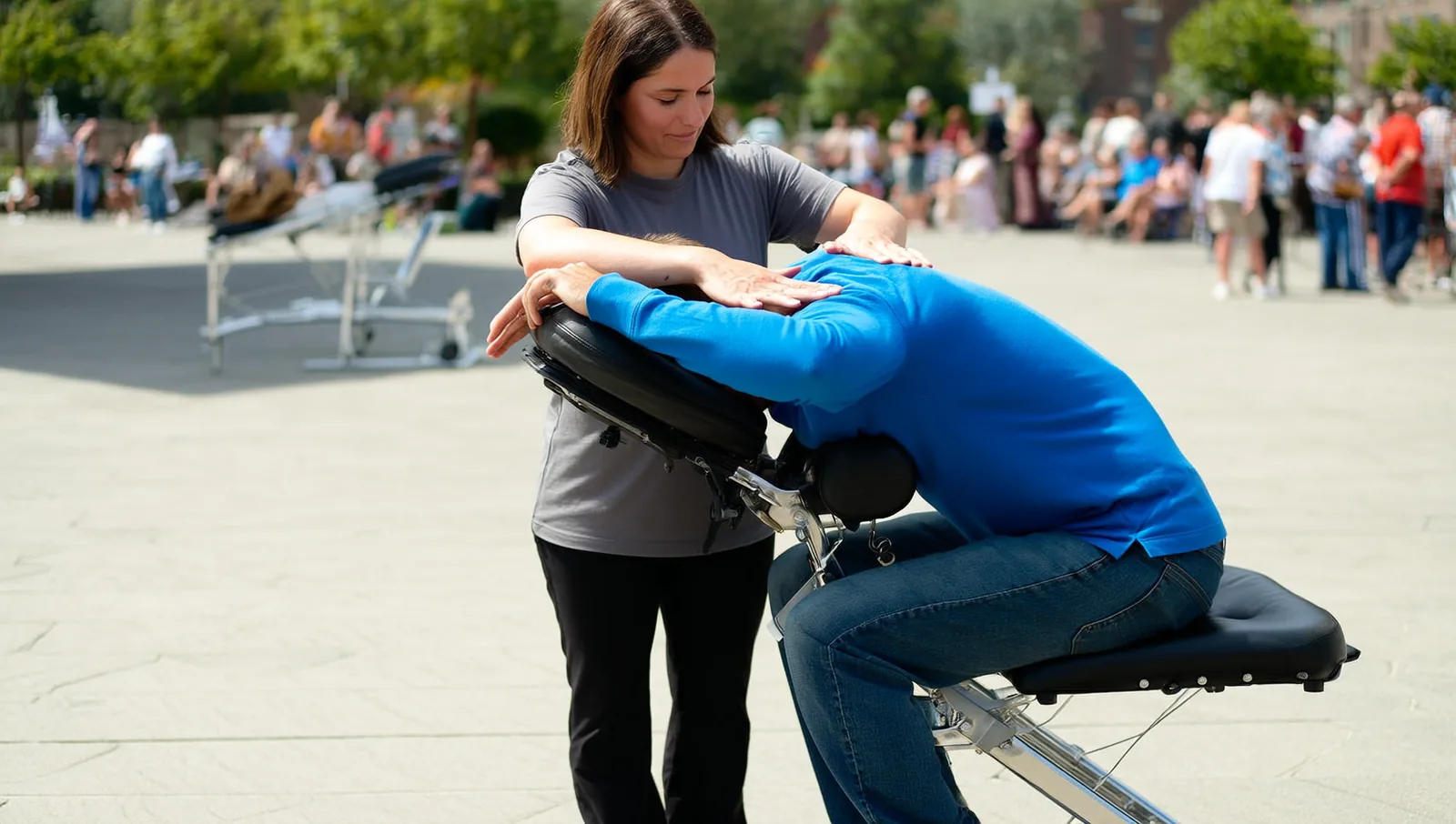
Hosting a small community workshop puts people in the room with your expertise, which is a far better sales mechanism than any ad, because touch is difficult to explain and trivial to demonstrate. A forty-five minute session at a library on desk-neck and shoulder mobility, a stretch talk at a running club before race season, a chair massage table at a 5K finish line or a corporate lunch-and-learn: all of these are low cost and generate the two things that matter, contact details and a memory of you being competent.
Two rules make the difference between an event that fills your calendar and an afternoon you never get back. Capture contact information on the day, with permission, and have a booking link ready on your phone. And go where your position already points. A runners specialist at a race expo converts; the same therapist at a generic wellness fair mostly hands out cards.
Local Search and Referrals: The Compounding Pair
Local search is where most mobile clients start, so a complete Google Business Profile is not optional. Set it up as a service-area business and hide your street address, which is both correct for a mobile practice and the right call for a solo therapist working from home. Keep your name, phone, and service area identical everywhere they appear. Ask every satisfied client for a review, at the end of the session while the effect is still obvious, and make the ask specific enough to produce a useful sentence.
Referrals compound faster than anything else because they arrive pre-trusted. Run two tracks. Client referrals work best when both sides get something, typically a credit toward a future session for the referrer and a small discount for the newcomer. Professional referrals come from the businesses whose clients overlap with yours: chiropractors, physical therapists, gyms, event planners, and wedding coordinators. Keep those relationships to genuine mutual referral rather than paid-per-head arrangements, since some states restrict fee-splitting with healthcare providers.
Build One Page That Runs the Year
A marketing plan works when it aligns what you promote with what clients are already looking for that month. Write it on a single page, one primary campaign per quarter, and stop improvising.
January rewards recovery and reset messaging. February is the year’s strongest gift certificate window, followed by Mother’s Day in May. Spring into early summer is event and bridal season, which is where chair massage and on-site party work lives. Late summer is often slow for consumer bookings and is the right time to pitch corporate wellness for the autumn. September through November is corporate and back-to-routine work, and the final six weeks of the year are gift certificates again, plus the holiday-stress angle.
Then track one thing relentlessly: ask every new client how they found you, and write it down. Within two quarters you will know which of these levers actually works in your market, and you can stop funding the ones that do not.
Marketing Sells Capacity You Have to Be Able to Deliver
There is a failure mode specific to marketing that works. The calendar fills, the drives stack up, and a body that was fine at twelve sessions a week starts complaining at twenty. Growth in a mobile practice eventually has to come from price rather than volume, because volume is capped by your hands and your windshield time. When demand outruns your capacity, raise your rate before you add another appointment. Our breakdown of how mobile massage services are priced shows what the market actually supports, and the self-care and injury prevention guide covers protecting the only equipment you cannot replace. A marketing plan that outruns your body is not a success. It is just a slower way to close the practice.
Sources
- Massage Magazine on the three stages every massage business grows through
- Massage Magazine for building a marketing plan around what clients are already looking for
Further reading
- Launching a Mobile Massage Business From Scratch: Your First Year Roadmap
- Building Your Mobile Massage Service Menu: A Modality-by-Modality Guide
- Personal Safety for Mobile Massage Therapists: A Comprehensive Protocol
- Understanding the Price Range of Mobile Massage Services
- Self-Care and Injury Prevention for Mobile Massage Therapists
- NCCIH on what the research says about massage therapy
- NCCIH for the evidence review on massage therapy for health