Hospice and Palliative Massage at Home: A Mobile Therapist's Guide
Published on August 25, 2026
The Client Who Is Not Going to Get Better
Almost every booking you take carries an unspoken promise of improvement. The shoulder loosens, the sleep gets better, the client walks out easier than they walked in. Hospice work removes that promise entirely, and letting go of it is the first real skill this niche asks for. The only question that matters is whether the person in front of you was more comfortable during your visit and for a while afterward.
It helps to be precise about the two words that get used interchangeably. Palliative care is specialist support for symptom burden and quality of life for anyone living with a serious illness, at any stage, and it can run alongside treatment aimed at a cure. Hospice is a narrower category: care for someone whose physician has certified a prognosis of roughly six months or less if the illness follows its expected course, with the goal shifted fully to comfort. Most hospice care in the United States happens in the person’s own residence, which puts a mobile therapist in exactly the right place. Very few LMTs work here, so a prepared one becomes a known quantity to a hospice team very quickly.
What the Evidence Actually Supports
A narrative review published in Annals of Palliative Medicine gathered a decade of research, from 2012 to 2022, on massage therapy delivered to palliative care populations. It found thirteen studies: seven randomized controlled trials, a retrospective cohort analysis from a large Veterans Health Administration facility, two qualitative studies in hospital-based palliative care, a pilot, a single-arm quasi-experimental study, and one mixed-methods study. The reviewers found wide variability in design, scope, sample size, and outcomes, and concluded that the body of work has not yet been strong enough to drive systematic integration of massage into palliative care.
One finding in that review deserves more attention from working therapists than it usually gets. Few of the studied interventions reflected real-world massage therapy delivery. Much of the research tested brief protocolized routines rather than what a trained therapist actually does at a bedside, so the published effect sizes probably understate skilled practice. That is a reason to keep doing the work carefully, not a licence to promise more than the data holds.
Where the evidence is steadiest is pain and psychological distress. Dyspnea and other symptoms are named as targets in this population because they are so common, but the trial evidence behind them is thinner than the evidence for pain and anxiety. Say so honestly when a family asks. Offer comfort, presence, and symptom relief, and never suggest that massage changes the course of the illness.
Session Design: Short, Frequent, and Light
The most useful dosing study in this population randomized 387 hospitalized adults receiving palliative care consultation into three arms: ten minutes of massage daily for three days, twenty minutes daily for three days, or a single twenty-minute session. Every arm improved quality of life at follow-up, and there were no significant differences between them. The researchers concluded massage was beneficial beyond dosage. Session length predicted the immediate improvement in distress and pain, while only the arms with three consecutive daily sessions held the drop in distress at follow-up.
Translate that into a mobile schedule and it is genuinely freeing. A fifteen-minute bedside session is a real intervention, not a token gesture. Frequency does more work than duration, so two or three short visits a week will serve a hospice client better than one long one, and short visits are also what a failing body can tolerate.
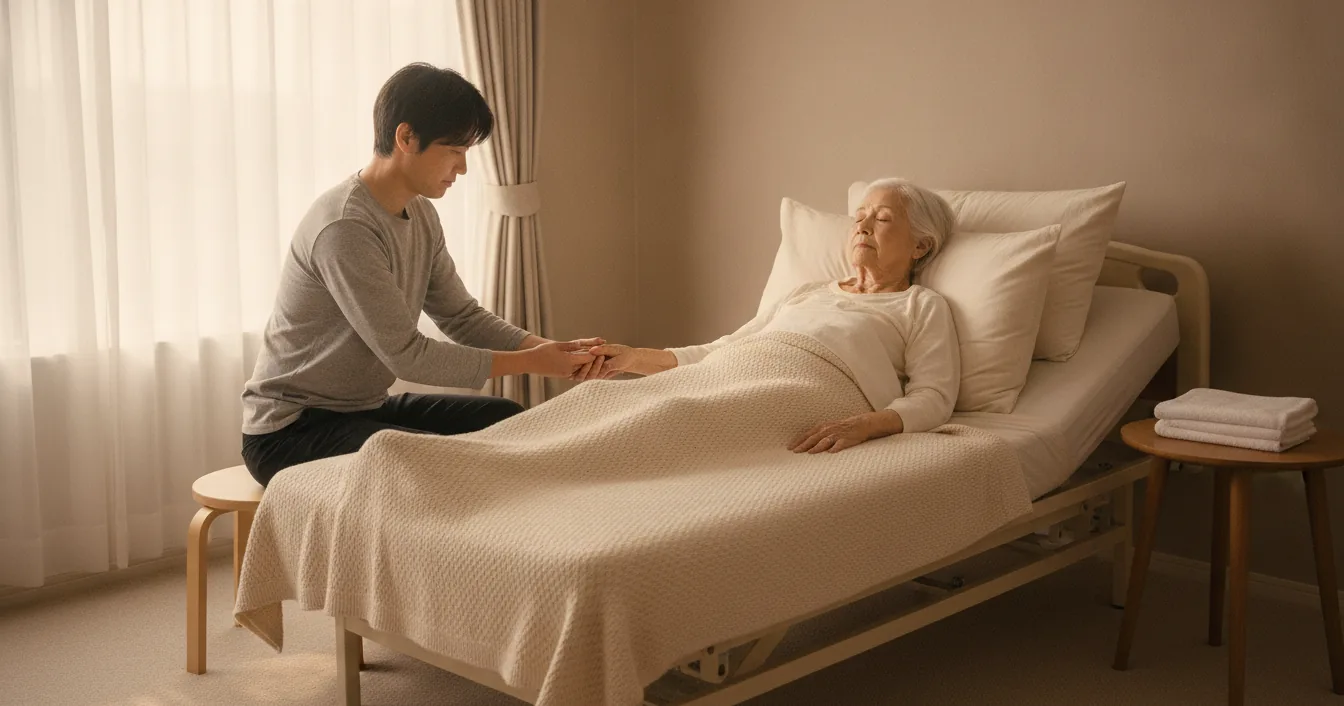
Most of these sessions will not happen on your table. Leave it in the car and plan for a hospital bed, a recliner, or the corner of a sofa, working from a chair or a low stool at bed height. Bring your own bolsters and rolled towels for propping a limb, and be ready to adapt to whatever position the person is already comfortable in rather than moving them into yours.
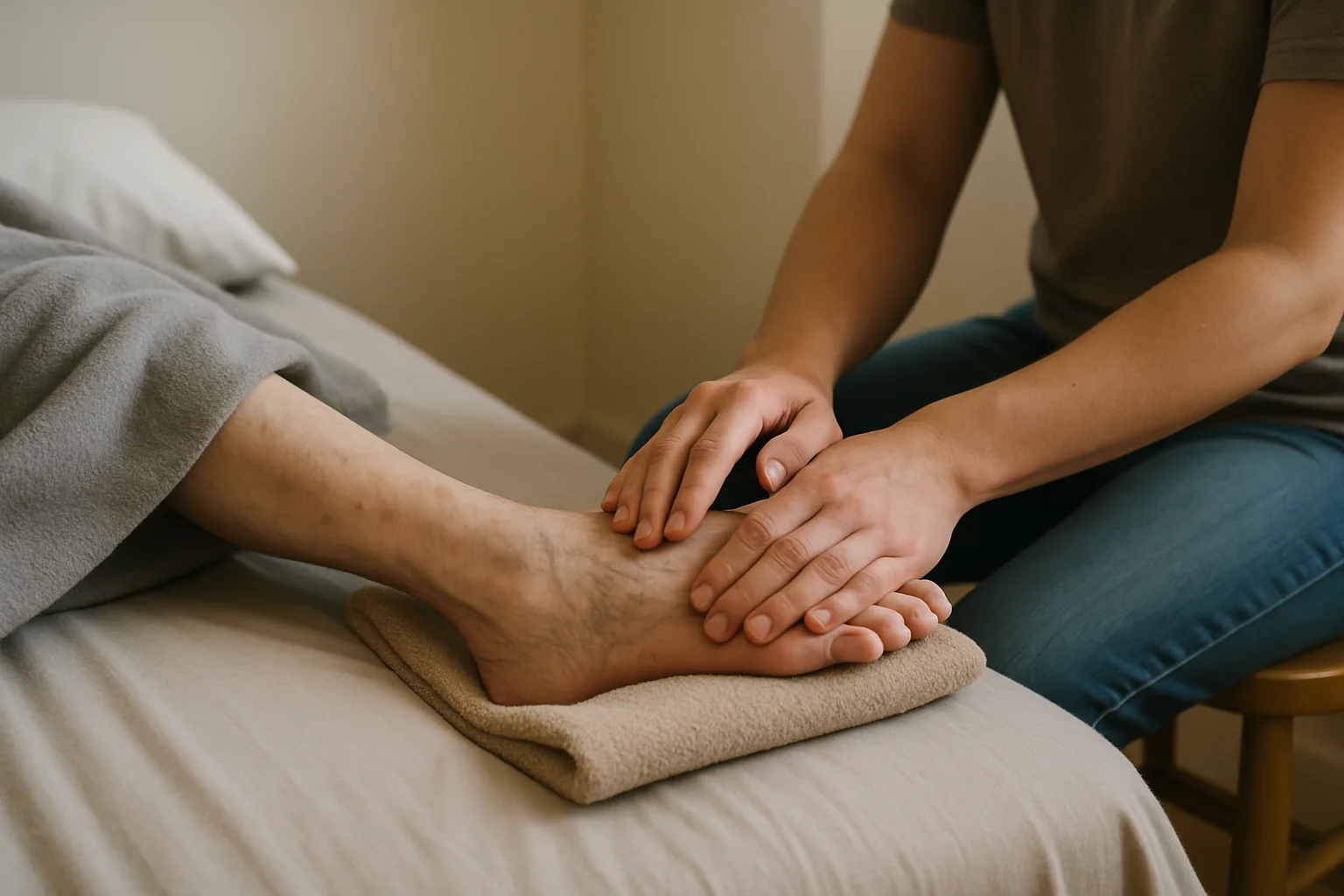
What you touch narrows too: hands, feet, lower legs, shoulders, scalp, and face, over clothing or a light drape. Slow, sustained, predictable contact does more than technique here, and a static hold counts as work. Keep pressure light, never push into pain, and abandon any instinct to release or fix tissue. Expect sessions to end early. Nausea, breathlessness, a spike in pain, or the nurse arriving are all normal reasons to stop, and stopping cleanly without any visible disappointment is part of the job.
Clearance and the Interdisciplinary Team
Written physician clearance before the first session is not negotiable in this population. For a hospice client that means the hospice physician or the attending, and the massage should be recorded in the plan of care rather than arranged privately around the team. Build the file on the same disciplined intake and client vetting you use for any booking, then add diagnosis, prognosis if the family shares it, current medications, the location of every line and device, and who holds decision-making authority.
Understand how the money works before you quote a rate. The Medicare hospice benefit funds an interdisciplinary team that includes a physician, nurse, social worker, counselor or chaplain, hospice aide, and volunteers. Massage therapy is not a required covered service. Some hospices contract for it, some run it through their volunteer program, and in many cases the family pays privately. Ask which arrangement applies at your first conversation.
Your practical contact is usually the hospice nurse or the social worker. Keep SOAP notes, and report anything you notice, including new skin breakdown, new swelling, a change in breathing, or a shift in alertness. You will often be the person who spends the longest stretch of quiet, unhurried time with the patient, which makes you a genuinely useful set of eyes. If a hospice agency wants a formal contract, expect the same paperwork as any facility work: a certificate of insurance, a background check, and sometimes immunization records, all of which is familiar ground if you already handle facility and organizational contracts.
The Contraindication Screen at End of Life
This screen is deliberately conservative, because the margin for error in a frail body is very small.
- Bone metastases carry a real risk of pathological fracture. Avoid the affected sites entirely, ask the nurse exactly where they are, and keep pressure light everywhere else.
- Edema is common at this stage, whether from heart, kidney, or liver failure or simply from immobility. Do not attempt fluid-moving work. Use light, slow contact with clearance, and treat new one-sided leg swelling with calf pain, warmth, or discoloration as a possible clot: stop, do not rub it, and tell the nurse immediately.
- Ports, PICC and central lines, catheters, feeding tubes, drains, and oxygen tubing all mean no pressure over or near the site. Know where every one of them is before your hands land, and watch the tubing whenever you move a limb.
- Fragile skin, bruising, skin tears, and pressure injuries are local contraindications. Work somewhere else, and never rub a pressure sore or the reddened skin around it.
- Low platelets and anticoagulant medication call for light pressure and no percussion.
- Uncontrolled pain is a timing problem as much as a technique problem. Coordinate your arrival with the nurse so the visit sits inside the window when the medication is working.
- Delirium and terminal agitation can go either way. Touch settles some people and escalates others, so approach slowly, watch the response, and be willing to leave.
When someone is actively dying, the work reduces to hands, feet, and forehead, and presence matters far more than anything technical.
Consent When Speech Is Gone
Consent has to be re-confirmed at the start of every visit rather than resting on a form signed weeks earlier. When words are no longer available, read the body: pulling away, grimacing, breath-holding, stiffening, or turning the head all mean stop. Where capacity is gone, get written consent from whoever holds legal authority for health decisions, but understand that proxy consent never overrides a refusal happening in front of you. The client keeps the veto until the end. These are the same principles that govern dementia-aware consent in aged care work, applied to a body with even less reserve.
The Family Is Part of the Session
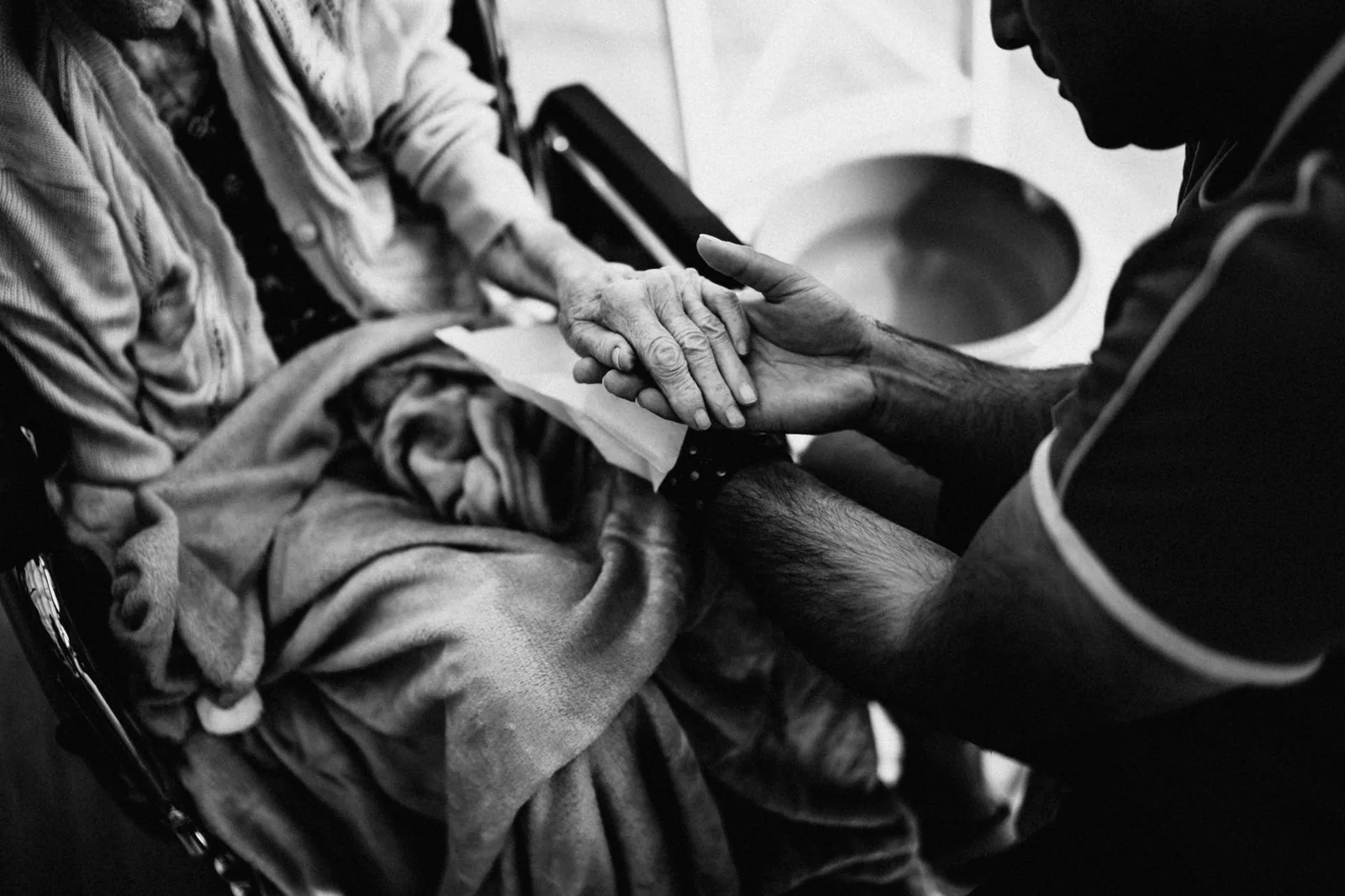
Families in a hospice home are exhausted, and they are usually in the room. Ask where they would like to be rather than assuming they want to leave, because some need the break and others need to watch.
Teaching a caregiver a simple two-minute hand or foot routine is one of the most valuable things you can leave behind. It gives someone who feels helpless a concrete way to help. Frame it clearly as comfort touch rather than treatment, and keep your own boundaries visible. You are not the chaplain, the counselor, or the nurse, and the most useful response to a spiritual or medical question is often the name of the team member whose job it is.
The Part Nobody Warns You About
In this niche your clients die, and they keep dying. The grief accumulates in an awkward place, because you are neither family nor staff, so there is rarely a socially sanctioned space for it. Solo practitioners feel this hardest.
Handle it structurally rather than hoping to absorb it. Cap the share of your caseload that is end-of-life work rather than letting referrals fill the book. Avoid scheduling a hospice visit as the last appointment of the day and driving straight home with it. Build a transition between visits, even something as small as a walk around the block. Ask the hospice whether contracted providers are included in team debriefs and bereavement support, because many will say yes if asked. Treat all of this as part of the same sustainability practice that protects your body and your career, not as an optional extra.
Training, Scope, and Insurance
General massage experience does not qualify anyone for this work. Healwell trains therapists specifically to work with people who are seriously ill in hospital and hospice contexts, and the Society for Oncology Massage curriculum covers advanced and end-stage disease. Get the training before you take the referral, not after.
Your state practice act remains the binding authority on scope, and it does not stretch for compassion. No diagnosing, no prescribing, and no claims about extending life or clearing toxins. Professional liability insurance is non-negotiable for every practicing therapist, and for this work confirm that the policy follows you into private homes and licensed facilities and satisfies whatever the agency’s certificate of insurance requires.
Done well, this is quiet, unglamorous, deeply skilled work, and it sits naturally alongside the in-home care you already provide to clients in active cancer treatment. Someone at the end of their life gets to be touched with warmth rather than only handled clinically. That is a small thing and an enormous one at the same time.
Sources
- Annals of Palliative Medicine on what a decade of massage research in palliative care populations actually found
- Journal of Pain and Symptom Management for how session length and frequency shape symptom relief in advanced illness
- Get Palliative Care with the practical difference between palliative care and hospice
- Medicare on what the hospice benefit covers and how the care team is staffed
Further reading
- Mobile Massage for Cancer Patients: An Evidence-Based In-Home Guide
- Mobile Massage in Aged Care: Bringing Wellbeing Home to Seniors
- Personal Safety for Mobile Massage Therapists: A Comprehensive Protocol
- Self-Care and Injury Prevention for Mobile Massage Therapists
- On-Site and Corporate Mobile Massage: The Complete Guide to Workplace and Event Contracts